Tiangong Ultra targets practical work after 8.64 second sprint
X-Humanoid says its immediate engineering priority for the Tiangong Ultra is reliability and practical use after the humanoid completed a 100 meter sprint in 8.64 seconds at the World Humanoid Robot Games. According to Reuters, the result was nearly a second faster than Usain Bolt’s world record.
The comparison is eye catching, but the more useful result is the evidence that X-Humanoid can train and run increasingly aggressive motion control strategies on physical hardware. A sprint does not demonstrate factory readiness. It exposes control, balance, mechanical durability and braking problems under unusually high loads.
Simulation trained controllers cut the race time
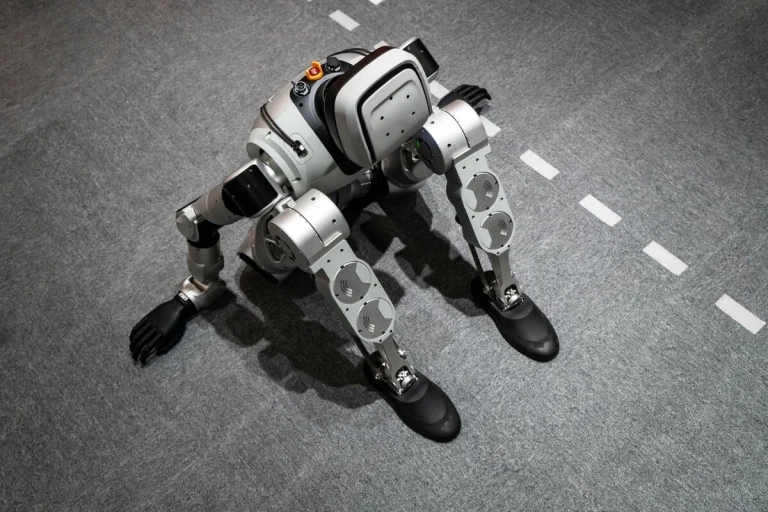
Ultra arrived at the competition with three running strategies trained in simulation. Each controller continuously adjusted the robot’s joints and balance, allowing it to sprint upright without an operator directing every step. The team used a different program for each round, recording 9.39 seconds in the preliminary, 8.86 seconds in the semifinal and 8.64 seconds in the final.
Engineers continued testing between races, adjusting navigation and running controls while repairing damaged machines. Robots stumbled and crashed as the programs were pushed harder, requiring backup units and repeated repairs. Guo said earlier development failures included broken legs and waists.
The braking problem remains particularly clear. Ultra weighs 75 kg and can exceed 17 meters per second at top speed, but the competition course provided only a short run off area and a crash mat. Guo said future versions could be lighter, brake more forcefully and use a safer stopping posture.
“We want to turn high performance into high reliability and high usability.”Jack Guo, Ultra and Omni development lead at X-Humanoid
Commercial evidence remains limited
X-Humanoid was established in November 2023 and is backed by state owned and private investors, including UBTech, Xiaomi and Baidu. The Beijing organization develops humanoid hardware, motion control software and AI for the wider robotics industry while commercializing its own machines.
It has not disclosed how many robots it has sold or placed in commercial operations. Its customers include universities, research institutes and companies investigating industrial applications.
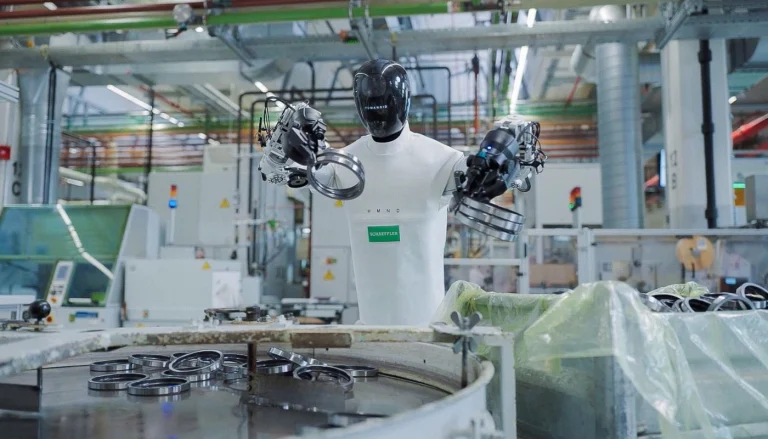
The most concrete workplace trial cited by Reuters involved a different X-Humanoid model, Tianyi 2.0, at Foton Cummins’ engine factory in Beijing. The robot lifted boxes weighing 8 to 12 kg onto shelves. The factory described the trial as an early stage exploration, and no operating duration or broader performance data were reported.
Omni, a smaller humanoid also led by Guo’s team, climbed from the first floor to the 17th floor of X-Humanoid’s headquarters during an internal test. Guo expects smaller machines to find initial roles in commercial services and light industry, while Ultra could eventually handle outdoor inspection or emergency rescue work.
For now, Guo identifies stable robot bodies and dependable movement control as the immediate bottlenecks. More capable AI for complex autonomous tasks will take longer, leaving reliability as the practical test of whether the speed developed for Ultra can support sustained work.
Source: Reuters