Xpeng bets on Iron humanoid robot as it widens AI strategy
Xpeng is putting the Iron humanoid robot at the center of a broader push beyond electric vehicles, framing humanoids, self-driving cars and flying cars as the three pillars of its next phase. In a podcast published on May 6, The Economist reported that founder He Xiaopeng has recast the company as Xpeng Group and is increasing investment in what he calls physical AI, a shift that matters because it ties humanoid development directly to an established automotive manufacturer rather than a standalone robotics startup.
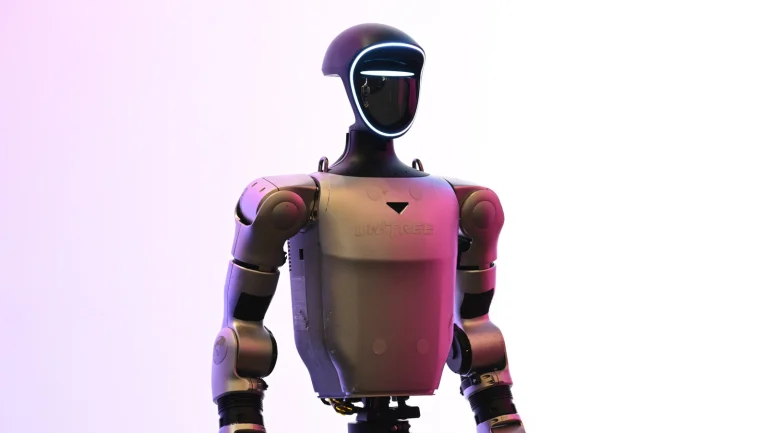
Iron humanoid robot becomes Xpeng’s public face
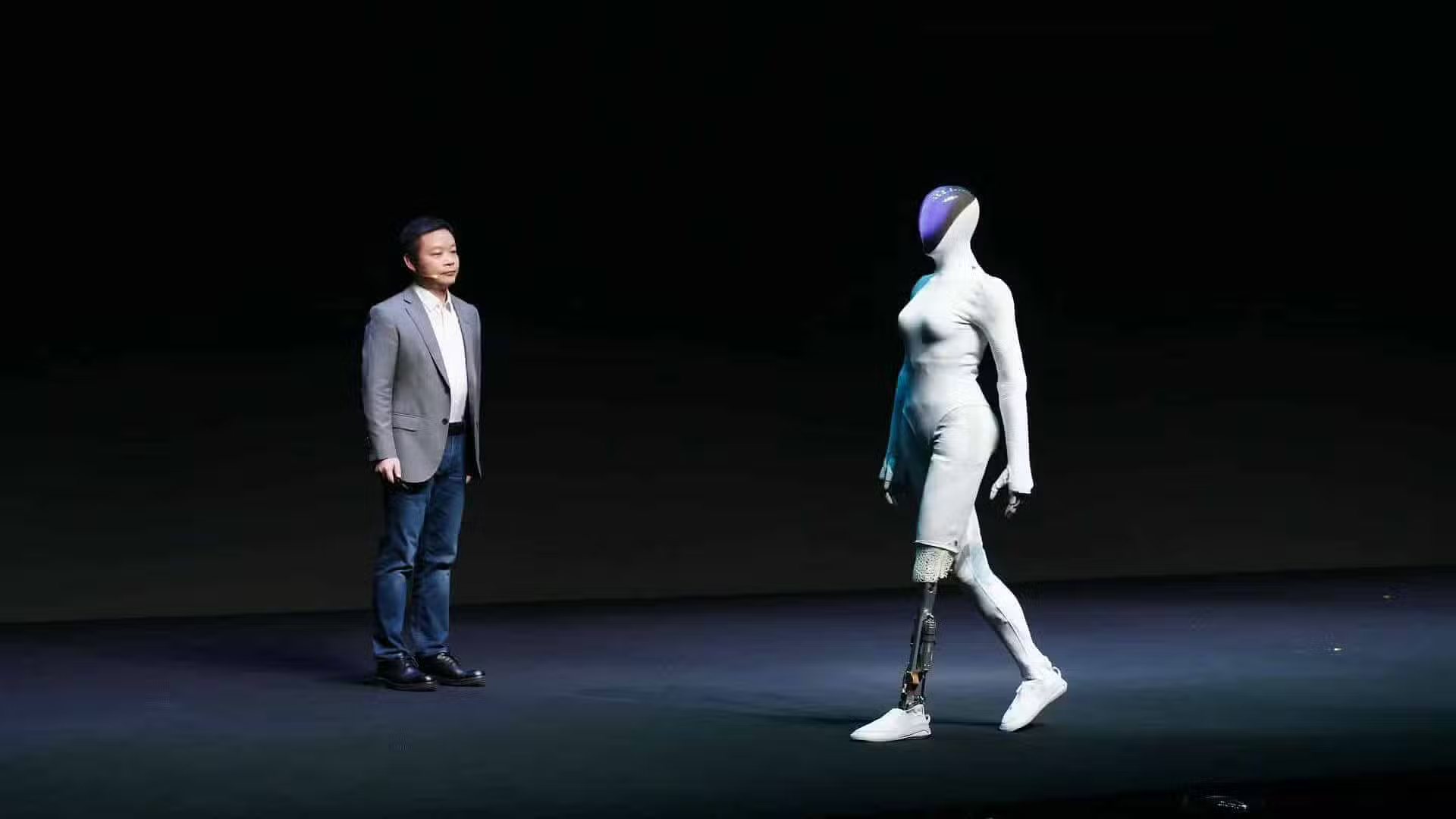
According to The Economist, the most attention at Xpeng’s Guangzhou headquarters was not on its EVs or prototype flying cars, but on its humanoid robots. Iron, the latest model, was described as unusually lifelike, with synthetic skin stretched across lattice muscles that felt soft to the touch. Videos of the robot walking on a catwalk drew enough scrutiny online that some viewers questioned whether it was a person in a suit.
The company showed earlier robot designs alongside Iron, including smaller four legged machines described as dogs and horses. Xpeng staff told the publication that the company had initially viewed four legs as a more stable architecture, but shifted toward bipedal humanoids in 2023 after the release of ChatGPT4, believing AI systems had advanced enough to support two legged operation.
That product evolution now sits inside a larger corporate repositioning. He said Xpeng has spent the past decade building EVs, and that from 2025 onward the company sees its foundation as resting on three areas: cars, humanoid robots and flying cars. The renaming from Xpeng Motors to Xpeng Group is meant to reflect that wider scope.
Why Xpeng links cars and humanoids
He’s argument, as presented in the interview, is that Xpeng’s automotive business already contains much of the technical stack needed for robotics. He said he has long viewed cars as a type of robot, and Xpeng has spent years developing software centered vehicles, autonomous driving systems, AI chips and other research that could cross over into humanoid development.
That helps explain why the company is willing to keep spending in a market where many Chinese EV makers are under pressure. The Economist said Xpeng only turned a profit for the first time in the fourth quarter of last year, yet still plans to invest 7 billion yuan in AI this year. He argued that many rivals are cutting R&D to preserve short term survival, while Xpeng is still trying to defend a technology lead and stay out of the lowest price tiers.
The humanoid push was not an easy sell internally. He said that when Xpeng acquired a robot company three years ago, all of its external board members opposed the move. He now says those same directors are asking when the robotics unit might be spun out to raise outside capital, and he claimed Xpeng’s robots are two or three generations ahead of most Chinese robot companies, an assertion presented in the interview without independent verification.
Near term jobs, long term care vision
He drew a clear distinction between long term aspiration and near term deployment. While he described the eventual goal as a robot capable of domestic tasks such as laundry, cooking and meal preparation, he said the first jobs to be replaced in physical AI are more likely to be simple, repetitive roles that people do not want to do. Household cleaning and caregiving, in his view, remain much harder problems.
Part of Xpeng’s thinking is shaped by demographics as much as engineering. He said concern about ageing and family care, sharpened by his father’s illness, helped motivate his interest in humanoids. That outlook also informs the design: he argued that a fully humanoid form with skin and muscles is more suitable for working closely with people than a machine that feels like steel armor.
Xpeng’s wager comes as China is backing robotics more broadly. The podcast noted that AI robots were mentioned in the country’s latest five year plan, that local governments are setting up development centers, and that hundreds of companies are entering the field. At the same time, analysts cited in the discussion warned of a possible bubble, noting that the state has so far been the largest buyer and that the commercial case for humanoids remains unsettled.
What Xpeng’s robot bet signals for the market
The company is trying to differentiate itself at a time when advanced driver assistance systems are becoming less distinctive across the EV market. Xpeng had built a reputation for strong ADAS, and the interview noted that Volkswagen bought a 5% stake in the company because of its technology. Moving deeper into robotics is therefore both an expansion plan and a response to intensifying competition in autos.
He said awareness and recognition for robots should rise after 2028, and predicted the robot market could ultimately exceed the car market by several times. Morgan Stanley, cited in the podcast, estimates the humanoid robot market could reach $5 trillion by 2050, though the discussion also stressed that such projections remain far from proven demand.
Xpeng’s strategy reflects a broader pattern in China, where EV makers are entering robotics and robotics firms are moving toward vehicles. The next test will be whether companies like Xpeng can turn humanoid prototypes into repeatable work and durable revenue before the sector repeats the price wars and overcapacity that reshaped the EV industry.
Source: https://www.economist.com/