Tiangong Ultra runs 100 meters in 8.86 seconds in Beijing
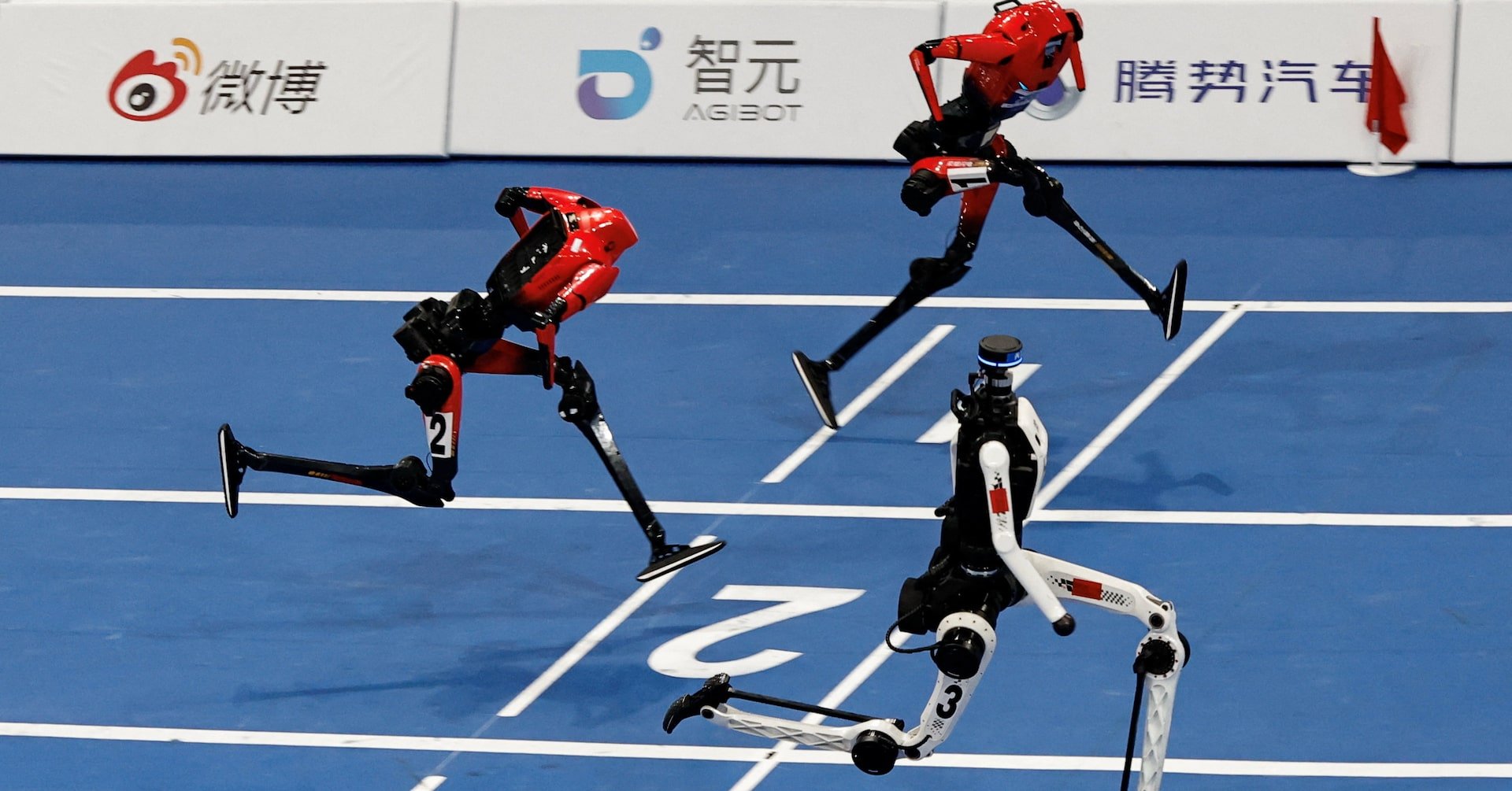
Tiangong Ultra completed a 100 meter sprint in 8.86 seconds at the World Humanoid Robot Games in Beijing, improving on the 9.39 second time it recorded at the event’s opening. The humanoid, developed by the Beijing Humanoid Robot Innovation Center, set the new time in a semifinal of the large size robot division.
The result was 0.72 seconds faster than Usain Bolt’s 9.58 second men’s world record, although the comparison has clear limits. Tiangong is a motor powered machine, and the event result does not establish equivalence with human athletic performance. Reuters also did not specify the robot’s autonomy level, control setup or timing methodology, so the 8.86 second run is best treated as a competition result rather than a standardized industry benchmark.
Tiangong cuts its sprint time sharply
The latest Tiangong Ultra sprint continues a rapid improvement at the Beijing competition. Tiangong won the inaugural event’s 100 meter race in 21.50 seconds. It also completed a humanoid half marathon in Beijing in 2 hours and 40 minutes.
Honor’s Lightning humanoid recorded 9.47 seconds during the opening day race, according to Reuters, and had previously achieved 9.32 seconds in a test run. Multiple robots at the games have therefore posted times below the human record, though under conditions designed for machines.
The Beijing Humanoid Robot Innovation Center said its Tiangong robots had also exceeded human records with a 38.15 second 400 meter run, a 2 minute 21.64 second 1,500 meter result and a 2.88 meter high jump. These are claims from the developer rather than independently standardized robotics benchmarks.
Straight line speed comes with a rough stop
Tiangong did not decelerate under control after crossing the finish line. It struck a thick stopping mat, collapsed from the impact and developed a small fire in its torso. Another robot disassembled during the other semifinal.
The sequence illustrates the narrow scope of the result. Tiangong Ultra demonstrated exceptional straight line speed, but not controlled braking, fall avoidance or recovery after the run. Those capabilities would be more relevant to humanoids operating around workers and equipment.
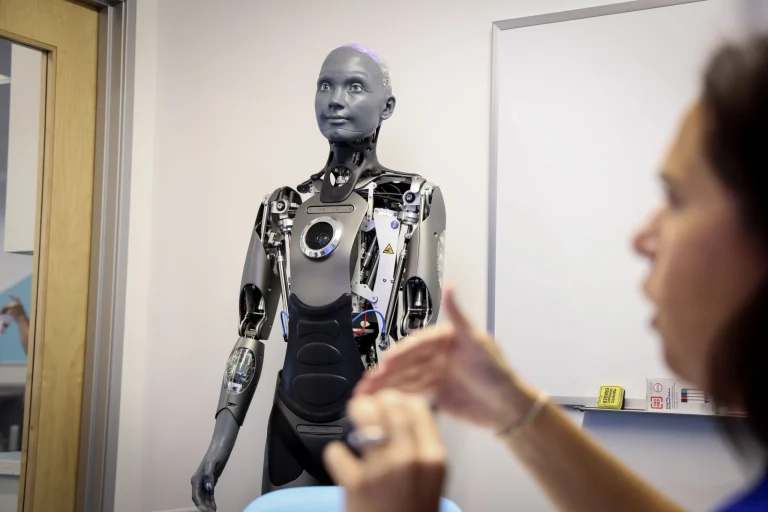
The second World Humanoid Robot Games brought together more than 2,000 robots from 666 teams across 51 events, including football, dancing and industrial task contests. China has designated humanoid robotics as a strategic emerging industry, with manufacturing, logistics and service applications among the target markets.
Source: reuters.com