Hyundai weighs dealer network for Atlas humanoid sales
Hyundai is considering using its car dealer network to distribute robots, potentially giving Boston Dynamics’ Atlas humanoid an established sales and financing channel. CEO José Muñoz disclosed the idea during Hyundai’s investor day, although he did not name which robots dealers might carry.
“We have existing potential distribution for selling robots through our dealer partners.”José Muñoz, CEO of Hyundai
Muñoz also said Hyundai Capital, which finances vehicle purchases, is examining whether it could finance robots. Business Insider reported that Hyundai representatives did not clarify whether the proposed channel would serve individual consumers, commercial customers, or both.
The comments do not amount to a retail launch plan. Hyundai gave no pricing, timetable, participating dealerships, or details about installation, training and service. Those gaps are substantial for Atlas dealership sales, particularly if Hyundai intends to reach customers beyond industrial operators.
Atlas production claim lacks volume details
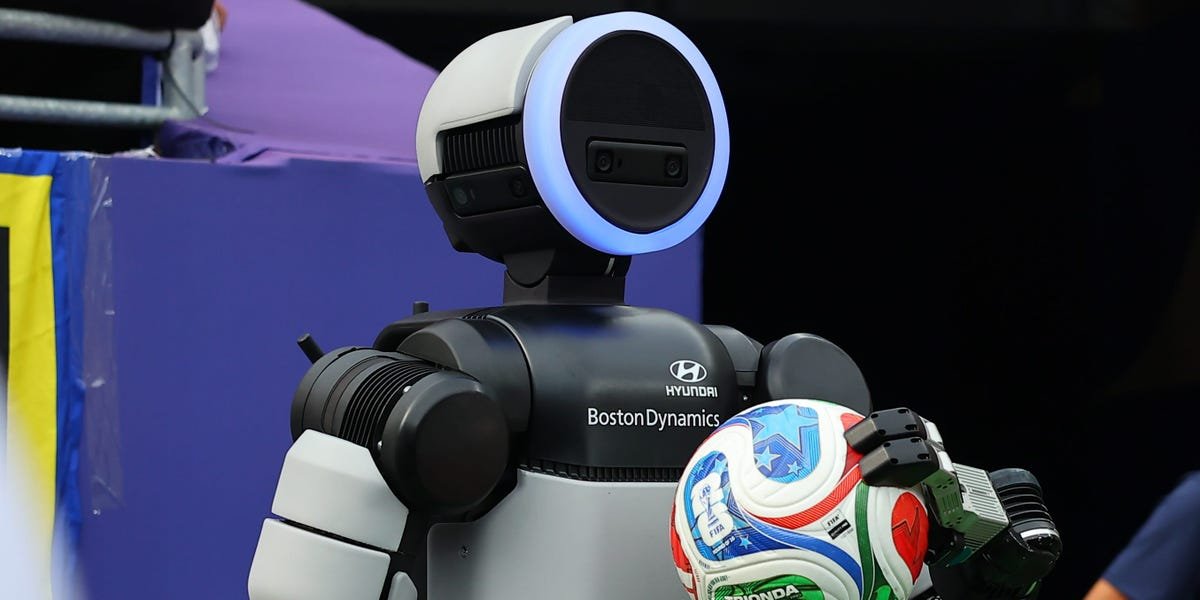
Muñoz said Hyundai would soon begin mass producing Atlas, Boston Dynamics’ humanoid with a torso capable of rotating 180 degrees. The company did not provide a production date or unit target.
Boston Dynamics showed Atlas squatting, lifting a mini fridge and carrying it to an engineer in a video posted in May. The demonstration offered another look at the platform’s handling and mobility, but the source did not describe it as a customer deployment.
Hyundai Motor Group acquired an 80% controlling stake in Boston Dynamics in 2021 through a deal that valued the robotics company at $1.1 billion. Hyundai already uses Boston Dynamics’ four legged Spot robots for inspections and predictive maintenance at its facilities, giving the group some operational experience with the company’s hardware.
Consumer humanoid sales remain limited
Most named humanoid programs in the automotive sector remain focused on factories. Business Insider cited Figure robots handling automotive components at BMW’s Spartanburg plant, an Agility Robotics agreement covering Toyota facilities in Canada, and Apptronik’s Apollo working in Mercedes-Benz plants.
Direct consumer availability is much less common. 1X is taking deposits for its $20,000 NEO home robot, while Unitree sells the $13,500 G1 and $4,900 R1 online. The Unitree systems are marketed mainly to researchers, developers, schools and enthusiasts rather than as general household products.
Hyundai’s dealer proposal identifies a plausible distribution mechanism, but not yet a defined Atlas product for that channel. The intended customer, sales model and support structure remain unspecified.
Sources: google.com, google.com