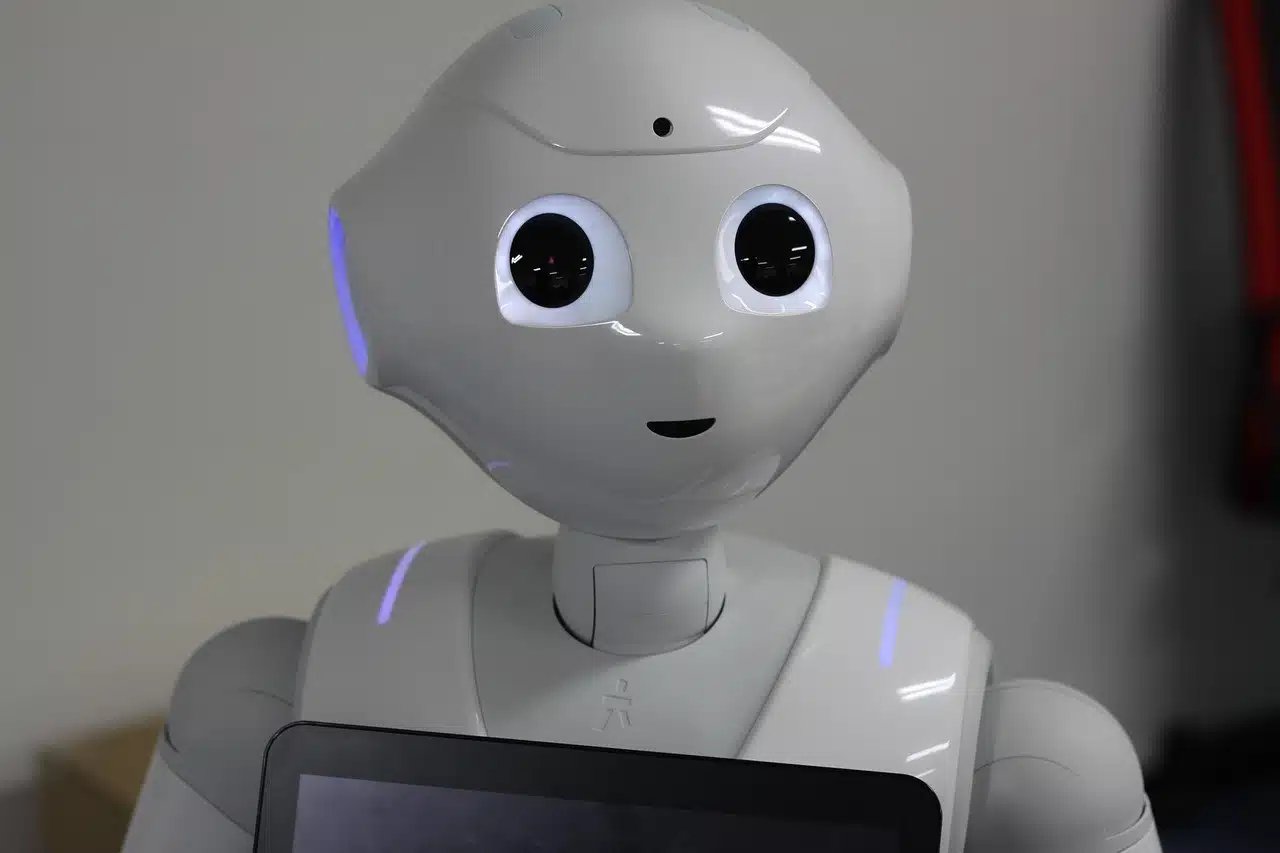
Japan humanoid robot push adds factory and airport pilots
Mitsubishi Motors has signed a memorandum of understanding with Highlanders, Inc., a University of Tokyo robotics startup, to jointly develop and produce humanoid robots at Mitsubishi’s Kyoto plant, according to Intelligent Living. The stated target is 1,000 units per month starting as early as 2027, with the robots first assigned to Mitsubishi’s own assembly lines before outside sales.
That is the strongest production claim in a busy Japan humanoid robot push. The same roundup cites a two year Japan Airlines and GMO AI & Robotics trial at Haneda Airport, Toyota evaluations on a components line at an Aichi plant, Shimizu Corporation construction development, and new humanoids from Kawasaki Heavy Industries and donut robotics. The list is heavy on pilots, evaluations and targets. It is not yet evidence of large operating fleets.
Labor pressure is driving the urgency
Japan’s working age population has fallen from 87.3 million in 1995 to 73.7 million in 2024, the source says, citing the Recruit Works Institute. By 2040, the country faces a projected shortfall of 11 million workers. Nearly 29.3 percent of Japanese citizens are 65 or older, and 2024 saw 686,601 births against 1.6 million deaths.
Those figures explain why humanoids are being tested in places where conventional automation has not removed enough manual work. A Reuters survey cited in the article found that about one in three Japanese companies are already using AI driven robots or considering them. Among transportation equipment manufacturers, the figure rises to 80 percent.
Construction remains one of the hardest cases. The article says Japan’s Ministry of Health, Labour and Welfare reports 6.68 job openings per applicant in construction and civil engineering. Shimizu is targeting practical use around fiscal 2030 for painting, plastering and site inspection, including a trial in Tokyo where a humanoid navigated a site at 1.0 meters per second while carrying a camera for AI based inspection.
What the 2026 programs involve
At Haneda, JAL and GMO AI & Robotics are trialing a humanoid based on Unitree’s G1 for baggage handling and cabin maintenance. The robots can operate for two to three hours on a charge and are being used to move luggage and freight across the tarmac, according to the source. Haneda handles more than 60 million passengers annually, so even a limited ground operations trial gives operators useful data on congestion, charging, supervision and safety procedures.
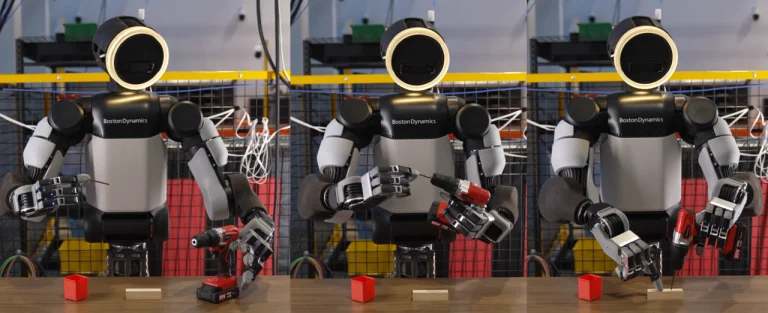
In manufacturing, Toyota has placed humanoid prototypes on a components line at its Aichi plant for evaluation. Toyota Research Institute is also working with Boston Dynamics on AI powered Atlas robots, with a mid 2026 demonstration showing object manipulation. The Mitsubishi and Highlanders plan is more explicit about volume, but it remains a target tied to a memorandum rather than a reported production run.
Kawasaki’s Kaleido 9, unveiled in late 2025, is described as a 180 cm, 86 kg humanoid for industrial applications including parts assembly and logistics support. It has 41 degrees of freedom and can lift 25 kg per arm. On paper, that gives it a more industrial profile than smaller service oriented humanoids, although the article presents it as still under development.
donut robotics is pushing a different angle. Its cinnamon mini, shown at SusHi Tech Tokyo, is a 130 cm humanoid that the company says can learn movements from video rather than conventional motion capture. The company also showed cinnamon 1, a 170 cm, 70 kg bipedal humanoid aimed at factories and construction sites. Pricing for cinnamon 1 has not been disclosed.
Physical AI is the policy frame
The article groups the new systems under Physical AI, meaning AI that perceives and acts in physical environments rather than only processing software inputs. The described stack includes computer vision, a vision language action model and motor control. The practical question is whether those systems can handle irregular work at useful speed without constant human intervention.
Japan’s Ministry of Economy, Trade and Industry has identified Physical AI as a strategic priority, according to the source. METI aims to build a domestic sector with a goal of capturing 30 percent of the global market by 2040 and has allocated ¥90 billion per year, about $600 million, for local manufacturing of assistive robots. A formal AI Robotics Strategy is expected in fiscal 2026.
Safety rules will be a gating factor. The source notes that Japan’s current industrial safety framework was written for caged robots, not mobile humanoids sharing floors with workers. A trade ministry working group is expected to issue draft guidance later in 2026.
The next concrete check is manufacturing throughput. Mitsubishi and Highlanders say production could begin as early as 2027, with 1,000 units per month as the stated capacity target.
Source: intelligentliving.co