Welcome, UM1 Evo!
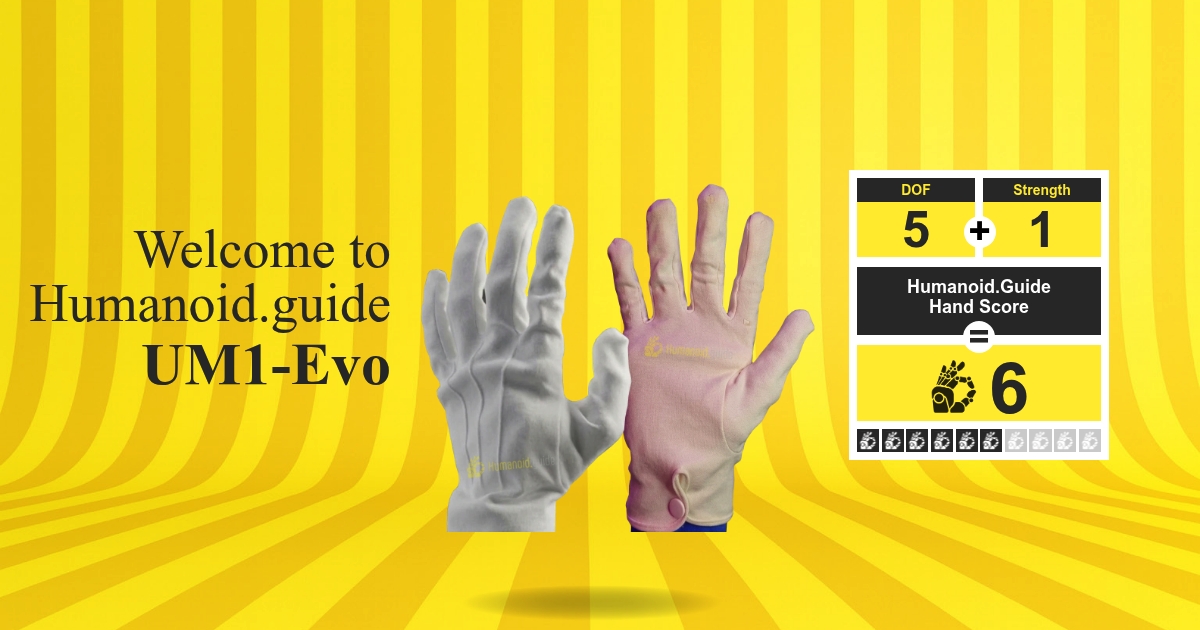
UM1 Evo is a biomechanical robotic hand developed by Didrei Robotic, the project of French inventor Didier Vançon. Its overall Hand Score of 6 out of 10 places it in the capable category, with a distinctly uneven assessment across its two rated dimensions. Degrees of Freedom receives the highest tier, 5 out of 5, while Strength receives 1 out of 5. This makes dexterity the stronger part of its evaluation rather than force. The assembly weighs 1.7 kilograms and incorporates 25 electric actuators within the forearm. Its construction uses custom CNC machined parts produced on machines built by Vançon himself. Working independently in the Lorraine region of France, he spent five and a half years developing the project, including studying hand biomechanics and writing control software. The result is a prototype centered on human hand engineering, combining mechanical construction, actuator integration, and software development within a single inventor’s development effort.
The technical ratings distinguish freedom of movement from strength rather than treating them as interchangeable measures of hand performance. A Degrees of Freedom rating of 5 out of 5 represents the highest assessment tier for that category, not a count of joints, motors, or independently controlled movements. The Strength rating of 1 out of 5 places that dimension in a lower tier. Read together, these scores describe a dexterity focused technical profile with a more modest strength assessment. The overall score of 6 out of 10 indicates a capable hand, but does not imply equally strong results across every aspect of manipulation. That distinction matters when comparing robotic hands with different engineering priorities.
UM1 Evo is listed as a prototype, with an advertised price of 5,000 USD and an inquiry option for prospective buyers. Vançon hopes to sell the prototype and its associated know how to a partner, making technology transfer an important part of the project’s commercial direction. The stated target fields include next generation prosthetics and humanoid robotics, with industrial and space applications identified as areas of interest rather than established deployments. Its broader significance lies in the scope of independent development: one inventor brought together biomechanics research, custom manufacturing, electronics integration, and control software. For prospective partners, the opportunity concerns both the physical prototype and the engineering knowledge accumulated during its development.