Humanoid robots outperform humans in Beijing half marathon
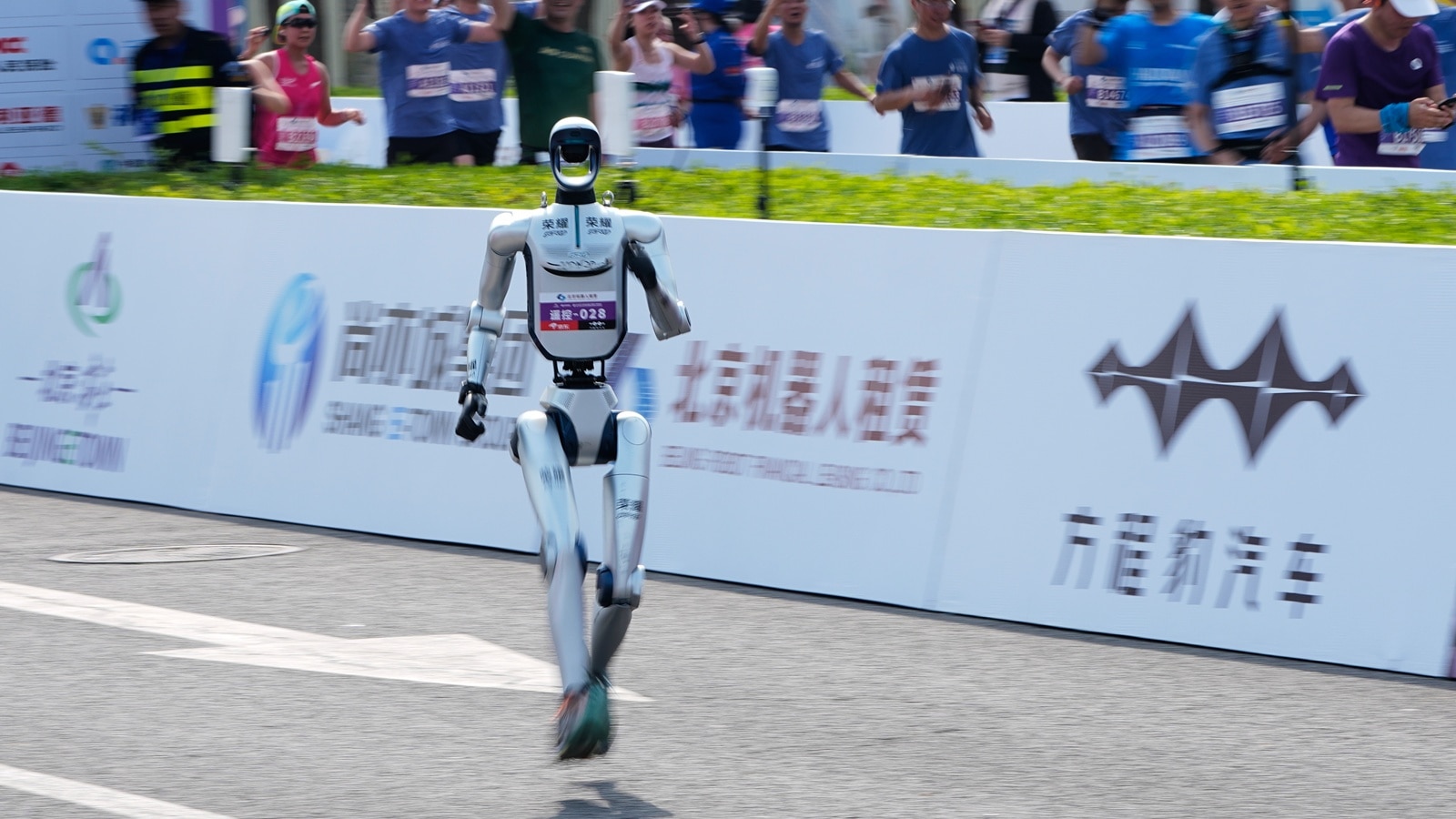
Humanoid robots demonstrated a significant leap in mobility and endurance at a half marathon event in Beijing, where more than 100 machines competed alongside human runners. The race, held in the city’s E-Town district, highlights the rapid pace of development in China’s humanoid robotics sector.
The fastest robot, developed by Chinese smartphone manufacturer Honor, completed the course in 50 minutes and 26 seconds. According to reports, this time was substantially faster than both human participants in the event and previous robotic performances.
The improvement marks a sharp contrast with the inaugural edition of the race held the previous year. In 2025, most participating humanoids struggled to complete the course, and the winning robot required 2 hours and 40 minutes to finish. That performance lagged well behind human runners competing on a parallel track.
This year’s event showed both increased participation and improved reliability. The number of humanoid entrants rose from around 20 to more than 100, with many completing the race successfully. The results suggest meaningful advances in locomotion control, balance, and energy management for legged systems operating over long distances.
While detailed technical specifications of the competing robots were not disclosed, the performance gains point to improvements in actuator efficiency, gait optimization, and real time control systems. Sustained running over a half marathon distance places demands on thermal management, joint durability, and onboard power systems, all of which have historically limited humanoid deployments outside controlled environments.
The event also reflects broader industrial policy in China aimed at accelerating humanoid robot development. Public demonstrations such as this race are increasingly used to showcase progress and attract investment, while also serving as informal benchmarks for system level performance.
Despite the strong showing, many economically viable applications for humanoid robots remain in trial phases. Events like the Beijing half marathon provide a visible indicator of progress, but translating athletic capability into consistent industrial or service deployment remains an ongoing challenge.
The rapid improvement over a single year suggests that iteration cycles in humanoid robotics are accelerating. For practitioners and operators, the results highlight a shift from proof of concept demonstrations toward more robust and repeatable performance in dynamic, real world conditions.
Source: indianexpress.com