Generative Bionics plans data factory for GENE.01 humanoid
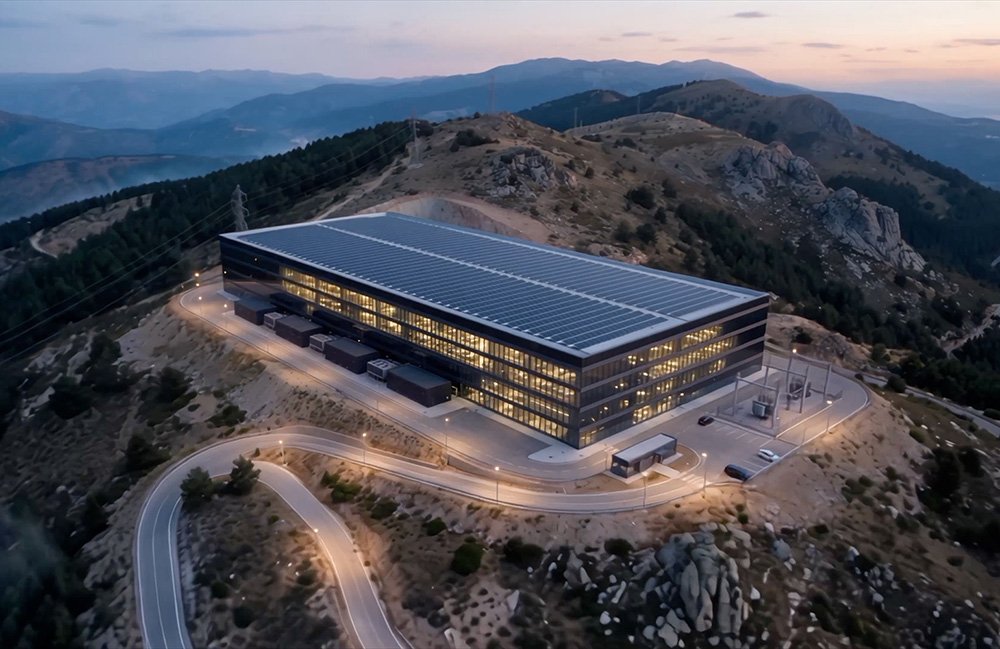
Generative Bionics plans to build a 5,000 square metre humanoid training facility in Italy, targeting operation by the fourth quarter of 2027, according to The Robot Report. The proposed Physical AI Data Factory will reproduce industrial environments to train and validate the company’s GENE.01 humanoid before customer deployment.
The Genoa company intends the Italian hub to be the first of three facilities, with a second elsewhere in Europe and a third serving global markets. Its approach centres on collecting physical interaction data, expanding those experiences in simulation, and testing the resulting models back on robots.
“A robot is not only vision and is not only language,” CEO Daniele Pucci told The Robot Report. “It is position, velocity, acceleration, temperature, and contact forces, so there is a large variety of data that you have to take into account.”
Training around contact and industrial tasks
Generative Bionics says the facility will house environments selected with industrial partners, where fleets of GENE.01 robots can perform tasks continuously. The planned dataset includes vision and motion data alongside signals from the robot’s full body multimodal skin, which the company says senses both touch and proximity.
The company plans to use those operations to train world action models and evaluate the complete robot system, including perception, control, safety behaviour and task execution. That makes the proposed facility a system validation environment as well as a source of training data.
Each physical environment and robot configuration is also intended to have a digital twin. According to the company, simulation will repeat tasks across thousands of variations in layouts, objects, materials, operating conditions and failure modes. Models tested in simulation would then return to physical robots for validation, with data from eventual customer fleets feeding subsequent training cycles.
AMD is the project’s AI infrastructure partner. Generative Bionics says AMD Helios will provide the computing foundation for processing physical and synthetic data, training models and running digital twin variations in parallel.
A common humanoid platform with application specific variants
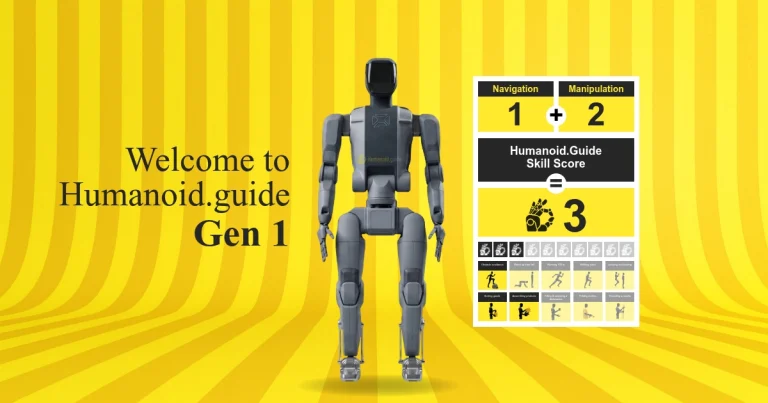
The data factory plan fits Generative Bionics’ proposed customization strategy for GENE.01. Rather than offer an identical robot for every workplace, the company plans three areas of adaptation: AI, exterior design, and hands and feet.
Pucci cited shipyard work and healthcare as applications with fundamentally different development requirements. For shipyards, the company envisages exterior protection against high temperatures, sparks and powders, while retaining a common underlying platform.
Generative Bionics spun out of the Italian Institute of Technology in 2024. The institute has granted it exclusive licences to key technologies developed through more than 20 years of humanoid research, development and prototyping.
Source: The Robot Report