Welcome, Max!
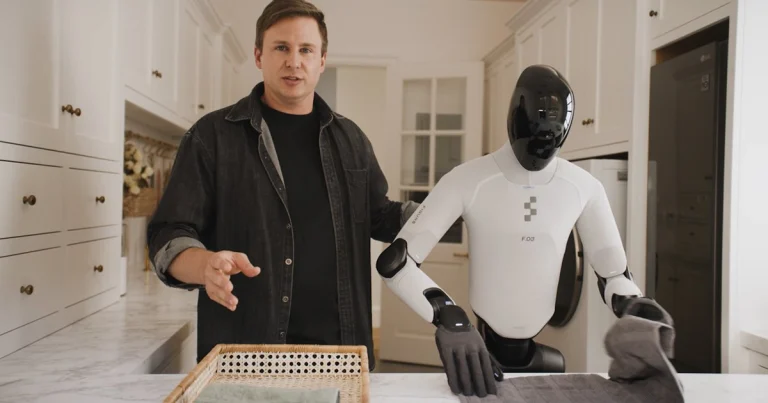
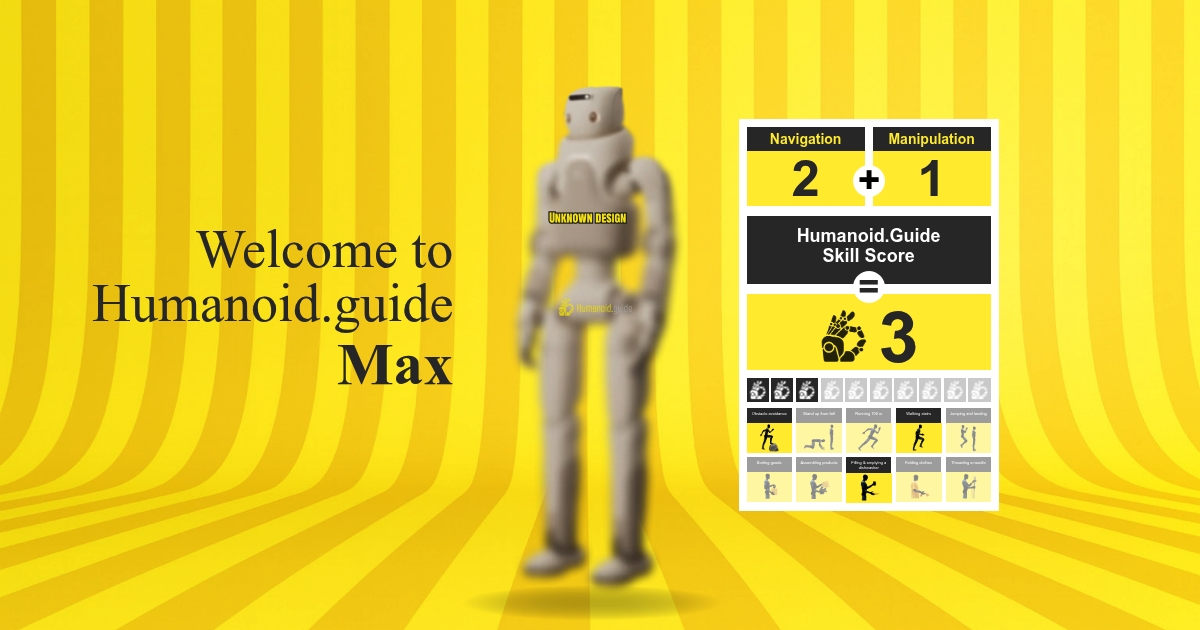
Max is Meta’s first humanoid robot prototype, developed with Chinese robotics company Fourier as a research platform for future home assistance. Standing 150 centimeters tall and weighing 48 kilograms, it combines a humanoid body, five fingers on each hand, and an expressive face screen. Its documented physical capabilities include obstacle avoidance, walking stairs, and filling and emptying a dishwasher. These functions connect movement through domestic spaces with the manipulation of household objects. Max has an overall skill score of 3 out of 10, placing it in the developing category rather than among mature general purpose robots. Its navigation rating is 2 out of 5, while manipulation is rated 1 out of 5. The hardware includes electric actuators and NVIDIA Jetson Thor computing, with 128 GB of memory. Listed specifications include a maximum speed of 5 kilometers per hour, a strength specification of 6 kilograms, and a runtime of 2 hours per charge. Together, these characteristics define a prototype intended for household robotics research.
Obstacle avoidance and stair walking give Max a navigation capability set relevant to homes with furniture and changes in floor level. Filling and emptying a dishwasher adds a concrete household manipulation task, bringing locomotion and object handling into the same application context. These capabilities provide useful research targets without establishing broad household autonomy. The distinction between its navigation and manipulation ratings is important: navigation occupies a higher tier, while manipulation remains at a lower developmental tier. Its five fingered hands provide the physical interface for the listed dishwasher task. For researchers, that combination offers a platform for studying how a humanoid moves around domestic obstacles and performs a specific chore within a home environment.
Max is available as a prototype, not an established consumer appliance. Meta developed it with Fourier in about three months, bringing together a major technology company and a Shanghai based robotics manufacturer. The project represents Meta’s first known humanoid robot hardware and extends its research into physical systems for home assistance. Its stated markets are consumer home assistance and research, making its broader significance the exploration of household robotics rather than a claim of finished domestic automation. The face screen communicates operating state as part of a design intended to build trust around people. The listed price is USD 100,000, with an inquiry option, but its prototype status remains central to understanding the offering.