
Welcome, Laborer M1!
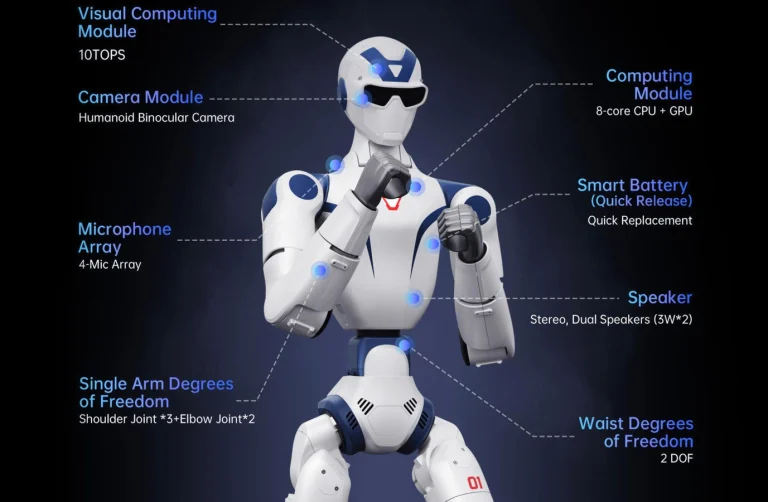
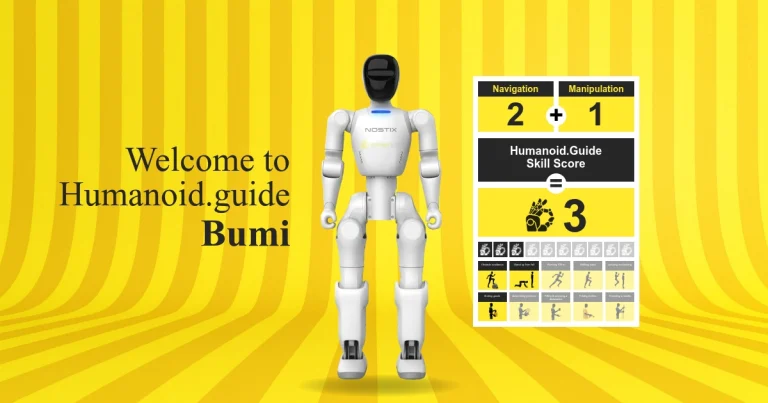
Laborer M1 is a full size bipedal humanoid from Glroad, a technology company based in Wuhan, China. Standing 187 cm tall and weighing 86 kg, it is designed for industrial environments where substantial load capacity matters. Its specified strength is 50 kg, placing heavy load handling at the center of its intended role. The robot has 27 degrees of freedom overall, including seven in each arm, and five fingers on each hand. Integrated joint actuators deliver peak torque of 430 N·m and incorporate dual encoders. A depth camera in the head supports environmental perception and target recognition. Listed maximum speed is 4.3 km/h, while walking speed is 4 km/h, and runtime per charge is two hours. Safety provisions include hardware redundancy, fault self diagnosis, and emergency braking operating on a millisecond timescale. Its overall skill score of 2 out of 10 places its demonstrated capability profile in the early stage category, with Navigation and Manipulation each rated 1 out of 5.
Obstacle avoidance and sorting goods are the two identified capabilities of Laborer M1. Obstacle avoidance addresses a practical navigation requirement in industrial spaces: accounting for objects along a movement route. The head mounted depth camera provides environmental perception relevant to this task. Sorting goods represents a manipulation application aligned with the robot’s industrial focus, combining target recognition with its articulated arms and hands. These capabilities establish a narrow but concrete starting point for evaluating useful work. The Navigation and Manipulation ratings remain at the lower end of their respective scales, so the distinction between substantial mechanical specifications and early stage task proficiency is important. Assessment should center on obstacle avoidance and goods sorting rather than treating its physical design as proof of broader competence.
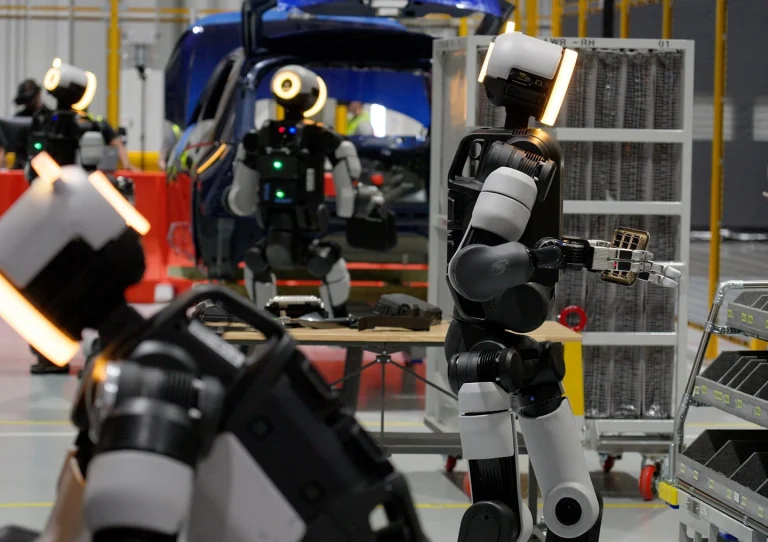
Laborer M1 is listed as in production, with a displayed price of USD 70,000. Its manufacturer, Wuhan Glroad Intelligent Technology Co., Ltd., brings a background in power grid monitoring and precision motion control to humanoid development. The robot targets industrial heavy load handling and customized applications across industries. Its broader significance lies in pairing a full size humanoid format with a substantial stated load capacity, rather than in a high overall skill rating. For prospective industrial buyers, the central evaluation question is how its obstacle avoidance and goods sorting capabilities perform within a specific workflow. Production availability creates an opportunity for practical assessment, while the early stage score keeps expectations grounded.