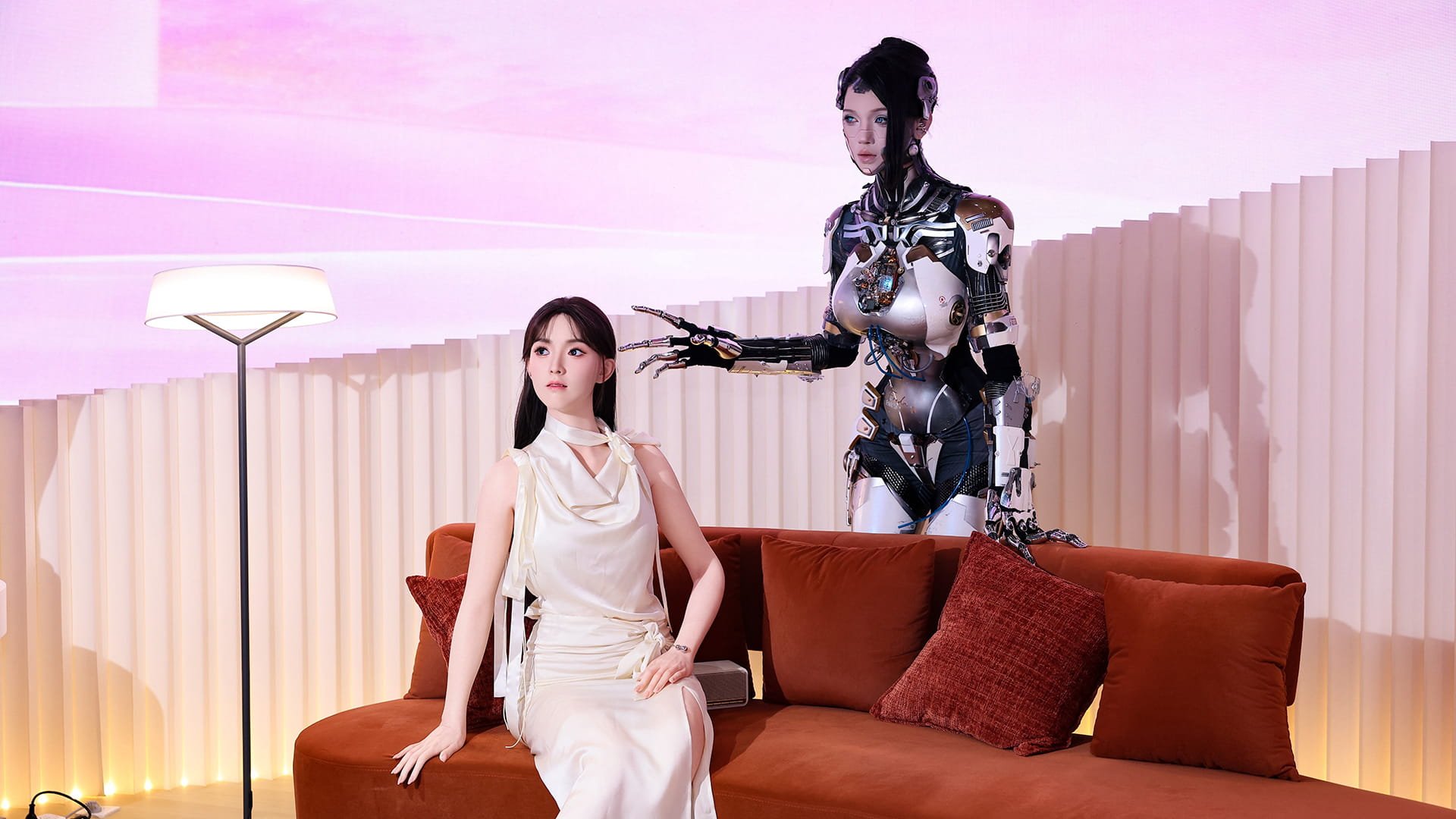
UBTech unveils UWorld U1 humanoid robots for home use
UBTech Robotics unveiled the UWorld U1 Series in Shenzhen on June 30, adding a consumer facing line of full size humanoid robots aimed at home companionship and everyday interaction. The company said cumulative orders for the series had surpassed 13,361 units as of the launch event, according to KrASIA.
The lineup includes three models: the U1 Lite semi torso edition, the U1 Pro full body model, and the U1 Ultra full body model. Pricing runs from RMB 119,800 to RMB 990,000, roughly $17,600 to $145,500 on first conversion.
Key facts
- Models: U1 Lite, U1 Pro, and U1 Ultra
- Price range: RMB 119,800 to RMB 990,000, roughly $17,600 to $145,500
- Orders: UBTech says cumulative orders exceeded 13,361 units as of launch day
- Hardware: 88 bionic joints and multidimensional flexible electronic skin
- Interaction claim: More than 20 emotional states recognized with accuracy above 90%, according to UBTech
The order figure is a company reported number, not independent shipment data, so it should be read carefully. Even so, it is a large stated preorder base for a category where private home adoption remains rare.
Companion hardware, not factory handling
UBTech says the UWorld U1 humanoid uses 88 bionic joints and a dual pivot biomimetic cervical spine. The company claims the robot can replicate 90% of everyday human body movements, including more than 300 composite micro expressions across four categories, humanlike neck movement, and posture retention.
The robot also uses full time self locking technology to maintain head posture when powered off, according to UBTech. Its flexible electronic skin is designed to sense the force and location of touch, allowing the robot to respond physically to hugs and leaning gestures.
Those features place the U1 series in a different part of the humanoid market than UBTech’s Walker S industrial robots, which entered mass production and began deliveries in 2025. In factories, the practical tests are walking stability, manipulation, payload, endurance, and repeatability. In a home, UBTech is betting that responsiveness, trust, and sustained emotional interaction will carry more weight.
UBTech leans on emotion models and memory
UBTech presents an emotion aware large language model as the core software layer for the UWorld U1 humanoid. Michael Tam, chief brand officer of UBTech and president of its robotics consumer innovation division, said the model can recognize more than 20 fine grained emotional states with accuracy exceeding 90%.
The company described a dual cognition architecture. One side is intended to generate intuitive responses at the 500 millisecond level, while the other supports deeper reasoning using hundreds of billions of parameters. UBTech says the system is meant to preserve real time interaction while tracking changes in a user’s emotions over a long relationship.
The robot’s Agent Memory OS is designed to record, understand, and respond to changes in the user’s condition across the product lifecycle. UBTech also says a proactive care engine can use environmental sensing so users do not generally need to wake the robot deliberately. For speech interaction, the company claims its self developed controller keeps speech and lip movement delay within 20 milliseconds.
Data handling is a central issue for any home humanoid with memory and perception systems. UBTech said the U1 series prioritizes local processing and avoids cloud uploads unless necessary. Users can view, export, and delete their data, according to the company.
UBTech also announced a donation program for customized bionic robots, including units for empty nest seniors, families that have lost their only child, and families of officially recognized martyrs. The company said it plans to donate 100 units in 2026. These robots would use 3D facial reconstruction and voiceprint identity replication technology, paired with an emotion interaction model and dedicated long term memory, to provide psychological companionship.
The consumer market remains thin by shipment volume. KrASIA cited IDC data that global humanoid robot shipments totaled about 18,000 units in 2025, with less than 0.8% entering private homes and more than 90% concentrated in industrial settings. Morgan Stanley, also cited by KrASIA, predicts China’s humanoid robot shipments could reach 50,000 units in 2026, with the market reaching $2 billion this year and $15 billion by 2030.
The hardest test for UWorld U1 will not be whether it can perform convincingly on a launch stage. It will be whether emotional interaction, privacy controls, software updates, and physical reliability hold up after months inside real households.
Source: kr-asia.com