Welcome, Hobbs W1!
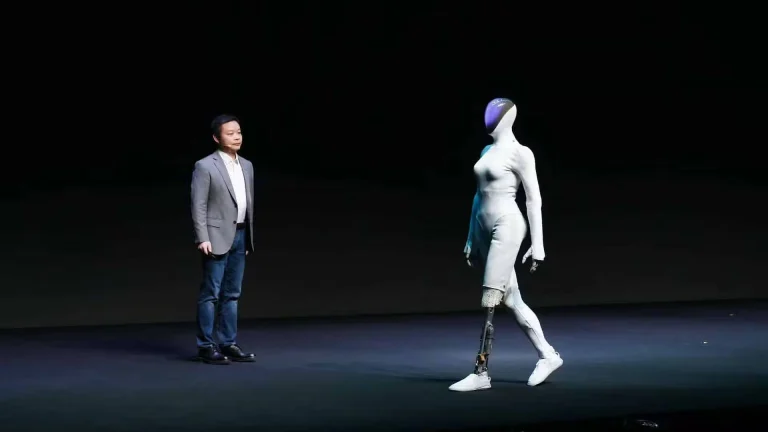
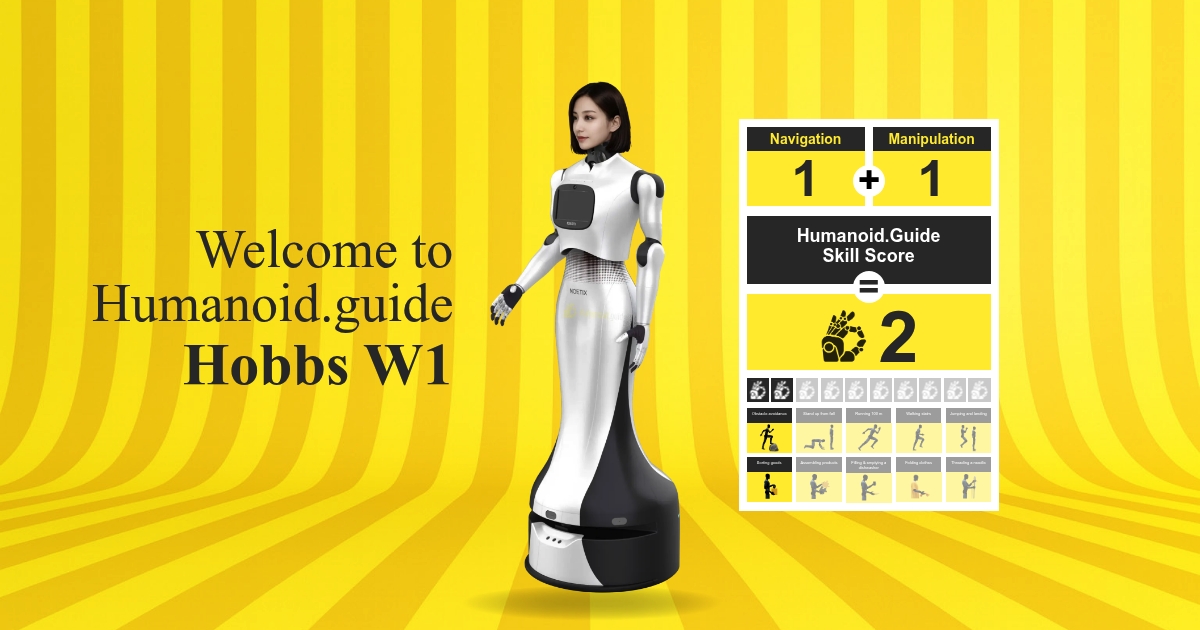
Hobbs W1 is a wheeled humanoid from Noetix Robotics, designed for public environments where a human shaped presence accompanies basic mobility and object handling. Standing 170 cm tall and weighing 75 kg, it combines a white body with a realistic silicone face and a mobile base. Its maximum travel speed is 3 km/h, and its listed runtime is six hours per charge. The robot has 54 active degrees of freedom, including 32 in the face, while its hands have five fingers each. Electric motors provide actuation, with tendon and linkage mechanisms used in the face. Its listed strength specification is 2 kg. A Humanoid Guide Skill Score of 2 out of 10 places its assessed physical capabilities in the preliminary tier. Navigation and manipulation each receive a rating of 1 out of 5. These ratings describe limited capability tiers rather than counts of movements or mechanisms. Obstacle avoidance and sorting goods are its identified physical capabilities, giving it a focused role rather than broad physical versatility.
Obstacle avoidance combines LiDAR, ultrasonic sensing and depth sensing to detect surrounding obstructions as Hobbs W1 moves on its wheeled base. Its sensor arrangement also includes two RGB cameras in the eyes, another RGB camera in the chest and a depth camera in the base. Sorting goods is the other identified physical capability, making navigation and basic item organization the relevant areas for evaluating deployment. The manipulation rating remains at the lower end of the scale, so sorting should not be equated with general purpose handling proficiency. For service halls, exhibition spaces and reception areas, practical assessment should concentrate on obstacle avoidance performance and the specific goods sorting task required.
Hobbs W1 is listed as in production, with a displayed price of USD 32,000 and an option to inquire about pricing. Its manufacturer, Noetix Robotics, is a Beijing company founded by researchers from Tsinghua and Zhejiang universities. Listed target settings include education, exhibitions, government and business service halls, hospitals and reception spaces. Android software, an SDK and Wi Fi connectivity provide a platform for application integration. Its broader significance lies in combining a lifelike humanoid form with a wheeled service platform, rather than demonstrating advanced whole body mobility. Production availability and a preliminary skill score describe different aspects of the product: commercial status does not establish mature navigation or manipulation performance.