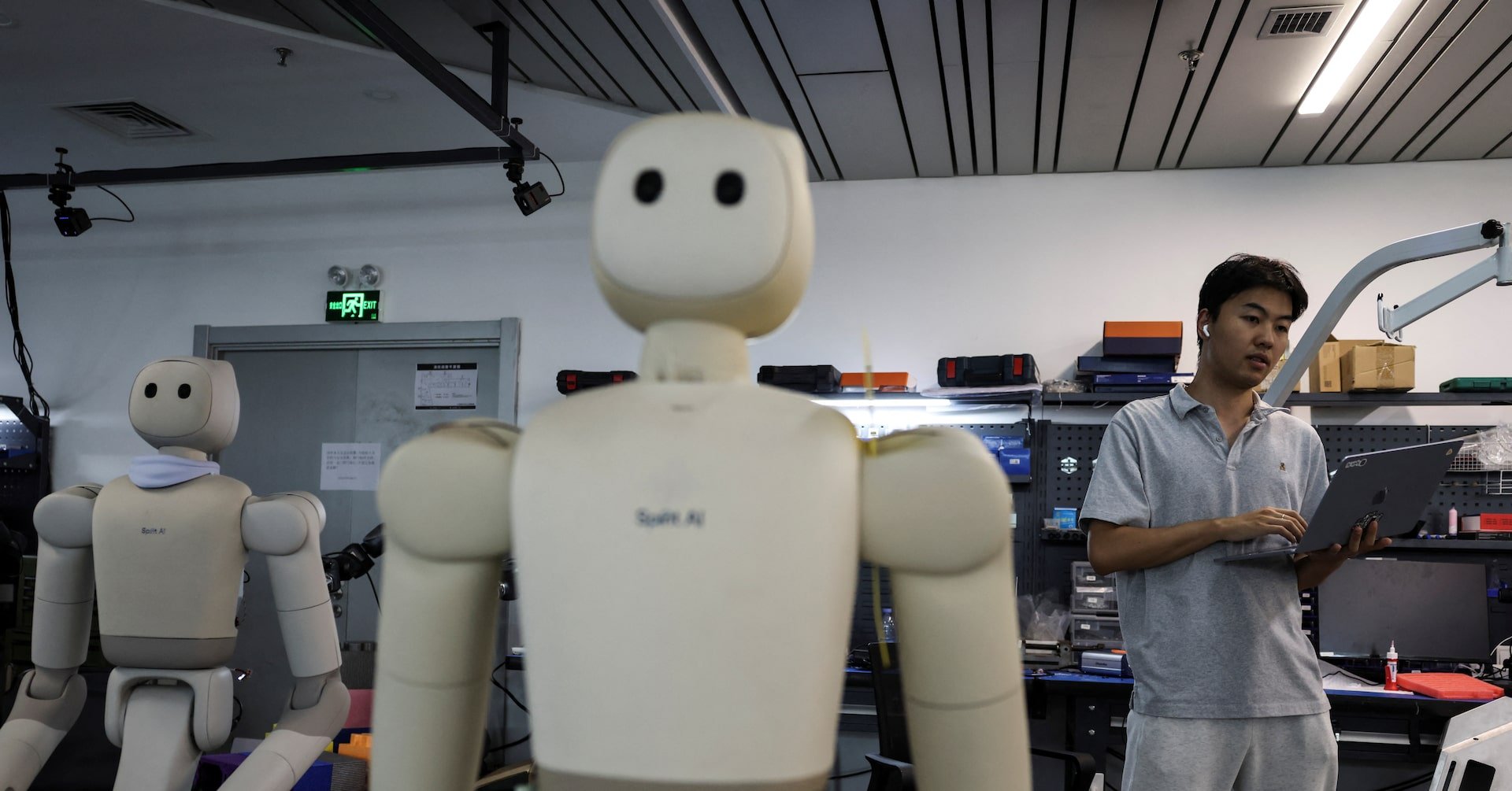
Spirit AI targets 2027 breakthrough in humanoid robot brains
Spirit AI expects its humanoid robot brains to interpret natural language instructions and attempt broad physical tasks by mid 2027, cofounder and chief scientist Gao Yang told Reuters. Reuters characterized the forecast as covering most general purpose tasks, although Gao described a more limited threshold: a robot receiving a spoken request and executing a series of reasonable actions in response.
The prediction is prospective rather than a demonstrated benchmark. Spirit AI currently reports a 90% success rate for simple tasks in structured living room environments, but Reuters did not provide the test protocol, number of trials or definition of success. Gao also acknowledged continuing difficulty with fine motor actions such as unscrewing bottle caps and with tasks the models have not previously encountered.
Factory foothold and funding
Spirit AI has deployed tens of its Moz1 wheeled humanoid robots on production lines operated by battery manufacturer CATL and retailer JD.com, according to Reuters. JD.com is also an investor. The report did not identify the robots’ exact line duties or their level of autonomous operation, limiting what can be concluded from the deployment count alone.
The 300 person company has raised more than $670 million since it was founded in 2024. Its current valuation is 20 billion yuan (about $3.0 billion). Gao declined to discuss possible initial public offering plans.
Gao said the next one to two years would provide the first window for industrial applications, with simpler commercial service work following within two years. Household use is further out. He estimated that humanoids would need at least eight years to become useful in homes, where unstructured spaces and unpredictable interactions raise the technical bar.
Real world data remains the bottleneck
Spirit AI employs around 1,000 contractors across China to collect human movement data in homes and factories. At a Beijing training center visited by Reuters, workers wearing sensors repeatedly opened refrigerators, unlocked safes and cut vegetables with knives.
The company relies primarily on real world interactions rather than simulation. Gao argued that simulators can represent rigid objects effectively but remain weaker with deformable items such as flexible electrical cables. Spirit AI also favors varied, imperfect recordings that it calls “dirty data.” Gao said this diversity improved its models faster than collecting narrowly defined clean movements, which can require more than 50 repetitions at some other Chinese training facilities.
For physical safety, Gao said Moz1 uses whole body force control and automatically applies emergency braking when interaction forces exceed set limits. He described that system as a baseline policy, while saying more advanced alignment research would become practical once robot foundation models achieve substantially greater autonomy.
Source: Reuters