OpenAI robotics hiring expands, raising stakes for humanoids
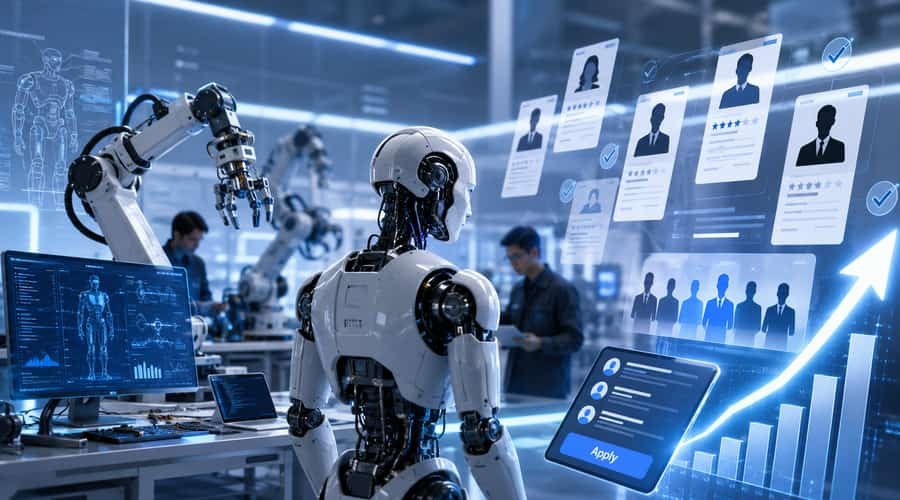
OpenAI robotics hiring has expanded to 11 San Francisco roles, according to Startup Fortune, a signal that the company is rebuilding practical in house capability for physical AI. The openings span hardware, simulation, data acquisition and machine learning, suggesting a move beyond passive investment in humanoid robotics and toward direct work on embodied systems.
The job list cited by the source includes a 3D Printing Lab Technician, Actuator Design Engineer, DAQ Station Engineer, Electrical Engineer, Simulation Applications Engineer, Operations Manager for Data Acquisition, plus machine learning and software roles tied to distributed data systems. Taken together, those roles point to a company assembling the infrastructure needed to collect physical data, test hardware, and connect model training to real world robot behavior.
What OpenAI robotics hiring reveals
Startup Fortune frames the new hiring as more practical than symbolic, and the roles support that interpretation. They cover the difficult layers of robotics, including lab operations, actuator design, perception infrastructure, simulation, and the data systems that convert noisy sensor inputs into training material.
The source also notes that OpenAI previously stepped away from robotics research after concluding it lacked enough real world data to train useful systems at scale. That earlier constraint remains central to robotics, but the environment has changed: vision language models are stronger, sensors are cheaper, and simulation tools have improved, while humanoid robotics has become a far more active commercial category.
Even so, the hiring should not be read as evidence of an imminent OpenAI humanoid product. As the source notes, staffing is an early signal rather than a launch. It does, however, indicate that OpenAI wants direct exposure to the bottlenecks that matter in robotics, especially data collection, feedback loops between deployment and training, and the challenge of maintaining reliable performance outside controlled demos.
Investments, partnerships, and humanoid competition
OpenAI has already been involved in humanoid robotics through investment activity. Startup Fortune reports that the OpenAI Startup Fund led 1X Technologies’ $23.5 million Series A2 round in 2023, and that OpenAI later joined Figure AI’s $675 million funding round alongside Microsoft, Nvidia, and Jeff Bezos.
Those ties matter because a company can invest in robotics without taking on the burdens of motors, batteries, manufacturing failures, or field support. Building internal teams around hardware integration, simulation, electrical systems, and data acquisition is a different step. It suggests that OpenAI is no longer limiting itself to supplying models or capital, but may want to shape more of the learning stack behind humanoid systems.
That creates strategic tension for startups. Figure AI is described in the source as building humanoid robots for labor heavy environments, and OpenAI’s earlier involvement helped validate the role large AI models could play in robot control and interaction. But if OpenAI is building its own robotics capability, companies that once saw it as an infrastructure partner may have to consider where collaboration ends and competition begins.
The competitive effect may be felt first in recruiting. Startup Fortune argues that engineers with experience in calibration, sensor fusion, simulation realism, real time control, and robot data pipelines were already in demand at Figure AI, 1X, Tesla, Agility Robotics, Physical Intelligence, and warehouse automation firms. OpenAI entering that same labor market could push compensation higher and make specialized hiring more difficult across the humanoid sector.
Leadership questions and the next signals
The source adds a governance dimension to the story. It cites CNBC’s 2024 report that OpenAI hired former Meta hardware executive Caitlin Kalinowski to focus initially on robotics work and partnerships aimed at bringing AI into the physical world.
Startup Fortune further reports that Kalinowski reportedly resigned in March 2026 after raising concerns about OpenAI’s Pentagon work and guardrails around surveillance and lethal autonomy. That account, if accurate, places robotics governance alongside technical execution as a key issue, especially when embodied AI systems may operate in workplaces, warehouses, homes, or defense related settings.
For humanoid robotics, the broader implication is that embodied AI is moving closer to the center of competition among major model developers. The source points to Google DeepMind’s Gemini Robotics work, Nvidia’s tools for physical AI, and Tesla’s continued positioning of Optimus as a long term AI product, not only a hardware effort.
The next indicators will be operational rather than theatrical. If OpenAI continues adding roles across perception, controls, hardware integration, simulation, and data acquisition, and if it rebuilds senior robotics leadership after Kalinowski’s reported exit, the industry will have stronger evidence that this is a sustained strategy. For humanoid companies, that would mean dealing not only with a powerful model supplier, but potentially with a well funded competitor for both talent and core robotics know how.
Source: startupfortune.com