RoboStore plans US humanoid robot production for 2027
RoboStore, formerly a major North American distributor of Unitree humanoid robots, plans to manufacture its own commercial robots at a 66,000 square foot facility on Long Island, New York. The company expects the site to be fully open by the first fiscal quarter of 2027.
The business has created Robo Inc. to manage robot development, manufacturing, and systems integration, according to Ars Technica. Its initial humanoid projects include a wheeled healthcare platform and a separate system intended for universities and research organizations.
RoboStore founder and CEO Teddy Haggerty said the distributor had sold more than 1,500 robots and worked with over 150 universities. Customers cited in the report include Harvard, MIT, Amazon, Nvidia, Cisco, and OpenAI. The figure covers both Unitree humanoids and quadrupeds rather than humanoid robots alone.
Import restrictions accelerated the manufacturing plan
RoboStore had been considering domestic robot production for about a year while helping customers deploy and integrate imported systems. The timetable accelerated as the US government pursued restrictions on foreign made robots through proposals including the American Security Robotics Act and the GUARD Act.
In July, the Federal Communications Commission banned imports of new foreign robot models, including Unitree humanoids, citing potential cybersecurity vulnerabilities and national security concerns. RoboStore subsequently closed its distribution operation, although it has promised continued parts, repair, and upgrade support for robots already sold.
The company is not arguing that humanoid form factors suit every automation project. Haggerty told Ars that dedicated robotic arms from suppliers such as Standard Bots and Universal Robots are better suited to most business applications than general purpose humanoids. That is a practical distinction for an integrator now designing its own hardware around specific customer requirements.
Healthcare and research platforms come first
Robo Inc.’s healthcare concept uses a humanoid torso mounted on a wheeled chassis rather than a bipedal body. Cameras and sensors would allow it to take standard patient measurements, including temperature and blood oxygen levels. Concierge work is another proposed application.
A separate humanoid robot platform is being developed for educators and researchers seeking a product that complies with US requirements. The company has not disclosed specifications for either platform, including dimensions, degrees of freedom, payload, battery life, autonomy, or pricing.
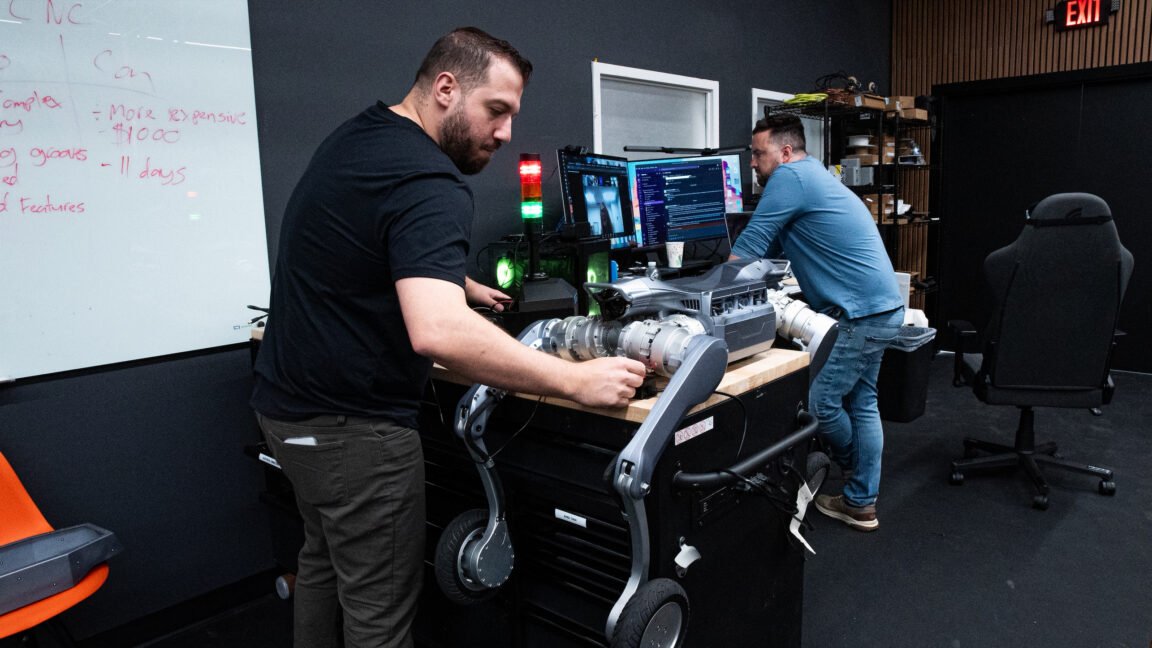
Engineers have used 3D printing to construct prototypes, which the company says are being tested by selected customers. Robo Inc. is also preparing its first major outside funding round after operating as a bootstrapped business. Commercial versions are targeted for early 2027, leaving the company less than a year and a half to finalize its designs, establish suppliers, and prepare the Long Island plant for production.
Source: arstechnica.com