
JoyIn unveils Aether humanoid model amid OpenAI dispute
Chinese humanoid robotics startup JoyIn has unveiled Aether, a control model that it says can help humanoid robots learn tasks faster and complete them successfully on the first attempt. The Suzhou company announced the model while publicly accusing OpenAI of copying some of its technical concepts and website design, claims that remain unverified.
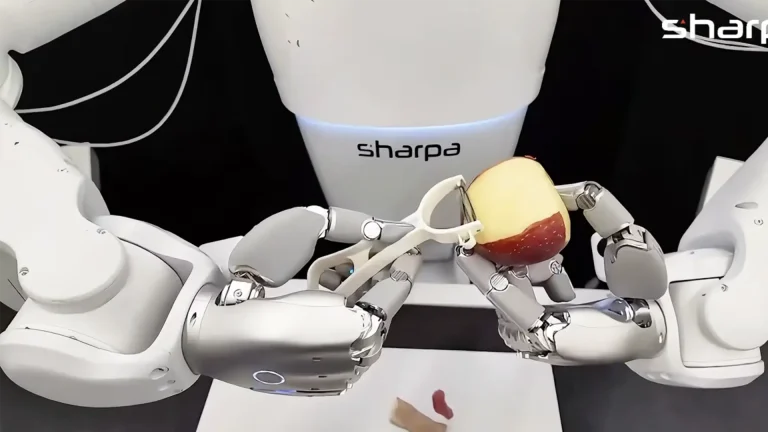
Aether uses what JoyIn describes as a perceptive approach to robot control rather than relying primarily on text. According to CNBC, the company claims the model gives humanoids a 90% task success rate on the first attempt. Zhu Mingxuan, who led its development, also told the outlet that Aether reduced training time by two thirds.
Those are potentially useful results for humanoid operators, but the report does not specify the robot platform, task set, trial count or evaluation conditions behind the 90% figure. Without that information, the claim cannot yet be compared meaningfully with other humanoid learning systems.
Developer brings experience from Figure
Zhu said she left U.S. humanoid company Figure last year. At Figure, she had worked on models designed to help humanoid robots imitate human actions, according to CNBC.
She plans to release some components of Aether as open source, including technology related to touch. Portions concerned with energy use will remain closed. JoyIn has not provided a schedule for those releases in the reported announcement.
JoyIn alleges similarities with OpenAI
JoyIn CEO Guo Renjie published a letter in Chinese alleging similarities between the startup’s work and OpenAI’s GPT-6 Astra presentation. Guo said JoyIn had presented an “extraterrestrial visitor” model framework in Silicon Valley several weeks before OpenAI published an essay titled “An Alien Mind” on Sept. 6.
He also pointed to shared concepts including recursive self improvement and the use of AI to optimize computing resources. CNBC noted that such concepts already exist within wider AI research and can be implemented differently. Guo separately alleged that the outer space visual design used for OpenAI’s Astra page resembled an Aether website that JoyIn had released two months earlier.
Guo said JoyIn had begun the process of filing a lawsuit. CNBC could not independently verify the allegations, and OpenAI did not immediately respond to its request for comment. For humanoid robotics, the more consequential part of JoyIn’s announcement is whether Aether’s reported training and task performance can be reproduced under disclosed test conditions.
Source: CNBC