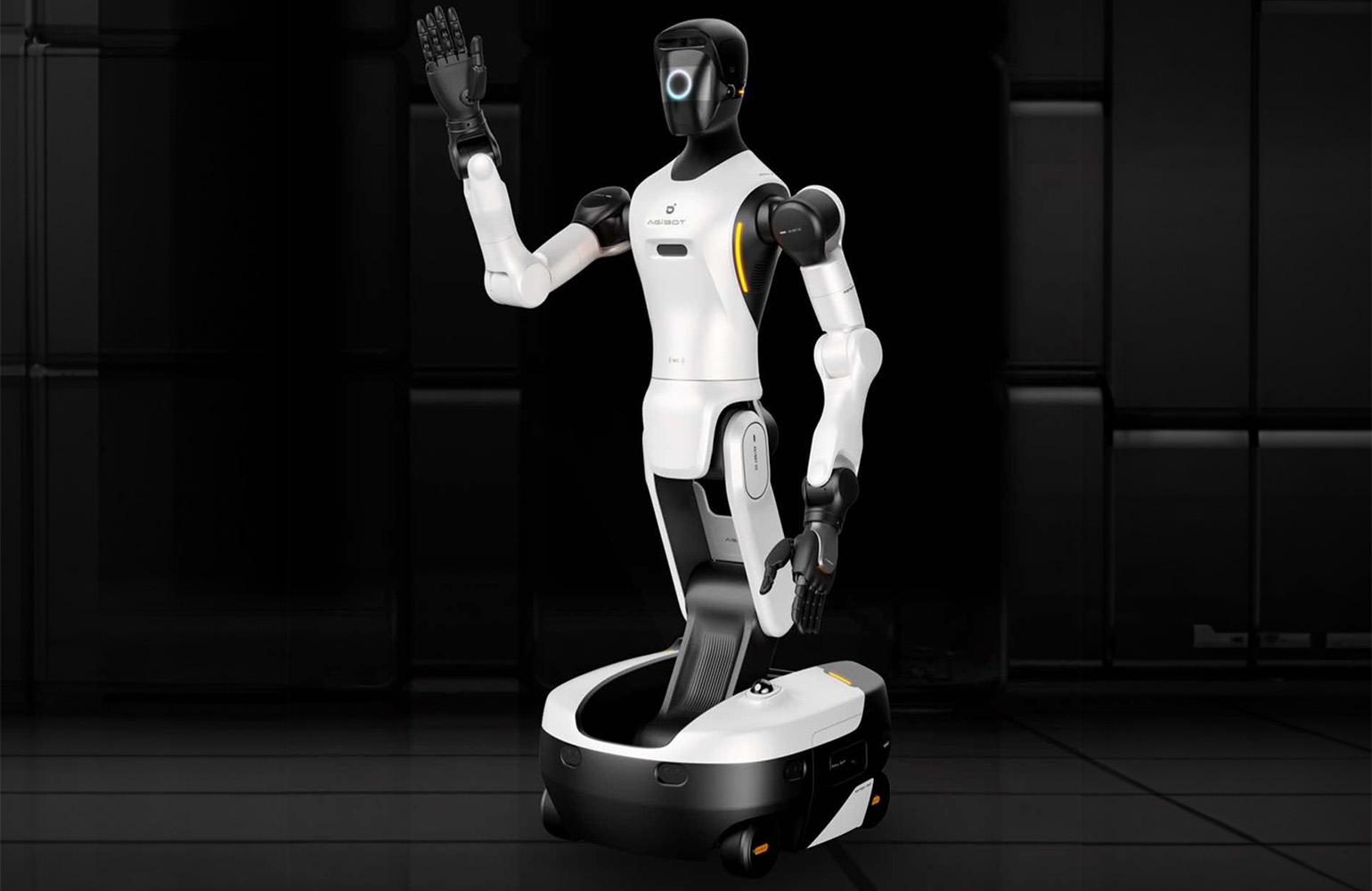
AGIBOT scales semi-humanoid robots in electronics lines
AGIBOT has deployed its G2 semi-humanoid robots into a live consumer electronics manufacturing environment, marking a shift from pilot projects to sustained industrial use. The deployment is taking place at Longcheer Technology, where multiple units have been integrated into tablet production lines.
The companies describe the rollout as a step toward large scale adoption of embodied AI systems within core manufacturing workflows. The robots are operating alongside human workers in production settings, handling tasks that require precision and adaptability rather than fixed automation.
Within Longcheer’s facilities, the G2 robots are assigned to multimedia testing stations. Their responsibilities include loading and unloading tablets, placing devices into fixtures with millimeter level accuracy, and sorting completed or defective units. The robots also navigate factory layouts autonomously, supporting high speed assembly operations.
AGIBOT positions the system as an alternative to conventional industrial automation, which often relies on rigid tooling and lengthy reconfiguration cycles. In contrast, the G2 platform is designed for mixed model production without custom hardware changes, enabling faster changeovers and reduced downtime.
The company reports that the deployment has achieved measurable performance metrics. Throughput reaches up to 310 units per hour, with cycle times of approximately 19 to 20 seconds per operation. Reported success rates exceed 99 percent during continuous operation. A single robot can support output of around 3,000 units per shift while maintaining stable operation with minimal human intervention.
Operational continuity is supported by features such as dual hot swappable batteries and pass through charging, enabling near continuous runtime. AGIBOT states that cumulative continuous operation has exceeded 140 hours, with downtime losses below 4 percent.
The G2 robot features 26 degrees of freedom and is built using automotive grade components with IP42 protection, targeting durability in industrial environments. Its performance is driven by an embodied AI stack that combines simulation based validation, reinforcement learning, and on device intelligence to reduce setup time and manual tuning.
Longcheer plans to expand the deployment to 100 units by the third quarter of 2026. The companies indicate that the approach could extend beyond consumer electronics into sectors such as automotive, semiconductors, and energy.
The deployment highlights a broader trend in humanoid and semi-humanoid robotics, where general purpose systems are being evaluated as flexible alternatives to fixed automation. While still early in scale, the integration of such systems into high volume manufacturing environments provides a concrete benchmark for reliability, throughput, and economic viability.
Source: therobotreport.com