Audi humanoid robot trial targets parts sequencing in Ingolstadt
Audi is testing wheeled humanoid robots to pick and sequence vehicle parts in the Production Lab at its Ingolstadt plant, according to The Gadgeteer. The proof of concept brings together Audi, Agile Robots, Dassault Systèmes and NVIDIA, with a small fleet being evaluated before Audi decides whether to expand the project.
The partners announced the work on October 21 at NVIDIA GTC Berlin. The robots retrieve parts from material containers and place them in the order needed for final assembly. Audi’s wider parts operation involves around one million picks a day, according to the report; that figure describes the logistics workload, not the robots’ output.
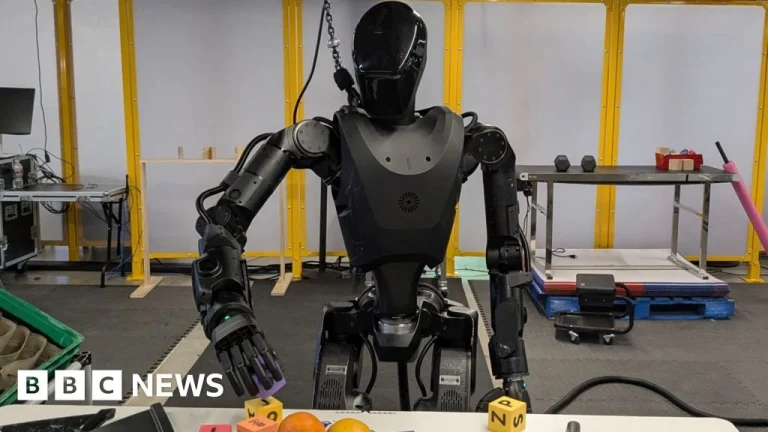
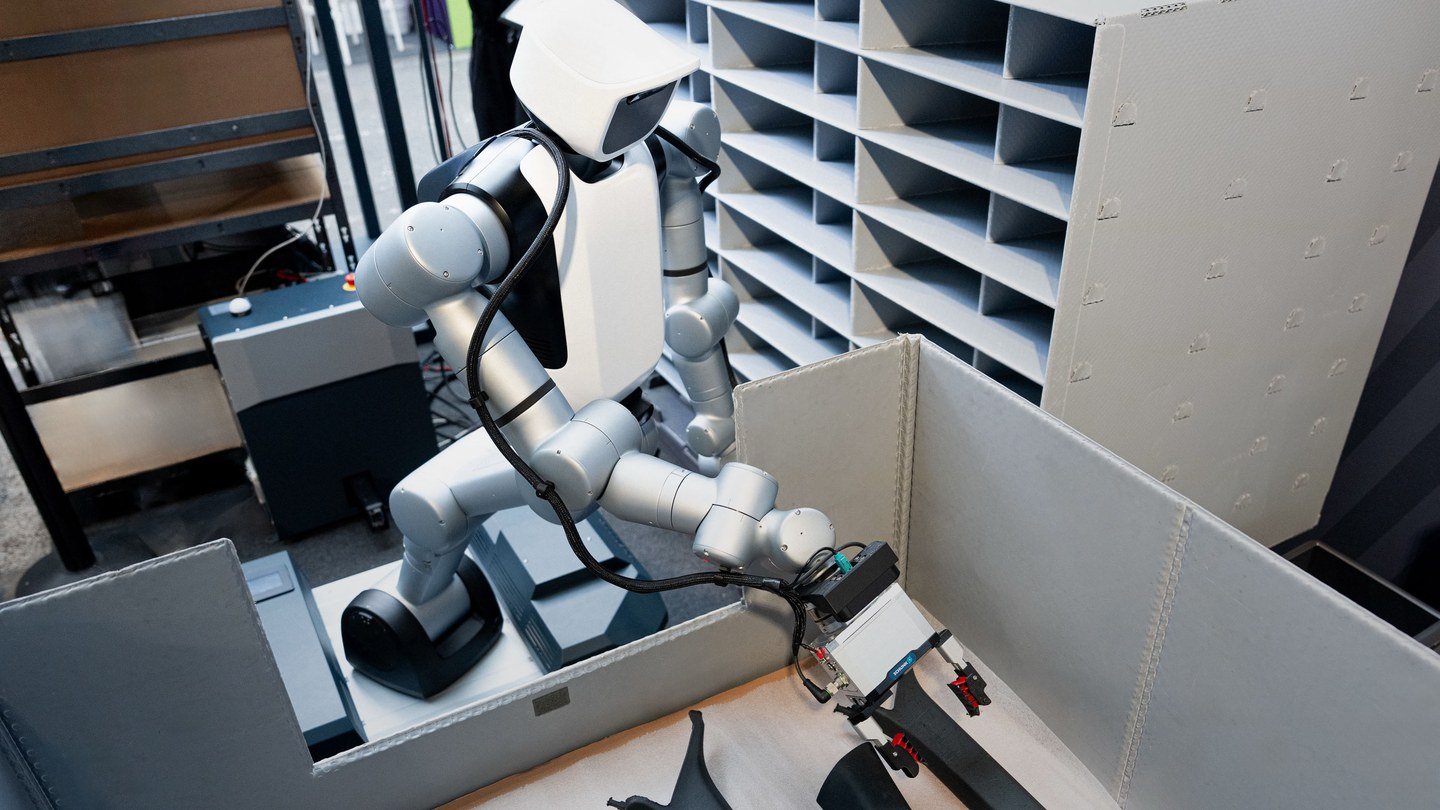
The Audi humanoid robot trial uses a new mobile design from Munich based Agile Robots. It combines a wheeled base with a human proportioned upper body, two arms and grippers, operating at human working height. The intended advantage is compatibility with existing workstations rather than a production line rebuilt around the machine.
Two arms for variable parts and packaging
Sequencing presents a manipulation problem as much as a scheduling one. Parts arrive unsorted in containers, with different shapes, orientations and packaging. Large or flexible components can require coordinated handling rather than a single grasp.
According to The Gadgeteer, the robots use image recognition to identify parts and determine how to grasp them without damage. Their two arms are intended to handle larger and flexible items together. Training combines real photographs of parts with synthetic images generated in simulation to expose the system to variation before physical handling.
The useful test here is whether that combination can perform a specific logistics task reliably, not simply whether a humanoid can pick up a component. Audi says it cannot yet give a timeframe for routine production use. Gerd Walker, Audi’s board member for production and logistics, described picking within sequencing as a longstanding automation challenge, with the evaluation set to determine the project’s next steps.
Validating the job in simulation
Dassault Systèmes is building a virtual twin of the logistics environment using DELMIA on its 3DEXPERIENCE platform and NVIDIA Omniverse libraries. The report identifies NVIDIA’s Isaac GR00T foundation model as part of the robot training approach.
The simulation work addresses the whole assignment, rather than grasping alone. Engineers use the virtual environment to assess feasibility, cycle times, ergonomics and safety before the robots carry out the sequence physically. Dassault Systèmes’ Philippe Laufer framed that advance in engineering and mission validation as the central contribution of the project.
Source: The Gadgeteer