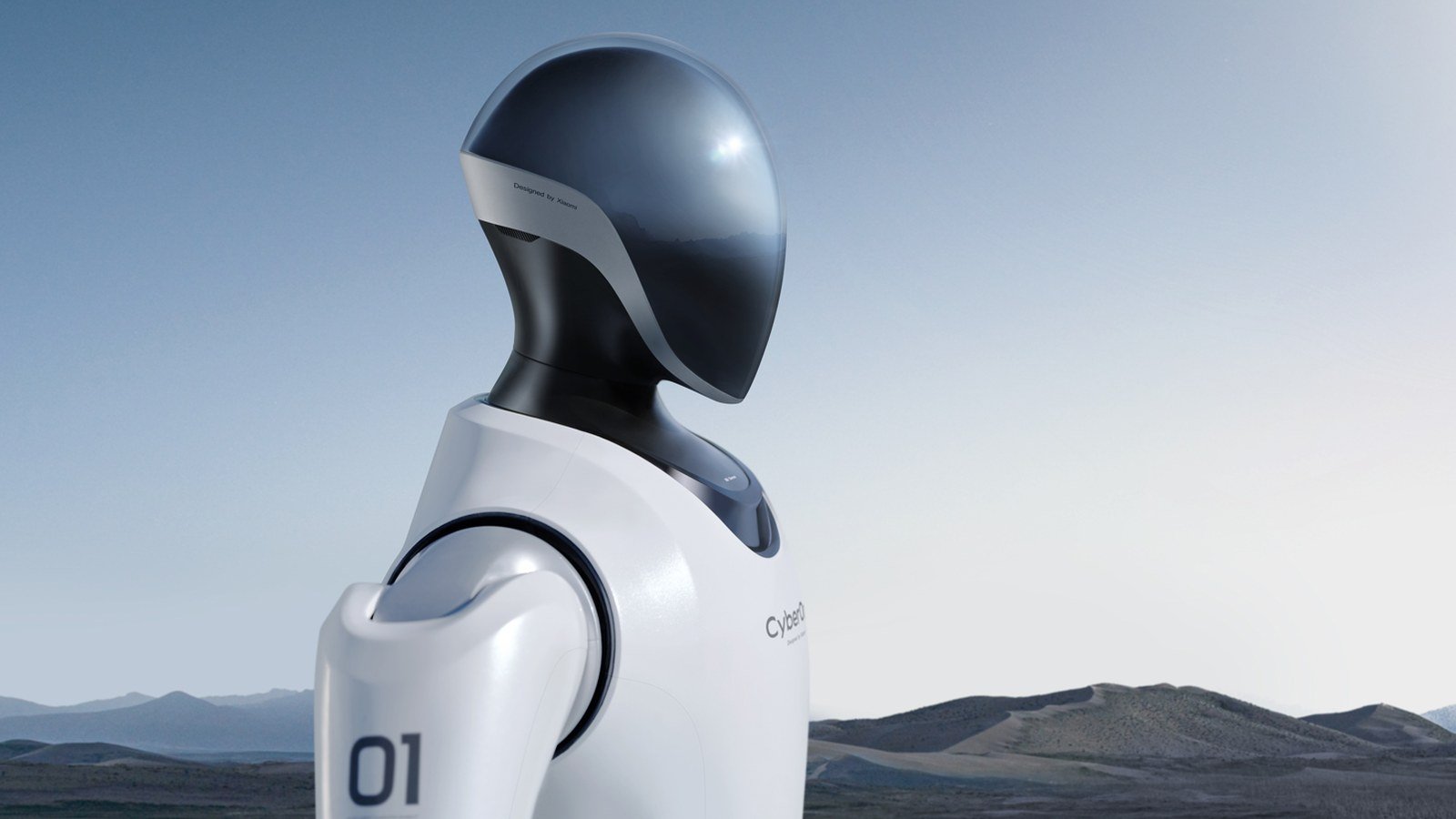
Xiaomi humanoids complete reported eight hour factory sorting test
Xiaomi says two of its humanoid robots completed an eight hour parts sorting trial at its electric vehicle factory, meeting one workstation’s daily production requirements with two charging stops. According to Martin Cid Magazine, the robots retrieved flexible plastic panels from bins and placed them into racks in the sequence required by the assembly line.
The report identifies the machines as CyberOne 02, citing Chinese coverage of footage posted on Weibo by Xiaomi founder Lei Jun. They are described as successors to the CyberOne humanoid Xiaomi first showed in 2022.
The task involves the covers fitted beside a car’s centre console. These arrive in bins at random orientations, requiring the robots to identify each panel’s pose, grip it without deforming it and place it into the correct rack slot. It is a manipulation problem involving variable presentation and flexible parts, rather than simply repeating a fixed pick and place motion.
According to the report, the pair stopped to recharge at 3 hours 2 minutes and again at 6 hours 3 minutes, finishing the run at 8 hours 5 minutes. Xiaomi says the humanoids detected and corrected errors while remaining synchronized with the line’s control system. The company describes the trial as a preliminary validation at one workstation.
A station trial, not a fleet deployment
The footage also shows the support equipment around the Xiaomi humanoids. Mobile robots deliver bins, while the humanoids adjust their route and stride to receive them. In one reported incident, a wheeled robot retrieves a dropped panel.
The roughly six minute video is accelerated and filmed from a wide viewpoint, according to Martin Cid Magazine. The report says Xiaomi has not published a shiftwide sorting success rate. The eight hour figure therefore describes the reported trial duration, rather than a measured reliability result.
Lei’s stated rationale for using humanoids is flexibility: the same hardware could take on another job without modification. For factory operators, that makes repeatable performance across different stations a more relevant test than whether a humanoid can perform this sorting task alone.
Xiaomi has previously reported more specific results for another factory assignment. Martin Cid Magazine recounts a March trial installing self tapping nuts, for which the company claimed a 90.2% success rate over three hours while meeting a 76 second station cycle. By July, Xiaomi said that success rate had reached 98%, compared with 99% for experienced workers, and that its humanoid trials also covered panel sorting and folding returnable boxes.
Source: Martin Cid Magazine