Welcome, Tianzhen Z1!
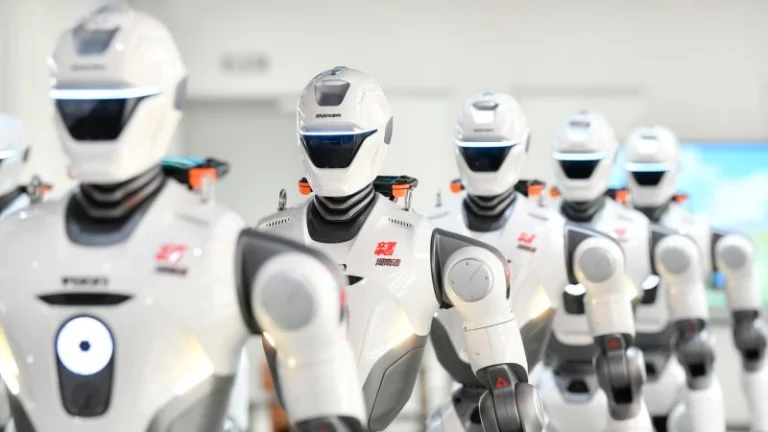
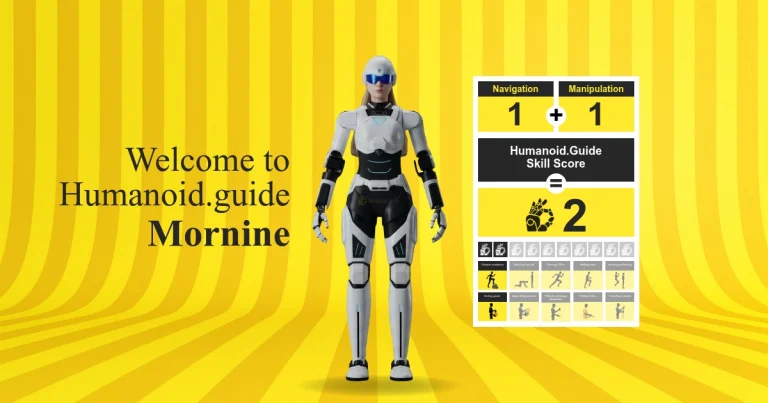
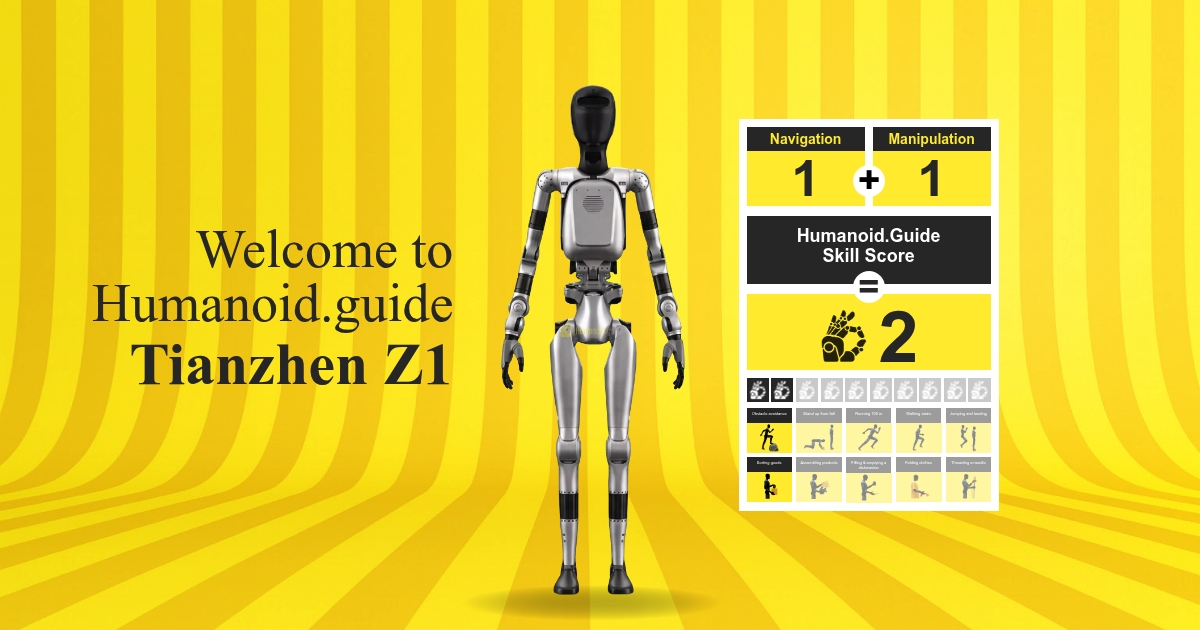
Tianzhen Z1 is a full size humanoid robot developed by Tlibot, also known as Sichuan Tianlian Robot Co., Ltd., in Mianyang, China. Standing 167 cm tall and weighing 45 kg, it combines adult scale proportions with a rounded, bionic appearance intended for approachable public interaction. Its customizable design targets exhibition guidance, commercial interaction, cultural performances, and research. The robot supports up to 40 active degrees of freedom excluding its hands, providing a physical platform for studying humanoid movement and interaction. It has ten fingers, with five on each hand. Listed specifications include a maximum speed of 4 km/h, a strength specification of 6 kg, and two hours of operation per charge. Its overall skill score is 2 out of 10, placing it in the early stage category rather than among mature general purpose humanoids. Navigation and manipulation are each rated 1 out of 5. Confirmed capabilities include obstacle avoidance and sorting goods, establishing a limited but concrete starting point for physical task development.
Obstacle avoidance and sorting goods define Tianzhen Z1’s demonstrated capability set. Obstacle avoidance is relevant to navigation in exhibition spaces and commercial environments, where the robot must account for objects along its route. Sorting goods provides a concrete manipulation task for research into object handling and organized placement. Together, these capabilities give researchers two distinct areas to evaluate: navigation around obstacles and manipulation during sorting. The navigation and manipulation ratings of 1 out of 5 indicate preliminary performance tiers, not counts of actions or physical joints. For prospective users, the useful technical emphasis is therefore on evaluating these specific functions within a defined setting, rather than treating the platform as an established solution for unrestricted physical work.
Tianzhen Z1 is listed as a prototype with an advertised price of USD 35,000. Its manufacturer, Tlibot, is based in China and provides a company website at www.tlibot.com. The prototype designation is important context for buyers considering the robot for exhibitions, commercial interaction, or research programs. Its broader significance lies in combining a full size humanoid format, customizable appearance, and a relatively light 45 kg body in one development platform. The early stage skill rating keeps expectations grounded: this is a platform with specific confirmed functions, not a mature substitute for general human labor. For organizations exploring humanoid robotics, it offers a concrete subject for assessing how obstacle avoidance and goods sorting fit their intended setting.