IDTechEx forecasts humanoid robot costs will fall sharply by 2030
IDTechEx is forecasting a steep drop in humanoid robot costs over the rest of the decade, with average selling prices falling from $114,700 in 2024 to $37,000 by 2030. As DC Velocity reports, the same market outlook also warns that return on investment will not move in lockstep with lower purchase prices, making payback a more case specific question than the headline cost decline might suggest.
Humanoid robot costs in the IDTechEx outlook
The forecast, as summarized by DC Velocity, is notable because it frames the humanoid market through economics rather than through a single product launch or demonstration. According to IDTechEx, the average selling price for humanoid robots is expected to decline sharply between 2024 and 2030, moving from a six figure level toward a much lower figure by the end of the decade.
That kind of pricing shift matters because hardware cost remains one of the most visible barriers to broader evaluation and deployment. Even without additional details from the underlying report, the figures cited by DC Velocity point to a market that expects much more aggressive cost compression as humanoid platforms mature.
For suppliers, that implies pressure to scale manufacturing and reduce the price of complete systems. For buyers, it suggests that the discussion around humanoids may increasingly move from whether machines can be acquired at all to whether they can be justified in a specific operating environment.
Why ROI could vary
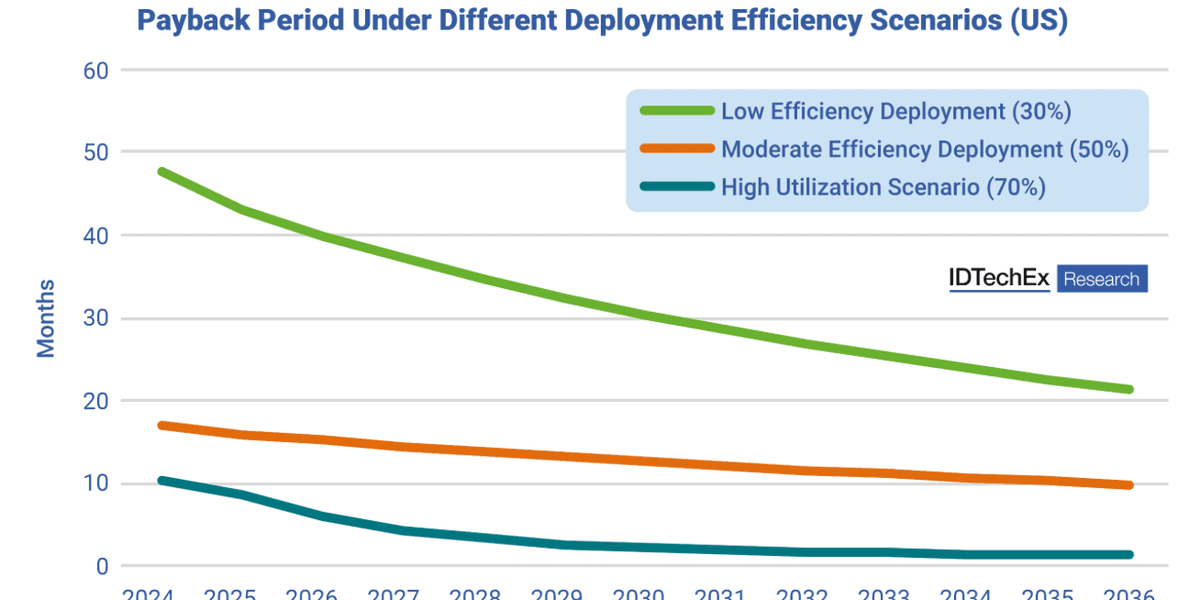
The caution in the headline is just as important as the projected price decline. Lower purchase prices can improve the economics of adoption, but they do not guarantee that every humanoid deployment will reach the same payback period or produce the same operating benefit.
DC Velocity’s summary refers to a graph of payback on robotics, indicating that the underlying analysis distinguishes between cost and realized return. In practical terms, return on investment depends on more than the sticker price. It is shaped by how much useful work a robot can perform, how consistently it can stay in operation, and how much supporting effort is required to put it into production.
That distinction is especially relevant in humanoid robotics, where a platform may be promoted as general purpose but still face very different conditions from one site to another. A lower average selling price could expand the number of organizations willing to test a system, while still leaving wide variation in how quickly those tests convert into repeatable business value.
What the forecast means for humanoid deployments
For operators and technical decision makers, the forecast suggests that list price alone will become a less useful shorthand for readiness. If humanoid robot costs do fall as IDTechEx expects, procurement teams will still need evidence on deployment performance, task suitability, and the operational effort required to integrate the machines into existing workflows.
The report summary also reinforces a point that has become central across the humanoid sector: commercial progress will be measured not only by lower hardware prices, but by whether those lower prices translate into predictable payback. A cheaper machine that remains difficult to deploy can still struggle to meet internal investment thresholds, while a more expensive system can be justified if it delivers dependable output.
That leaves the next phase of the market focused on execution. The pricing trajectory highlighted by IDTechEx is likely to attract more attention to humanoid programs, but the stronger signal for the industry will come from whether vendors can pair falling costs with repeatable return in real deployments.
Source: dcvelocity.com