Welcome, GR-Dexter!
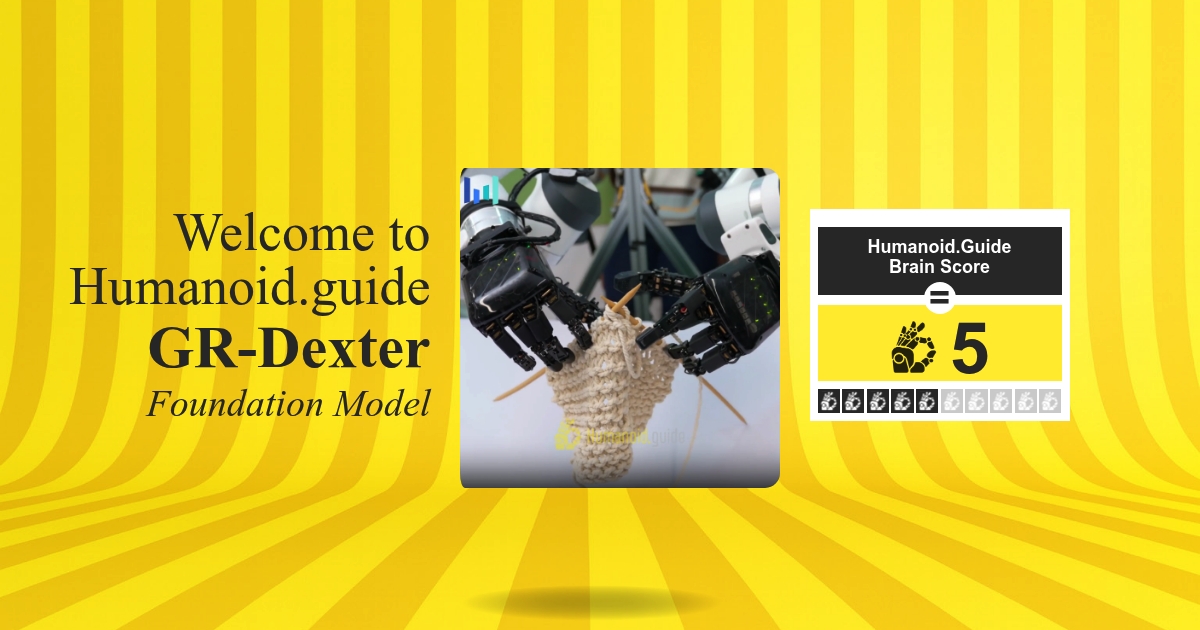
Developed by ByteDance Seed, the AI research team within ByteDance, this robot foundation model focuses on software for dexterous robotic hands. Introduced in December 2025, it belongs to a research direction that brings general AI methods into robotic control rather than treating every task as a separate programming project. Its foundation model designation identifies it as a software component, not a complete humanoid robot or a standalone robotic hand. The project originates in China and sits within ByteDance Seed’s broader robotics research portfolio. Its training combines remotely controlled robot demonstrations, data collected from other robots, and videos of people using their hands. These sources bring different forms of task information into the development process. A Humanoid Guide Brain Score of 5 out of 10 places the model in the developing range. That rating positions it as an ongoing foundation model effort, rather than establishing mature deployment readiness or leadership across robotics benchmarks.
The training approach connects several distinct sources of robotics information. Remotely controlled demonstrations provide examples recorded through robot operation, while data from other robots adds material from additional hardware contexts. Human hand videos introduce a separate observational source. These are training inputs, not interchangeable measurements of performance. Evaluating a foundation model for dexterous robotics requires separating the composition of its training material from evidence about its behavior. Useful assessment questions include how demonstrations are collected, how evaluation tasks are selected, and whether results remain consistent across repeated trials. This distinction matters when comparing research projects: a varied training dataset describes the development approach, while measured outcomes establish the scope of demonstrated performance.
The listing marks the model as available on backorder and displays a price of zero dollars. Those storefront details should not be treated as a software license, a deployment agreement, or confirmation that associated hardware is included. ByteDance Seed is identified as the manufacturer, and the project has a dedicated research website alongside the organization’s main website. Its broader significance lies in the involvement of a major AI research organization in foundation models for robotics, particularly research centered on dexterous hands. For researchers and prospective adopters, the practical next step is to consult official project materials for release terms, access arrangements, and evaluation documentation before making procurement or integration decisions.