Welcome, Billi!
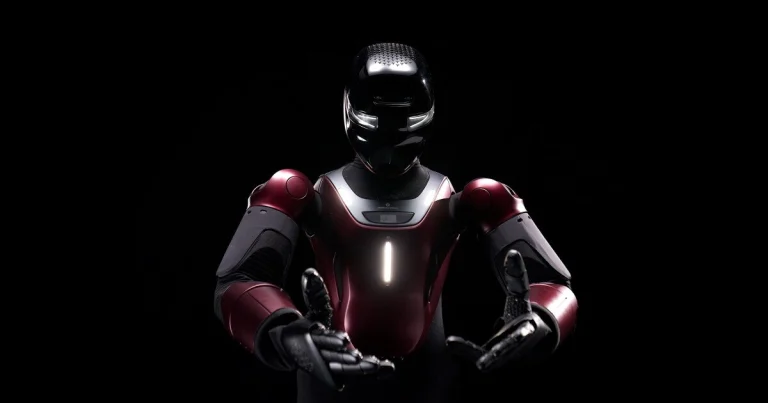
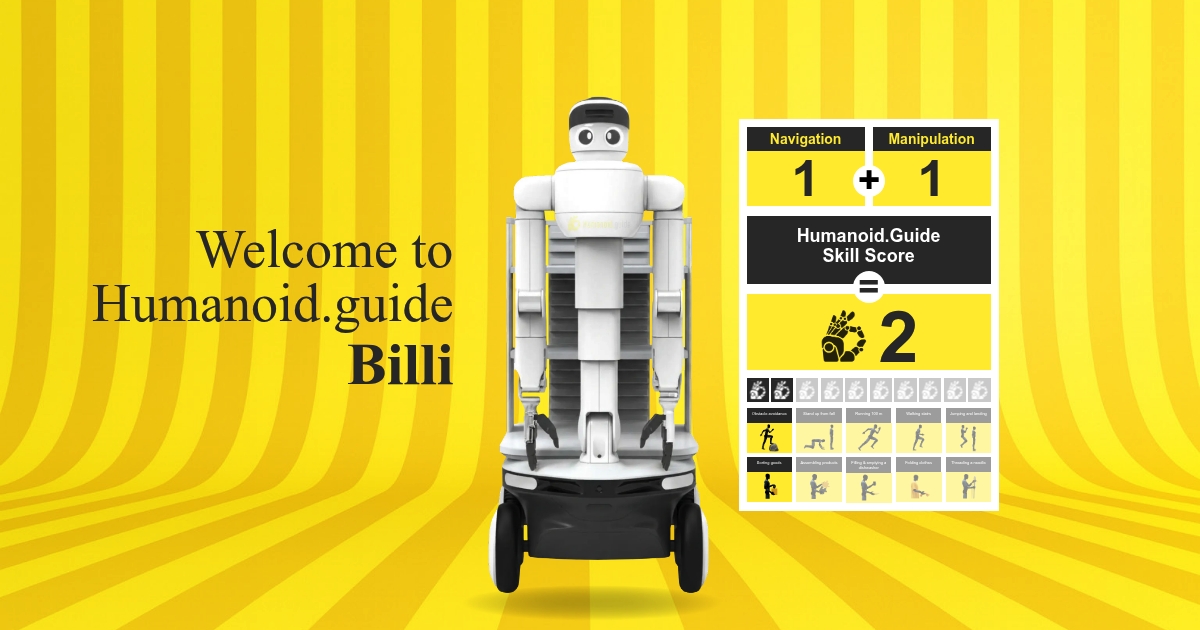
Billi is a wheeled hybrid humanoid robot developed by NEUBILITY, a South Korean robotics company, for industrial logistics, manufacturing, distribution, and material handling environments. Its design combines a mobile base with a humanlike upper body, two arms, and hands with five fingers each. A rotating upper body with adjustable height gives the platform a configurable physical arrangement for workplace interaction. Billi stands 149.7 centimeters tall, weighs 110 kilograms, and has a listed maximum speed of 6 kilometers per hour. Its listed strength specification is 4 kilograms. The robot uses camera based perception and navigation, with obstacle avoidance and sorting goods among its demonstrated capability categories. Its overall Humanoid.Guide Skill Score is 2 out of 10, placing it in the early stage category rather than among mature general purpose systems. Navigation and manipulation are each rated 1 out of 5. These ratings describe preliminary capability tiers, while the combination of wheels, arms, and hands defines its practical approach to industrial robotics.
Obstacle avoidance and sorting goods are the central capabilities to consider when assessing Billi for a workplace. Camera based perception supports its navigation approach, while its wheeled configuration distinguishes it from humanoids built around legged movement. For sorting applications, the relevant physical features include its two arms, ten fingers in total, and upper body that can rotate and change height. These elements bring a humanoid manipulation layout to a mobile industrial platform. Distribution facilities and manufacturing environments are relevant settings for evaluating these functions. The navigation and manipulation ratings of 1 out of 5 keep expectations grounded: Billi represents an early platform for these activities, not a broadly validated replacement for established industrial automation.
Billi is listed as a prototype, with a displayed price of 35,000 US dollars and an inquiry option for prospective buyers. Its development reflects an approach to humanoid robotics that prioritizes wheels and a configurable upper body over reproducing the full human form. For organizations considering industrial robotics, its significance lies in bringing mobile navigation and goods sorting into one humanoid style platform. Prototype status is an important part of that assessment, particularly when planning evaluations in operational facilities. A useful procurement discussion would center on the intended sorting workflow, obstacle avoidance requirements, and suitability for the specific workplace. The early overall score reinforces the importance of practical evaluation rather than assumptions about broad autonomy.