Unitree launches humanoid robot motion App Store for robot skills
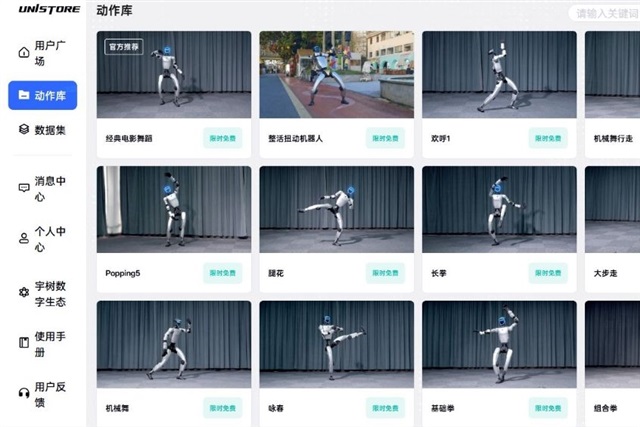
Unitree Robotics has launched a humanoid robot motion App Store, according to Digitimes, presenting it as a marketplace where users can download and install robot skills much as they would smartphone apps. Reported on May 11, the announcement matters because it shifts part of the humanoid competition from hardware performance alone to the packaging, distribution, and reuse of motion capabilities.
What Unitree announced
The public details are limited because the Digitimes report is behind a subscription wall, but the central claim is unusually specific. Unitree describes the offering as the world's first store focused on humanoid robot motion applications. That wording suggests a software layer centered on actions and behaviors, rather than a broad catalog for every part of a robot system.
According to Digitimes, the operating model is straightforward: users browse, download, and install skills onto a humanoid platform. For robotics practitioners, that is more than a convenience feature. A motion package sits close to locomotion, balance, timing, and physical interaction, which makes distribution and validation more consequential than in a conventional consumer app store.
Even from this brief description, the launch shows that Unitree wants to frame humanoid robots as upgradeable software products, not only as mechatronic systems shipped with a fixed set of functions. That is an important commercial message. It implies that additional value may arrive after deployment through downloadable behaviors, instead of only through new hardware revisions or custom engineering work.
Why a humanoid robot motion App Store matters
If implemented well, a humanoid robot motion App Store could shorten the path between a general-purpose platform and a usable deployment. Early adopters often need robots to perform a narrow set of repeatable actions, yet turning a demonstration system into a site-ready machine usually requires custom integration work. A store model suggests a more modular way to add those actions when they are needed.
The approach could also simplify capability management for fleet operators. Instead of maintaining separate internal builds for each behavior, operators could potentially standardize on packaged skills with clearer versioning and installation procedures. That would matter in settings where the same humanoid body may be reassigned from one workflow to another, and where software consistency can affect uptime as much as hardware reliability.
For developers, the concept points to a possible market structure in which motion skills become identifiable products in their own right. Whether Unitree intends a closed catalog or a broader ecosystem is not stated in the source. Still, the comparison with smartphone apps makes clear how the company wants customers to think about discovery, deployment, and repeated use of robot functionality.
Key technical questions remain
The brevity of the public description leaves many operational questions unanswered. Digitimes does not say which Unitree humanoid models are supported, how many skills are available at launch, or whether the store includes only first-party content. It also does not describe pricing, review procedures, simulation requirements, or update policies.
Those omissions matter because motion software on a humanoid has a direct connection to safety and predictability. A downloadable behavior may need to account for joint limits, terrain variation, recovery behavior, and differences in operating conditions from one site to another. In practice, operators will want to know how Unitree handles testing, compatibility, rollback, and approval before treating motion downloads as routine.
The store metaphor also raises questions about portability. If a skill is built around one hardware configuration, sensor layout, or control stack, its usefulness may be limited outside that environment. For the model to scale, developers and customers usually need clear interfaces between high-level motion intent and low-level robot control, along with predictable behavior across software versions.
Software distribution is becoming a humanoid issue
Unitree's announcement stands out because it treats software distribution as part of the product strategy for humanoid robots, not just a back-end engineering concern. As the sector moves beyond headline demos, customers will increasingly compare not only dexterity and locomotion, but also how quickly new capabilities can be installed, tested, and maintained in the field.
What follows will matter more than the claim of being first. The market will be watching for evidence of developer participation, customer uptake, and clearer governance around skill quality and safety. If those elements begin to appear, Unitree's move could mark an early shift toward app-style commercialization in humanoid robotics, where the delivery of motion skills becomes a product category of its own.
Source: digitimes.com