NASA veteran urges U.S. humanoid robotics policy push
Robert Ambrose, a former NASA robotics leader, is urging Washington to build a U.S. humanoid robotics policy around factory deployment, not research funding alone.
In an opinion piece for The Hill, Ambrose argues that federal robotics policy still treats invention as the central challenge, even though the harder problem for many manufacturers is integrating humanoid robots into existing production lines. Ambrose is chairman of Robotics and Artificial Intelligence at Alliant and previously led NASA’s Software, Robotics and Simulation Division.
The essay is not a report of new federal action. It is a policy agenda from a veteran robotics engineer, and its strongest point is practical: many small and medium size manufacturers do not have in house robotics teams able to evaluate humanoid platforms, plan integration work or train staff around them.
Tax credits aimed at factory use
Ambrose calls for a deployment specific tax incentive that would reward companies for putting humanoids to work on factory floors. He compares the idea to existing federal tools such as the research and development tax credit and investment tax credits, but argues that humanoid robotics needs support aimed at adoption rather than patents.
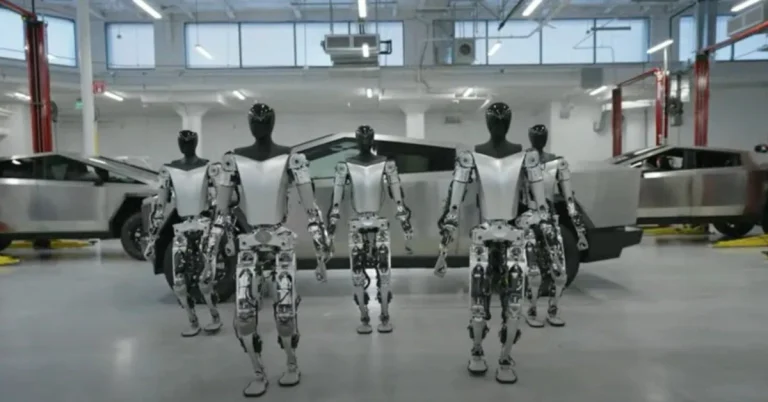
According to the piece, current examples of humanoid adoption in U.S. manufacturing include installations at BMW, Tesla and Amazon. The article does not provide details on the robots used, the scale of those deployments or measured productivity results, so those references should be read as examples of early activity rather than a broad proof point for the sector.
Ambrose also points to the Manufacturing Extension Partnership, the NIST linked network that supports manufacturing modernization across U.S. states. His proposal is to expand its mandate to include humanoid deployment experts who could help with site assessment, integration planning and workforce training.
Interoperability enters the policy argument
The more technical part of the argument concerns standards. Ambrose says safety is no longer the main bottleneck for humanoids operating near people, citing early standards work around NASA’s Robonaut 2, a General Motors collaboration that put the first humanoid in space aboard the International Space Station.
He instead identifies interoperability as the next economic problem. In his view, manufacturers adopting humanoids could face vendor lock in if robot makers use incompatible hardware, software and tooling ecosystems.
Ambrose wants the National Institute of Standards and Technology to develop standards covering communication protocols, software interfaces and robot hand attachments. For humanoid buyers, those are not abstract details. Interchangeable end effectors, predictable software interfaces and common factory communication methods would reduce integration risk and make multi vendor fleets more realistic.
The Hill essay also places U.S. policy in competition with China. Ambrose argues that the United States may lead in investment in AI for robotics operation, but that domestic manufacturing capacity remains central because robot design and production improve through tight feedback between engineering teams and factory use.
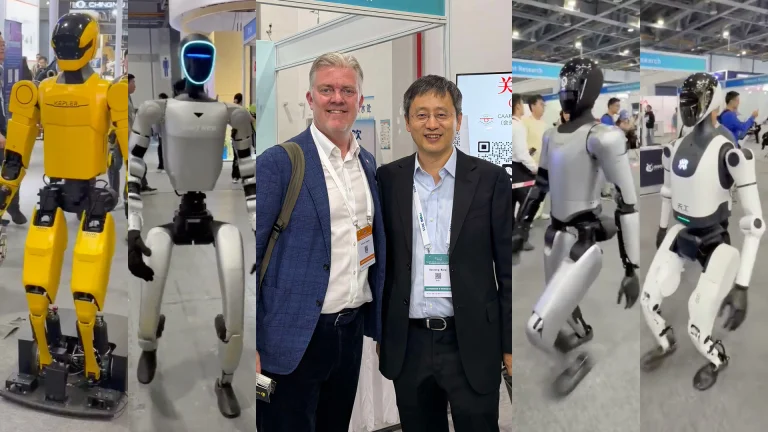
He cites the 2026 Institute of Electrical and Electronics Engineers Robotics and Automation conference, saying almost all humanoids on display were from China and that Chinese teams dominated the research papers as well. The claim is presented in the source as part of an opinion argument, not as an independently audited market ranking.
The proposed U.S. humanoid robotics policy package is narrow: deployment tax incentives, expanded manufacturing extension support and interoperability standards while the market is still forming. The piece leaves open the harder implementation questions, including which humanoid deployments would qualify for incentives and how NIST would define interfaces across fast changing robot platforms.
Source: thehill.com