Morgan Stanley forecasts tens of billions of robots in two decades
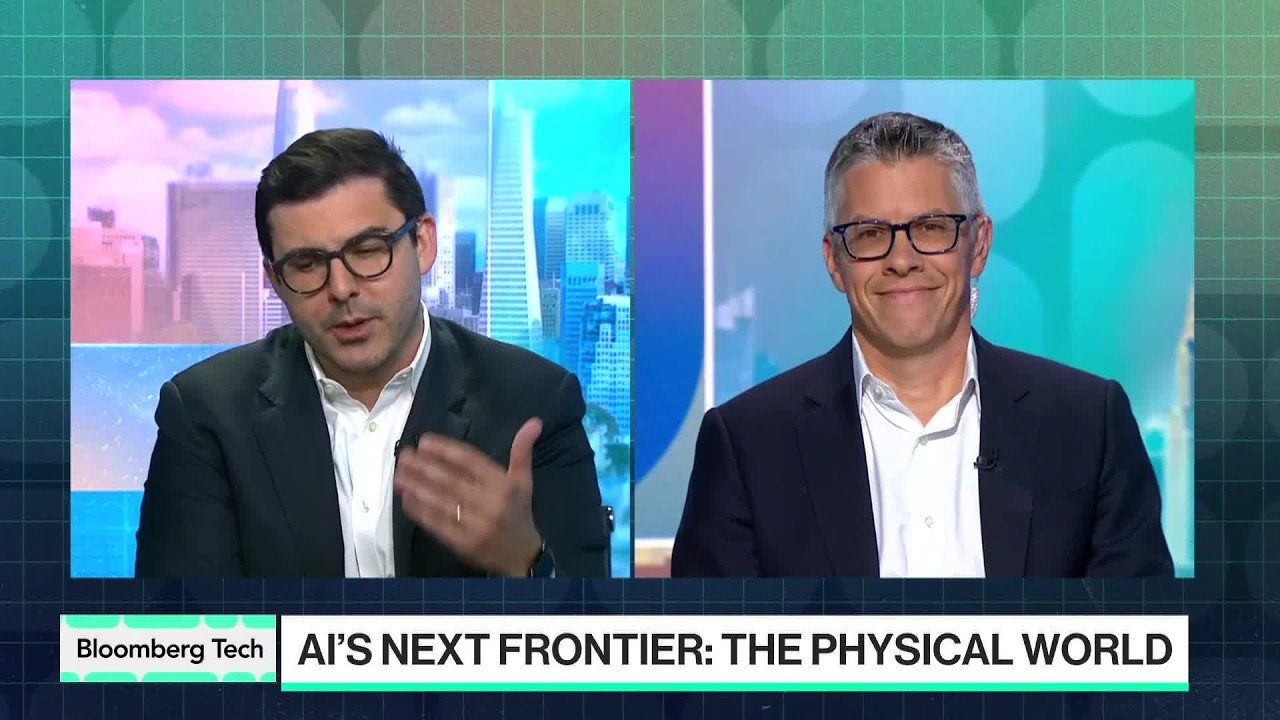
Morgan Stanley strategist Adam Jonas expects tens of billions of robots to enter daily life within the next one to two decades, with humanoids forming only one part of a much larger physical AI economy. In an interview published by Bloomberg Tech, Jonas linked the expansion of robotics to manufacturing capacity, supply chain policy, edge computing and tighter regulation.
His most aggressive projection is that combining AI with robotics could multiply global GDP by eight to ten times. The interview did not provide the assumptions behind that estimate, and it should be read as a long range scenario rather than an evidenced near term forecast. Jonas also described physical AI as potentially socially destabilizing and decisive for military competition.
Humanoids are one form factor among thousands
Jonas said the humanoid form receives disproportionate attention and currently functions partly as a recruiting and capital raising tool. Morgan Stanley’s scenarios still place the number of humanoids in the billions by 2050, but the firm expects physical AI to spread across thousands of categories, including mobile robots, industrial systems, autonomous vehicles and low altitude machines.
The core technical argument is that more inference will need to happen inside connected machines. Jonas expects any machine that can be automated and equipped with an edge inference computer eventually to receive one. Machines without that capability could face faster obsolescence, he argued.
In this model, connected robots collectively perform a substantial share of global inference instead of sending every task to centralized data centers. Jonas compared using a data center GPU for a simple inference request to using a Ferrari to collect milk. The analogy captures a real systems concern, although the interview offered no figures on power consumption, latency or the computing requirements of the proposed robot network.
Tesla and SpaceX anchor the investment thesis
Morgan Stanley views Tesla and SpaceX as complementary physical AI companies. Jonas characterized Tesla as a manufacturing and data collection layer capable of producing robots and gathering information from the physical world. SpaceX would provide connectivity and an AI infrastructure layer, including the orbital computing concept associated with Elon Musk.
Jonas declined to assign a probability to a merger between the companies. He nevertheless said investors should expect continued cooperation, centered on producing more intelligence for each unit of energy, cost and time. That remains a strategic thesis rather than a disclosed product architecture.
Tesla’s Optimus humanoid featured in the discussion, but Jonas did not present deployment figures, task performance data or other evidence that Optimus currently depends on Starlink or orbital computing. His argument concerned the eventual relationship between connected robots, local inference and wider infrastructure.
China remains embedded in the robotics supply chain
Jonas described China’s lead in manufacturing ecosystems, critical minerals, rare earths and component supply as a fact that the United States cannot quickly unwind. Morgan Stanley’s scenario analysis found no credible route to separating the US and Chinese technology ecosystems without substantial inflationary consequences.
He instead expects physical AI investment to encourage US manufacturing while preserving extensive, if politically sensitive, supply chain links with China. Producing robots at scale would also require vocational, technical and highly skilled human labor in the United States and partner economies, according to Jonas.
Regulation is built into Morgan Stanley’s base case. Jonas expects AI equipped robots to face extensive oversight because independent machines can have both civilian and military uses. He argued that regulation could alter the sequence and speed of adoption, but not prevent large scale deployment.
The interview presents an expansive physical AI forecast rather than a deployment report. Its strongest near term point is less dramatic than the GDP projection: robot production, edge compute and supply chain capacity are increasingly difficult to evaluate separately.
Source: youtube.com – Bloomberg Tech