
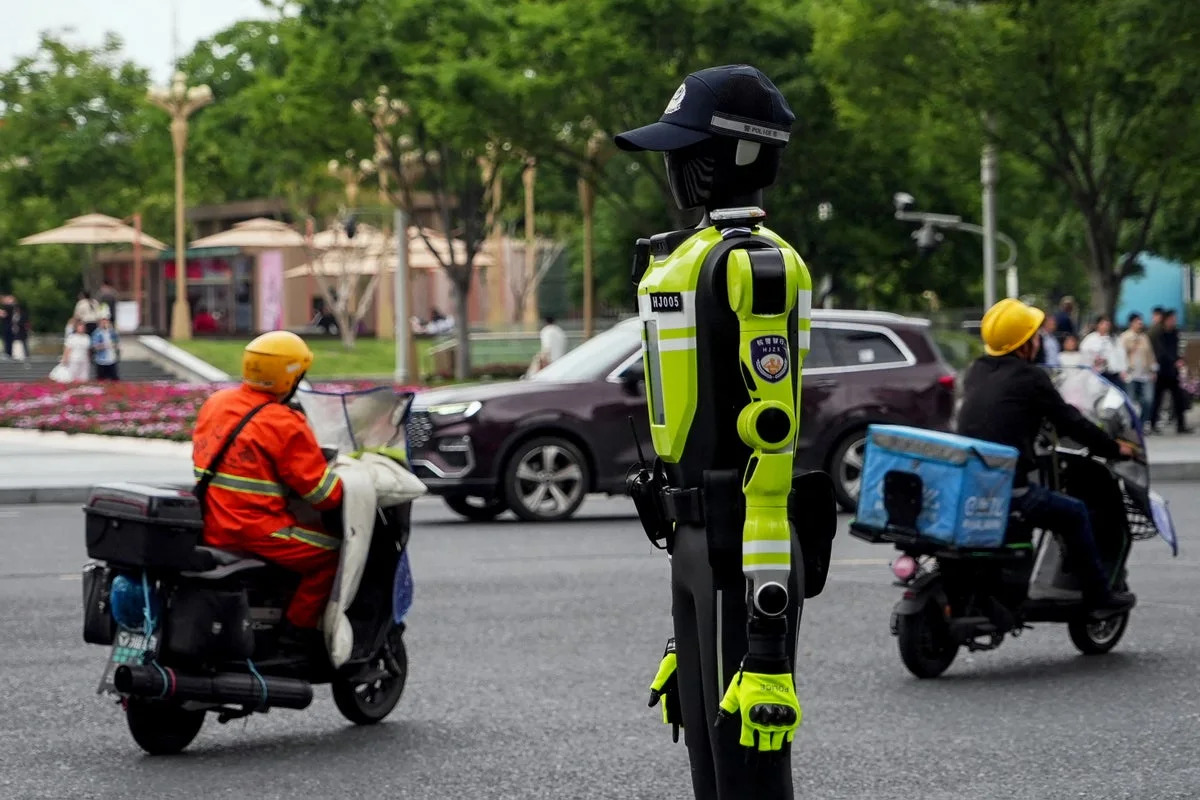
China assigns humanoid robot digital IDs for safety tracking
China is rolling out humanoid robot digital IDs as a national tracking system for robots in the category, with the program already covering more than 100 manufacturers and 28,000 robots across 200 models. According to the report carried by aol.com, citing state broadcaster CCTV, the aim is to monitor safety risks across the full lifecycle of these systems, from production and deployment to eventual recycling.
The policy is notable because it treats humanoids less as isolated pilot projects and more as a product class that requires formal traceability. As China accelerates industrial and commercial work around embodied AI and humanoid platforms, a standardized identity system could become a key part of how regulators, manufacturers, and operators manage fleets at scale.
How humanoid robot digital IDs are structured
The new identification format is divided into four parts. The first is a two-digit code for tracking cross-border shipments, followed by a four-digit code that identifies the Chinese firm that manufactured the robot.
A six-digit product code is then used to identify the humanoid’s type, while a 17-digit serial code distinguishes individual units. That structure suggests the system is designed not only for broad regulatory oversight, but also for model-level and unit-level traceability.
China has also released guidelines covering how humanoid robots should be managed and how these identifiers can be tracked. The overall program is being led by China’s Humanoid Robotics and Embodied Intelligence Standardisation, or HEIS, under the Ministry of Industry and Information Technology.
Why China is introducing lifecycle oversight
The report says the digital identity program is intended to help authorities monitor humanoid robot products for safety risks from the point of production through to recycling. That is a wider scope than a simple registration database, because it implies oversight of logistics, deployment, and end-of-life handling.
For operators and manufacturers, lifecycle traceability has practical implications. A standardized ID system can support incident reporting, product recalls, customs processing, and the separation of design issues from maintenance or misuse at the level of individual units.
It also reflects the current state of the market. The same report notes that humanoids now in use in China are still far from fully autonomous and often lack the precision and dexterity required for many tasks, which makes monitoring and classification especially relevant while systems remain in trial-heavy phases.
China’s humanoid market is moving from pilots toward scale
At present, humanoid robots in China are used mainly by universities, research labs, and in manufacturing settings. Experts cited in the report say the country is also preparing for larger commercial rollouts in applications such as eldercare and domestic cleaning.
That matters because a digital identity framework becomes more valuable as deployments move beyond research environments and into homes, workplaces, and public settings. Once fleets spread across multiple sectors, regulators and operators need a consistent way to identify who built a machine, what model it is, and where it sits in its operating lifecycle.
The report also says China is rapidly localizing the hardware supply chain for humanoids, while companies including GigaAI, Unitree, and Agibot are leading the market with hardware innovations. It highlights GigaAI’s SeeLight S1, described as China’s first general-purpose humanoid robot for household tasks, with testing in Wuhan households expected as early as the first half of 2027, according to SCMP as cited in the article.
What the policy could mean for operators and manufacturers
For robotics companies, the introduction of humanoid robot digital IDs could formalize compliance requirements at a time when the sector is still defining technical standards and acceptable operating envelopes. For fleet operators, the system may eventually simplify procurement records, maintenance histories, and liability tracking across mixed deployments.
What remains unclear is how deeply the identifier system will integrate with software updates, field performance records, or certification processes. Even so, China’s decision to assign structured identities to tens of thousands of humanoids shows that governance infrastructure is starting to develop alongside the machines themselves, not after mass deployment has already begun.
Source: aol.com