Apptronik opens Robot Park to train Apollo 2 humanoids
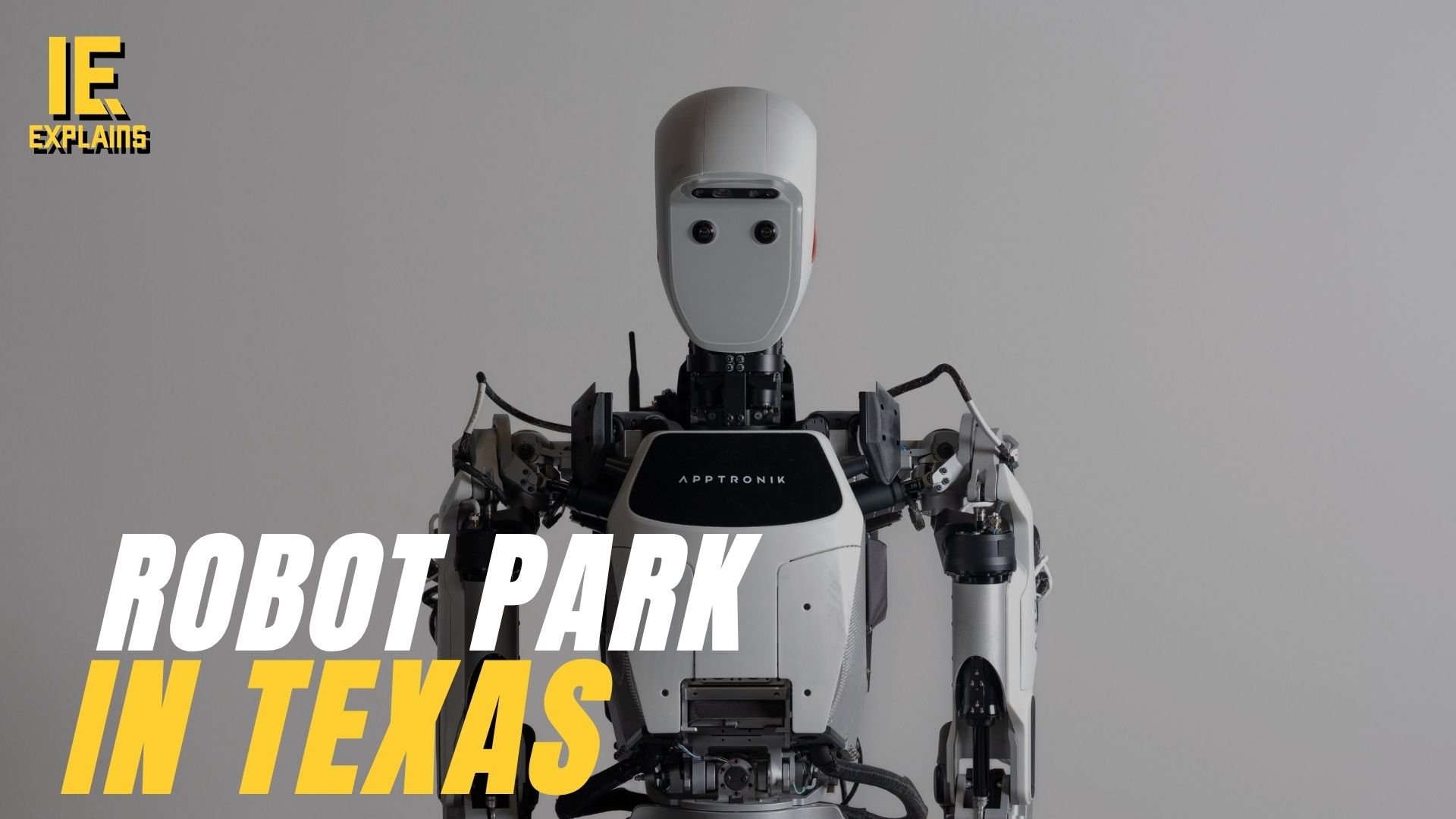
Apptronik has opened an expanded Robot Park in Austin, Texas, where Apollo 2 humanoid robots are being trained on repeated workplace tasks, according to Interesting Engineering. The facility is described as nearly 90,000 square feet and was unveiled on June 30, 2026.
The site is built around Apollo 2, which the report says comes in two versions: a bipedal model that walks and a wheeled base model built to meet existing industrial safety standards. That split is a practical detail. For industrial users, a humanoid upper body on a mobile base can be easier to place around existing workflows than a fully legged system, while still preserving human scale manipulation.
Training data is the main product of the facility
The robots at Robot Park are reportedly practicing logistics, manufacturing and retail tasks repeatedly. Interesting Engineering says each repetition is recorded and fed to Google DeepMind to train Gemini Robotics, described in the source as the AI system for robots.
For Apollo 2 humanoid training, the most consequential claim is the data loop: robots perform work, generate examples, and those examples are used to improve the robot intelligence stack. The source says similar setups also run at Mercedes-Benz, logistics company GXO and DeepMind itself.
The report does not provide fleet size, task success rates, autonomy level, uptime, payload, battery life or the exact tasks being measured. Those are the details operators would need before comparing Apptronik’s training approach with other industrial humanoid programs. The facility scale and DeepMind connection are concrete, but the performance evidence remains thin in the public account.
Apollo3 is the stated commercial target
Apptronik says the work at Robot Park is feeding into Apollo3, a commercial robot that the company says will ship with intelligence built in. The source does not give a shipping date or customer volume for Apollo3.
The near term readout will be whether Apptronik can show repeatable task execution outside its own training environment and at the named external sites. Robot Park gives the company a larger data collection base. It does not, by itself, answer how much of that training will transfer cleanly to live industrial operations.
Source: interestingengineering.com