Welcome, Y Hand M2!
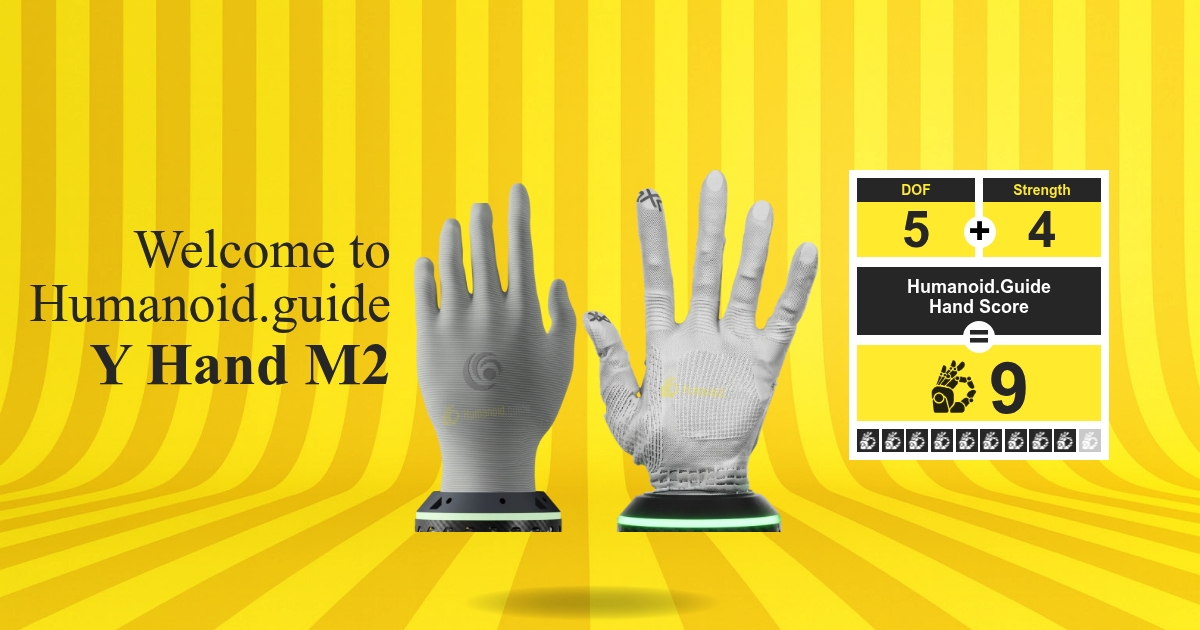
Y Hand M2 is a bionic robotic hand developed by Yuequan Bionics, a company based in Beijing, China. Its overall score of 9 out of 10 places it in the state of the art category, supported by a top tier rating of 5 out of 5 for Degrees of Freedom and a strong rating of 4 out of 5 for Strength. These ratings describe its standing in two important dimensions of robotic hand design: dexterity and grip strength. The hand uses a structural approach inspired by the relationship between human bones, tendons and ligaments, combining rigid elements with soft components. Its actuation architecture incorporates the company’s magnetic electric drive artificial muscles, integrating drive, speed conversion and transmission within compact units. Listed dimensions are 200 × 90 × 40 mm, with a weight of 0.7 kg and five fingers. Together, these specifications describe a compact research and engineering platform built around an anatomically inspired mechanical design rather than a conventional arrangement of rigid hinges and linkages.
The distinction between dexterity and strength is central to understanding Y Hand M2’s evaluation. Its Degrees of Freedom rating reaches the highest tier, while its Strength rating sits one tier below the maximum. Neither rating is a physical measurement or a count of joints. Instead, the combination highlights a strong overall assessment across both categories, without treating them as interchangeable. For engineering teams comparing robotic hands, this balance provides a useful starting point for defining evaluation priorities. Application selection still requires attention to the complete system, including mechanical mounting, control integration, operating conditions and task requirements. A high overall score is a comparative indicator, not a substitute for testing against a specific deployment brief.
Y Hand M2 is listed as in production, with an advertised price of USD 15,000. Yuequan Bionics provides a direct manufacturer contact route for commercial inquiries, allowing prospective buyers to discuss application requirements before purchasing. The product belongs to the company’s Y Hand series and is positioned as its flagship bionic hand. Its broader significance lies in the pursuit of robotic hand designs that combine rigid structural support with compliant mechanical elements. That approach offers an alternative design direction for teams evaluating how robotic hands should be constructed and integrated. For procurement planning, the listed price and production status provide initial commercial context, while delivery terms, integration support and project suitability remain matters to establish directly with the manufacturer.