1X targets 50,000 NEO humanoid robot shipments in 2027
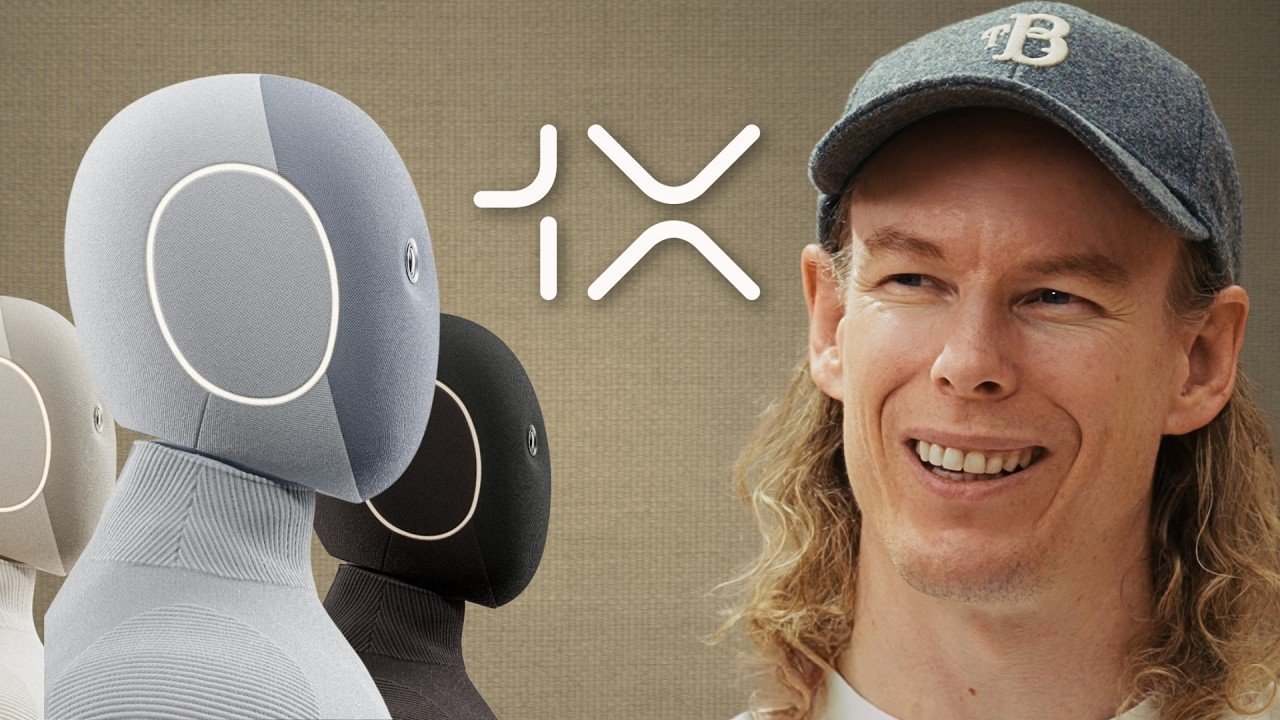
1X is targeting the manufacture and shipment of 50,000 NEO humanoid robots in 2027, backed by two California production sites with planned annual capacity of 110,000 units. CEO Bernt Børnich described the target in an interview with Relentless, while repeatedly cautioning that the company must increase output only as its quality data supports each step.
The existing Hayward factory is designed for 10,000 robots a year at full capacity. Børnich said the line would reach that rate near the end of 2026, too late to produce 10,000 units during the year. A second facility in San Carlos is being built for annual capacity of 100,000 robots, although most of that volume is expected to become available late in 2027.
Key facts
- 2027 shipment target: 50,000 NEO robots
- Hayward capacity: 10,000 units per year at full output
- San Carlos capacity: 100,000 units per year at full output
- Hardware iteration cycle: About four weeks from major CAD changes to a walking robot leaving the line
Quality and safety will control the ramp
Børnich called production harder than prototyping and said rare faults become statistically significant as output rises from hundreds of units into the thousands. The company plans to pass successive quality gates rather than immediately use all available factory capacity. In his words, the constraint is not simply shipping 50,000 robots, but making sure customers do not send them back.
1X expects early machines to receive extensive field service and remanufacturing. If engineers identify a component that needs replacement, the plan is to update robots already deployed as well as newly built units. Børnich said NEO is small and light enough for many such repairs to be completed in the field rather than through a conventional recall.
Safety remains unfinished work. Børnich said 1X aims to demonstrate it more formally during 2026 and hopes to provide details near the end of the year. That qualification is central to the 1X NEO shipment plan, since some robots will operate in homes, while others will be assigned to more structured environments with less task variation.
The intended deployment mix includes home users, enterprise applications and the NEO developer platform. 1X has not identified its planned enterprise customers or verticals, but Børnich said several large customers could absorb substantial robot volumes. He ruled out clothes folding as the primary application, describing it as an overused demonstration that modern AI systems can learn with relatively little data.
In house hardware supports rapid revisions
1X has designed its robot around internally developed motors and tendon drives, an approach Børnich said reduces the number of gears, sensors, tolerances and other failure points. The tradeoff is that no established supply chain exists for much of the system, requiring 1X to manufacture those components itself.
The company has spent roughly a decade developing those processes. Its current benchmark is a four week cycle between a major full system CAD change and a revised robot walking off the production line. That gives engineering teams a relatively short feedback loop for addressing assembly difficulty, yield, calibration and quality problems found during production.
Børnich estimated that a well designed humanoid should contain around 1,000 parts, far fewer than a car. 1X also imposes budgets on cables and connectors and challenges engineers to combine fixed components where possible. Those details are less visible than an autonomy demonstration, but they directly affect whether tens of thousands of machines can be assembled and serviced consistently.
A large fleet is also part of the AI strategy
The production target is tied to 1X’s plan for training general robot models. Børnich said deployed robots can generate examples of successful and failed attempts, allowing future models to improve without requiring a human operator for every data collection session. Such learning depends on safe hardware that can fail without damaging itself or its surroundings.
“In reality you’re almost never data bound you’re diversity bound.”Bernt Børnich, founder and CEO of 1X
According to Børnich, 1X expects web video to provide about 99 percent of its training data, supplemented by simulation, synthetic data, egocentric video, human worn sensors, teleoperation and autonomous robot experience. He argued that repeated examples of one task have limited value compared with experience across many environments and behaviors.
A newly established 1X world model team was preparing larger training runs for later in the month, but Børnich explicitly said the forthcoming run would not solve general robot intelligence. He expects specialized models to remain stronger for individual tasks through 2026 and predicted broader models could become more competitive in 2027. The proposed fleet of 50,000 NEO robots would supply the real world diversity needed to test that thesis at much larger scale.
Source: youtube.com – Relentless