Honor humanoid robot wins Beijing half marathon in 50 minutes
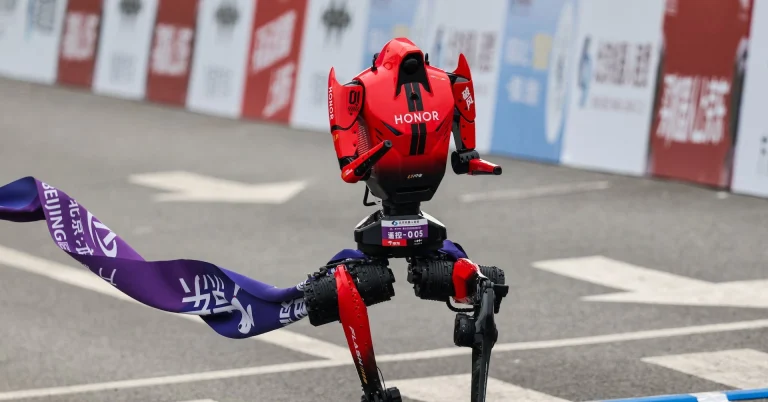
An Honor humanoid robot won the second Humanoid Robot Half Marathon in Beijing on Sunday, finishing the 13 mile course in 50 minutes and 26 seconds. The result matters less as a sports milestone than as a visible benchmark for how quickly humanoid locomotion, thermal management, and autonomous navigation are improving in China.
Honor humanoid robot leads a faster field
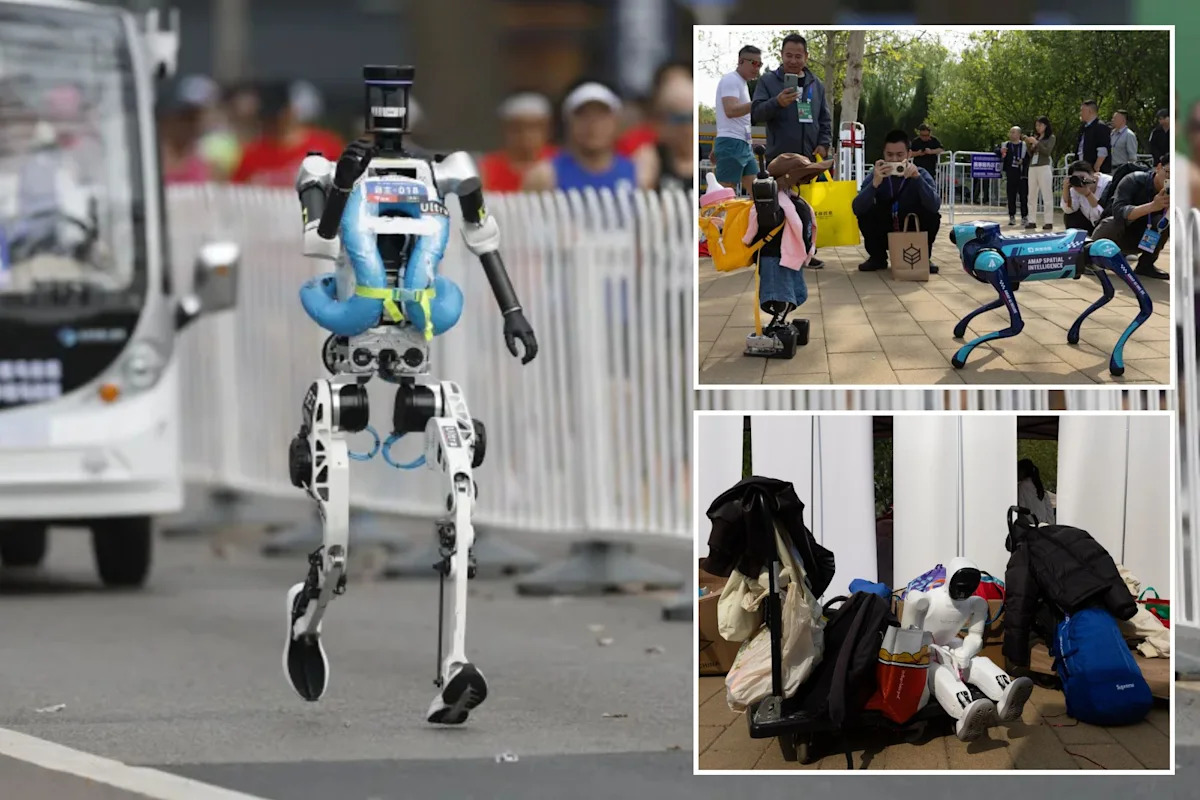
According to Reuters, more than 100 teams entered this year’s event, up from 20 in the inaugural edition last year. Several leading robots finished more than 10 minutes ahead of the human winners on the parallel course, and the winning machine’s time was also reported as faster than the current human half marathon world record.
The race format was designed to separate demonstration value from safety risk. Robots and roughly 12,000 human runners used parallel tracks to avoid collisions, while many of the humanoids had to manage uneven terrain and sustained running over the full route. Reuters reported that nearly half of the robot entrants navigated the course autonomously rather than relying on remote control, a notable shift from the first edition, when most machines failed to finish and the winning robot needed 2 hours and 40 minutes.
What the Beijing humanoid half marathon measured
Honor engineer Du Xiaodi told Reuters that the winning robot had been in development for a year and used legs measuring 90 to 95 centimeters to better match elite human running proportions. Du also said the team adapted liquid cooling technology from Honor’s smartphones, a detail that points to one of the central engineering constraints in mobile humanoids: maintaining actuator and compute performance during continuous full body motion.
That helps explain why events like the Beijing humanoid half marathon are drawing attention from robotics engineers even when they do not map directly to real factory tasks. A half marathon stresses balance, gait efficiency, impact tolerance, autonomy, and heat dissipation over an extended period. Du told Reuters that faster running may appear superficial at first, but the work can transfer into structural reliability and cooling improvements that could matter in later industrial applications.
Commercial limits remain clear
The same Reuters report also underlined the gap between athletic demonstrations and useful deployment. Experts cited in the article said the capabilities shown in the race do not yet translate into broad commercialization in industrial settings, where manual dexterity, real world perception, and the ability to handle varied tasks remain more important than straight line speed. The report added that Chinese robotics firms are still struggling to build the software needed for humanoids to match the efficiency of human factory workers.
Even so, the event fits a wider national push. Reuters described China as actively trying to become a global center for humanoid robotics through subsidies and infrastructure support, and noted that the country’s annual CCTV Spring Festival gala in February also highlighted humanoids as part of a manufacturing and automation strategy. Public showcases alone will not settle questions around uptime, manipulation capability, or deployment economics, but the pace of improvement between the first and second races suggests that mobility is advancing faster than many expected. The next test for developers will be whether those gains can be carried into longer duration work, richer perception, and safer operation outside controlled demonstration courses.
Source: aol.com