Welcome, TORCH HAND 2!
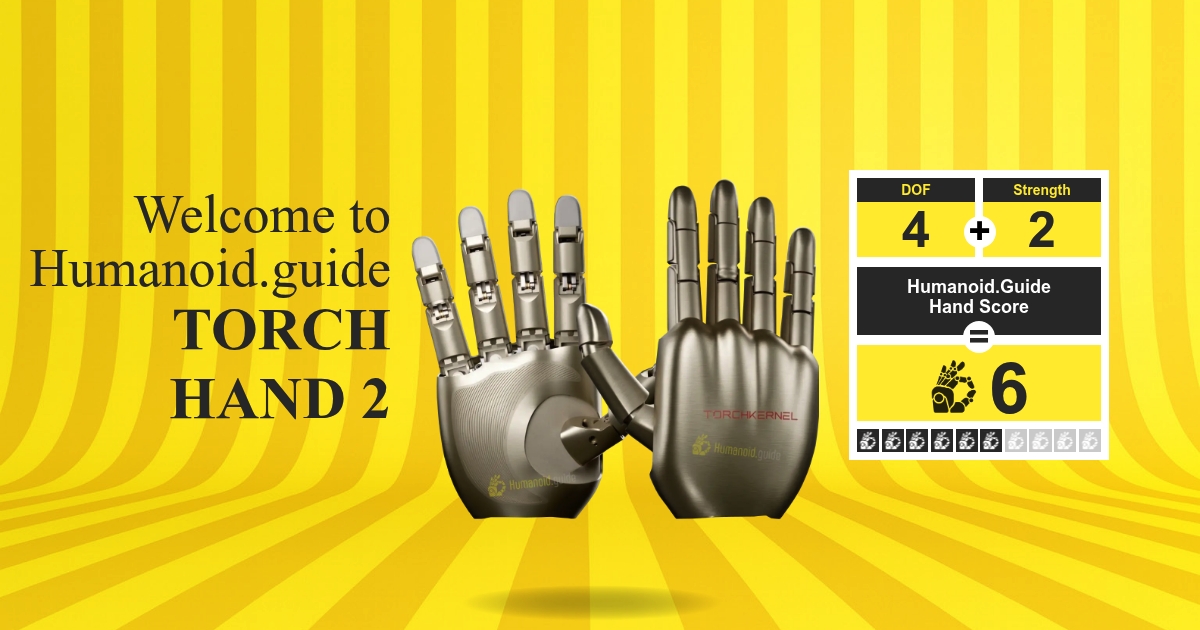
TORCH HAND 2 is a robotic hand from TorchKernel Robotics, a Chinese manufacturer, with an overall Humanoid.Guide Hand Score of 6 out of 10. That places it in the capable category, with a rating profile that emphasizes degrees of freedom more strongly than strength. Its Degrees of Freedom rating is 4 out of 5, while its Strength rating is 2 out of 5. These are category ratings rather than physical measurements, and together they describe a hand whose stronger assessment lies in dexterity rather than gripping power. The hand weighs 0.48 kilograms and measures 200 millimeters by 105 millimeters by 50 millimeters, providing concrete dimensions for evaluating its fit within a robotic system. Its advertised price is USD 6,500. For buyers comparing robotic hands, the combination of size, weight, cost, and category scores provides a useful starting point, while keeping the distinction between a favorable dexterity rating and a lower strength rating clear.
The central technical distinction in TORCH HAND 2’s assessment is the balance between degrees of freedom and strength. A 4 out of 5 rating for degrees of freedom is a strong result within that category, whereas the 2 out of 5 strength rating places force capability in a lower tier. Neither score should be read as a joint count or a measured load limit. For integration planning, this balance makes dexterity requirements and force requirements separate evaluation priorities. Teams comparing candidate hands should assess both against their intended tasks rather than treating the overall score as a complete performance specification. The 6 out of 10 total communicates capable overall standing without implying exceptional performance across every category.
TORCH HAND 2 is in production, with a published price of USD 6,500 and a price inquiry option for prospective customers. TorchKernel Robotics provides its manufacturer website at www.torchkernel.com. Its broader significance lies in offering another commercially available option for teams evaluating robotic hands through a combination of practical specifications and differentiated performance ratings. Procurement decisions can account for its compact dimensions and 480 gram weight alongside budget and integration requirements. The overall rating positions it as a capable product, while the difference between its two category scores encourages a more selective comparison than price alone. That distinction matters when choosing hardware for a particular robotic system rather than seeking a single universally superior hand.