Welcome, TianGong Ultra!
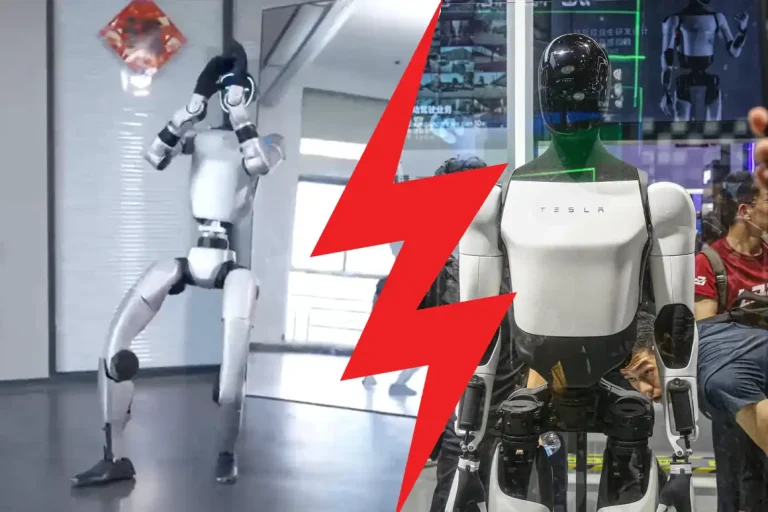
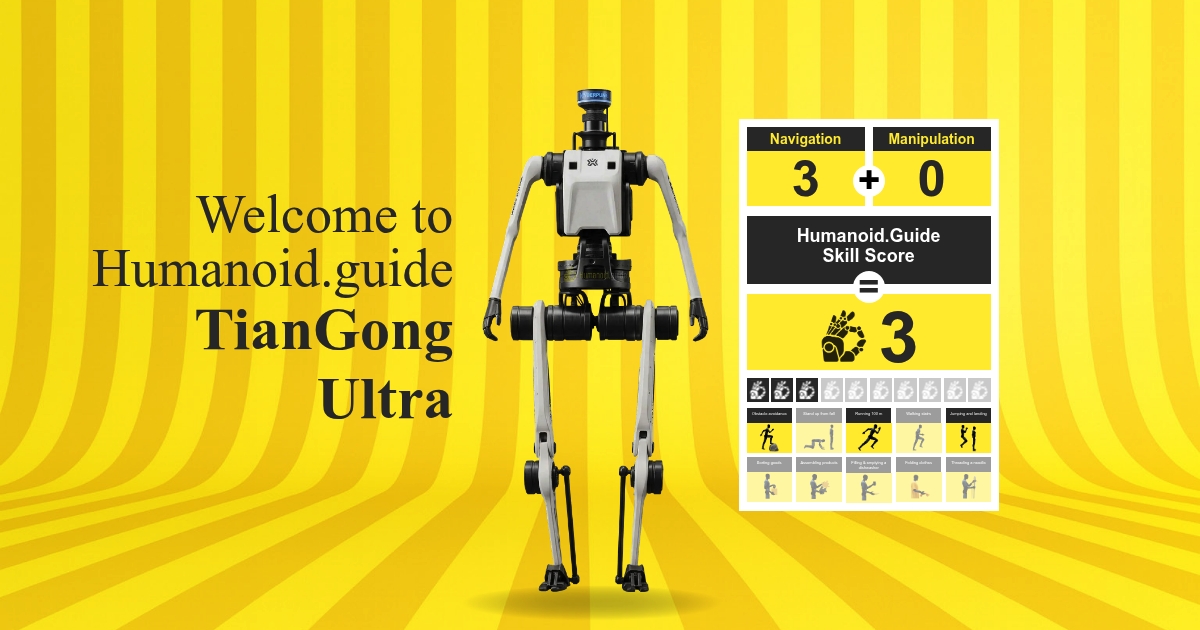
TianGong Ultra is a full size humanoid robot developed by the Beijing Humanoid Robot Innovation Center, also known as X Humanoid. Standing 180 cm tall and weighing 55 kg, it is designed for research and technology demonstration, with a particular emphasis on locomotion. Its demonstrated capabilities include obstacle avoidance, running 100 meters, and jumping and landing. A maximum speed of 12 km per hour gives the platform a clear focus on dynamic movement rather than stationary tasks. Its overall Humanoid Guide Skill Score of 3 out of 10 places it in the developing category. Navigation is rated 3 out of 5, while manipulation is rated 0 out of 5, making mobility its defining strength within the assessment. The robot uses integrated electric joints developed internally, alongside the Huisi Kaiwu embodied AI platform. Its white exterior and human scale proportions give it a recognizable humanoid form, while its listed runtime of one hour per charge provides a practical operating parameter for research planning.
Obstacle avoidance, running 100 meters, and jumping and landing provide distinct ways to evaluate TianGong Ultra’s movement. Obstacle avoidance concerns navigating around physical obstructions, while running tests coordinated motion at speed. Jumping and landing introduce another set of demands, including managing takeoff, body motion, and impact on contact with the ground. The platform’s integrated electric joints and emphasis on strong, shock absorbing legs support its locomotion focused design. Ultra wideband wireless guidance is also listed among its technical features. For research teams, these capabilities make the robot relevant to controlled studies of dynamic movement, navigation, and repeated landing performance. Its navigation rating should be understood as a category assessment, not a count of supported behaviors.
TianGong Ultra is listed as a prototype from China, with an advertised price of USD 80,000 and an inquiry option for prospective buyers. Its stated market is research and technology demonstration, positioning it as a development platform rather than an established general purpose commercial worker. The Beijing Humanoid Robot Innovation Center’s emphasis on running highlights the engineering importance of balancing body weight, joint performance, impact resistance, and battery demands. These challenges matter beyond any single demonstration because sustained physical operation depends on how effectively the complete system works together. For organizations evaluating the platform, its prototype status, listed runtime, physical dimensions, and locomotion focused capability profile provide concrete starting points for assessing research fit and planning supervised demonstrations.