Welcome, ARMAR 7!
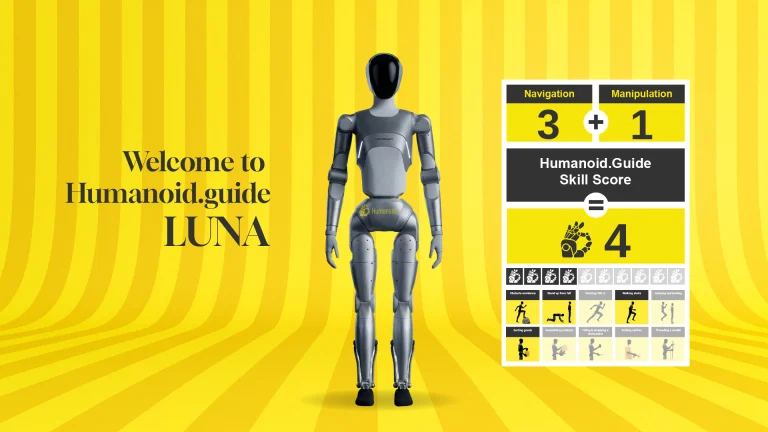
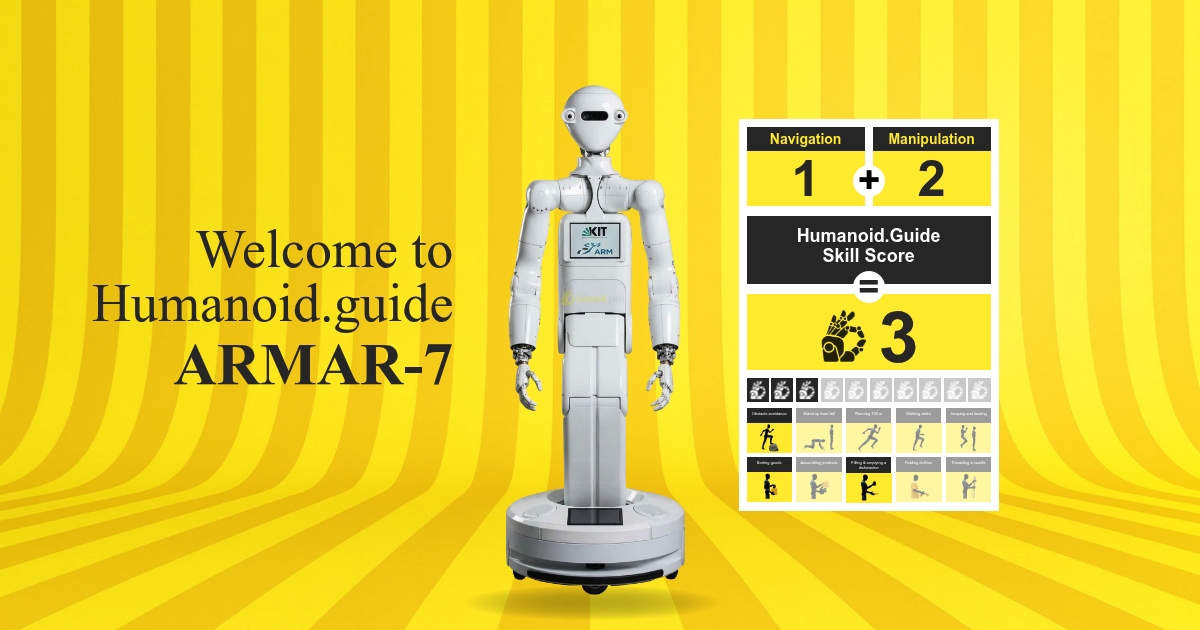
ARMAR 7 is a humanoid assistance robot developed in 2024 by the High Performance Humanoid Technologies Lab at Karlsruhe Institute of Technology in Germany. Designed for homes and care facilities, it combines an omnidirectional mobile base with a bowing torso, two torque controlled arms and a head with three degrees of freedom. Each arm has eight degrees of freedom, while its underactuated hands have five fingers each and integrated RGB cameras. Additional camera systems are incorporated into the head. The robot stands 175 centimetres tall, weighs 120 kilograms and has a listed maximum speed of 3 kilometres per hour. Its listed strength specification is 12 kilograms, with a runtime of three hours per charge. A total skill score of 3 out of 10 places it in the developing category. Navigation is rated 1 out of 5 and manipulation 2 out of 5, reflecting an early navigation tier and developing manipulation performance. Its supported capabilities include obstacle avoidance, sorting goods, and filling and emptying a dishwasher.
Obstacle avoidance, sorting goods, and filling and emptying a dishwasher define ARMAR 7’s demonstrated task range. These activities connect mobility with manipulation in domestic assistance settings. The omnidirectional base supports positioning, while the bowing torso and articulated arms provide a physical arrangement for interacting with objects at different locations. Torque control is designed to support compliant interaction around people, an important consideration in homes and care facilities. Cameras in both hands provide visual sensing close to the objects involved in sorting or dishwasher tasks. Its integrated sensor, actuator and controller modules combine an electric motor, gearing, sensors and electronics in each unit. Together, these components support the robot’s developing capabilities without implying advanced general purpose autonomy.
ARMAR 7 is listed as a prototype, with a displayed price of 75,000 US dollars and an inquiry option for pricing. Its stated markets are household assistance, nursing care assistance and research. The robot belongs to the ARMAR family, developed at KIT since 2000 under a laboratory led by Professor Tamim Asfour. That history places it within one of Europe’s longest running humanoid research programs. Its broader significance lies in bringing mobile manipulation research into settings where robots must share space with people and interact with everyday objects. The combination of a mobile base, compliant arms and integrated vision makes it a research platform for developing practical assistance, while its current score keeps expectations grounded in an ongoing development stage.