Welcome, 4NE1 Gen 3.5!
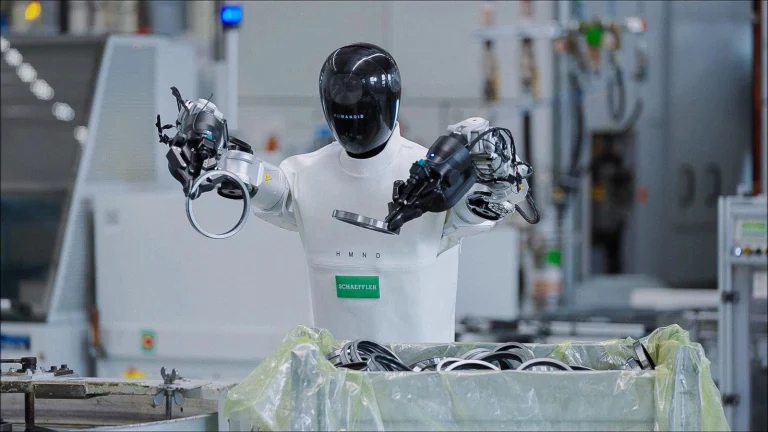
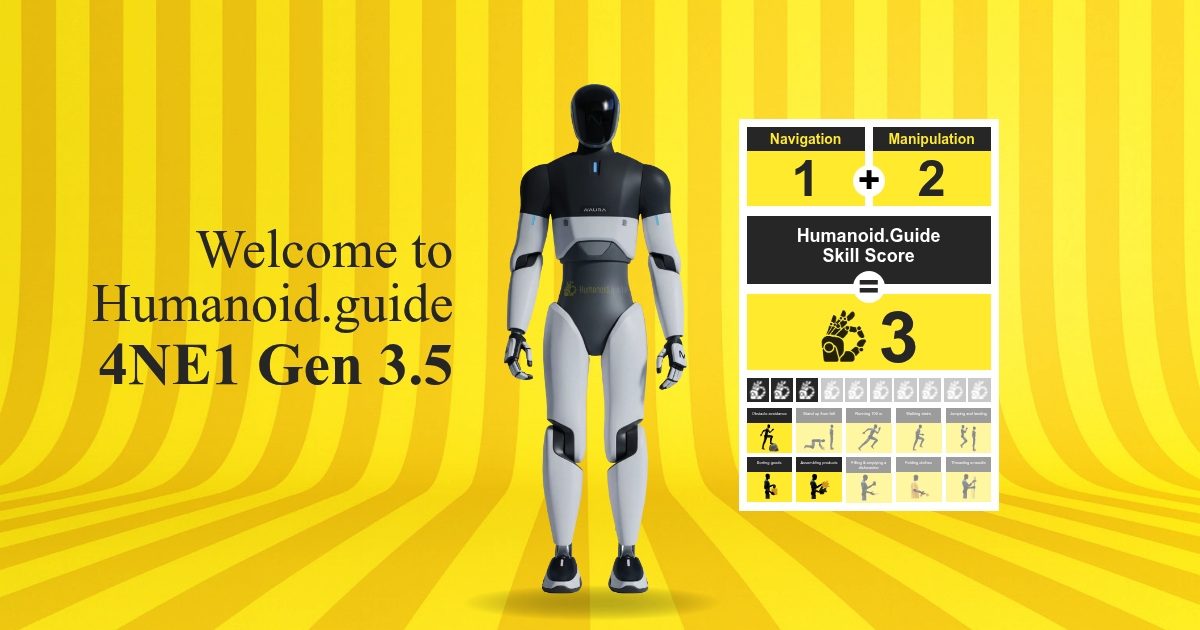
4NE1 Gen 3.5 is a full size humanoid from Germany’s NEURA Robotics, developed for industrial manufacturing, logistics, and work alongside people. Standing 180 cm tall and weighing 80 kg, it combines a human shaped body with 55 overall degrees of freedom and five fingers on each hand. Its listed specifications include a maximum speed of 5 km/h, six hours of runtime per charge, and a strength rating of 100 kg. That strength figure should not be interpreted as a payload guarantee for every task or posture. NVIDIA Jetson Thor provides onboard computing, while NEURA’s electric actuators drive the body. The robot incorporates panoramic 3D vision, patented sensor skin, touchless human detection through Omnisensor, and joint force and torque sensing. Its demonstrated capability set includes obstacle avoidance, sorting goods, and assembling products. A Humanoid Guide Skill Score of 3 out of 10 places it in the developing category, with navigation rated 1 out of 5 and manipulation rated 2 out of 5.
Obstacle avoidance supports movement around physical obstructions, while sorting goods and assembling products establish the robot’s manipulation focus. These capabilities connect directly to logistics and manufacturing use cases, particularly workflows involving goods organization or product assembly. The distinction between its navigation and manipulation ratings matters: manipulation sits a tier above navigation, but both remain in the lower part of the rating scale. For deployment planning, sorting and assembly tasks warrant evaluation against the specific objects, layouts, and process requirements of a facility. Its sensor skin, joint sensing, and 3D vision are relevant technical features for these environments, without making the skill score a guarantee of task reliability or production throughput.
NEURA Robotics lists 4NE1 Gen 3.5 as in production and expects deliveries at the end of 2026. The listed price is USD 115,000. This generation was publicly presented at CES 2026 in Las Vegas, with body design developed in collaboration with Studio F.A. Porsche. On the software side, the platform uses NVIDIA Isaac GR00T and NEURA’s own Neuraverse software stack. A ROS 2 interface, Python and C++ software development kits, Ethernet, and WiFi 6 provide integration options. Together, these design and computing partnerships position the robot as an industrial development platform with a broader ambition to work alongside people. Its current score keeps that ambition distinct from mature, broadly proven autonomy.