Vingroup humanoid robots debut at ICRA 2026 and Computex Taipei
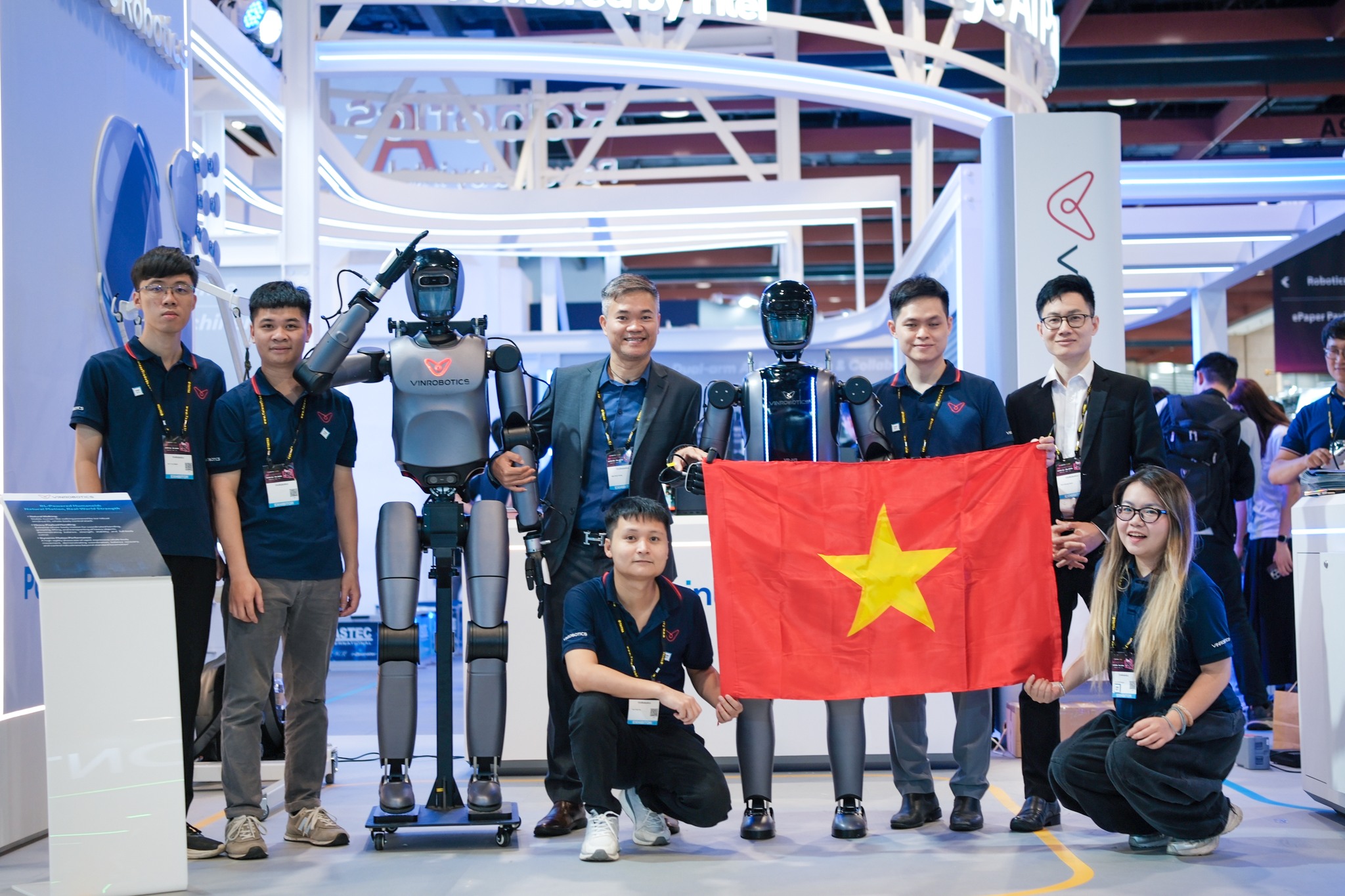
Vingroup humanoid robots were presented to international audiences at ICRA 2026 in Vienna and COMPUTEX Taipei 2026, where the Vietnamese conglomerate’s subsidiaries showed two distinct humanoid platforms. According to technode.global, VinRobotics demonstrated the VR-H3 industrial humanoid, while VinDynamics introduced Dyno, a service oriented humanoid aimed at living and public environments.
Vingroup humanoid robots enter two major showcases
The dual appearance matters because it places two separate humanoid programs from the same corporate group on well known global stages for robotics and computing. Rather than showing a single prototype, Vingroup used the events to highlight parallel development tracks, one centered on industrial tasks and one on assistance, security, and guided service work.
Technode.global reports that both companies also presented broader robotics ecosystems alongside the humanoids. That framing suggests the effort is not limited to robot shells or event demonstrations, but extends to components and software that could shape how quickly the platforms move toward repeatable deployment.
VR-H3 targets industrial manipulation and teleoperation
VinRobotics positioned VR-H3 as its third generation humanoid robot, with an emphasis on industrial and operational performance. The machine is equipped with more than 31 actuators and two onboard edge computers, and the source says it can perceive its surroundings, interact with humans, lift payloads of 6 to 8 kilograms, transport objects, and perform assembly operations.
Vingroup said the robot’s core technologies were developed in house, including the mechanical structure, the real time computing and communication electrical and electronic architecture, the power distribution platform, the battery system, and full body AI control technology. At ICRA 2026, VR-H3 also demonstrated remote operation through motion capture integrated into a virtual reality headset, with no additional external devices required.
That combination of onboard computing, manipulation capability, and teleoperation is notable because it addresses two common paths to industrial humanoid adoption. One is higher autonomy for handling materials and assembly tasks, and the other is supervised or remote execution in settings where full autonomy remains difficult to validate.
Dyno expands into service, security, and household roles
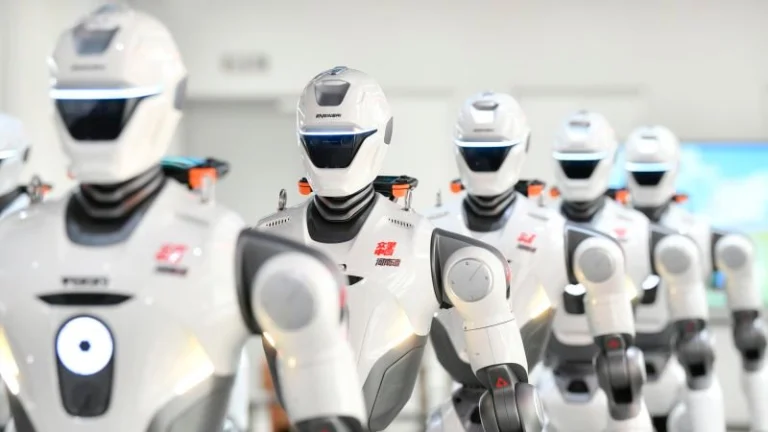
VinDynamics introduced Dyno as its first humanoid robot and described it as a versatile assistant for modern living environments. The robot combines an AI platform with an environmental sensing system that, according to the source, is optimized for security and surveillance across urban areas, campuses, and integrated service complexes.
The company is also developing Dyno as a household assistant, with a flexible arm span and dexterous object manipulation intended to support everyday tasks. At both events, Dyno was shown working as a robotic guide, a role the source says it had previously performed at the Vinpearl Safari Phu Quoc tourism complex.
That makes Dyno different from many current humanoid announcements that focus narrowly on warehouse or factory use. VinDynamics is instead presenting a platform that spans public facing service work, site monitoring, and domestic assistance, though the source does not specify deployment scale, pricing, or commercial timelines.
Shared technology foundations and market implications
Both subsidiaries used the showcases to emphasize technology ownership across the development stack. VinRobotics highlighted an ecosystem covering humanoid robotic systems, robotic hands, and high performance actuators, while VinDynamics presented a specialized actuator system, a robotic hand it described as having internationally benchmarked dexterity, and an AI training dataset optimized for real world scenarios.
As technode.global notes, both companies said they cover hardware, software, mechanical design, and artificial intelligence internally. That is an important claim in the humanoid sector, where actuator quality, hand design, controls, and training data often determine whether a system can move from a controlled demo to useful task execution.
The source also points to an earlier April report that VinDynamics and Germany’s Schaeffler would collaborate on humanoid robotics research and development. Taken together, the Vingroup humanoid robots now appear to be part of a broader strategy that combines product demos with component development and external industrial collaboration.
What remains unclear is how quickly either platform will move beyond demonstrations into sustained field deployment. Even so, showing two humanoid programs with in house work on actuators, hands, controls, and training data indicates that competition in humanoids is widening geographically and technically, with more companies trying to own the systems beneath the robot as well as the final machine.
Source: technode.global