Tiangong Ultra clocks 9.39 seconds in 100 metre sprint
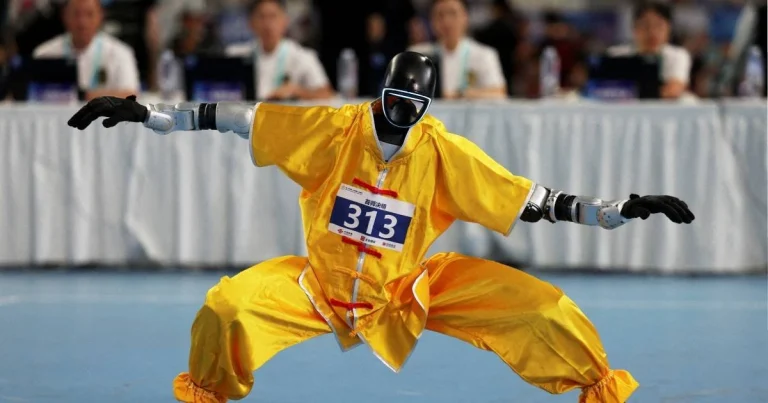
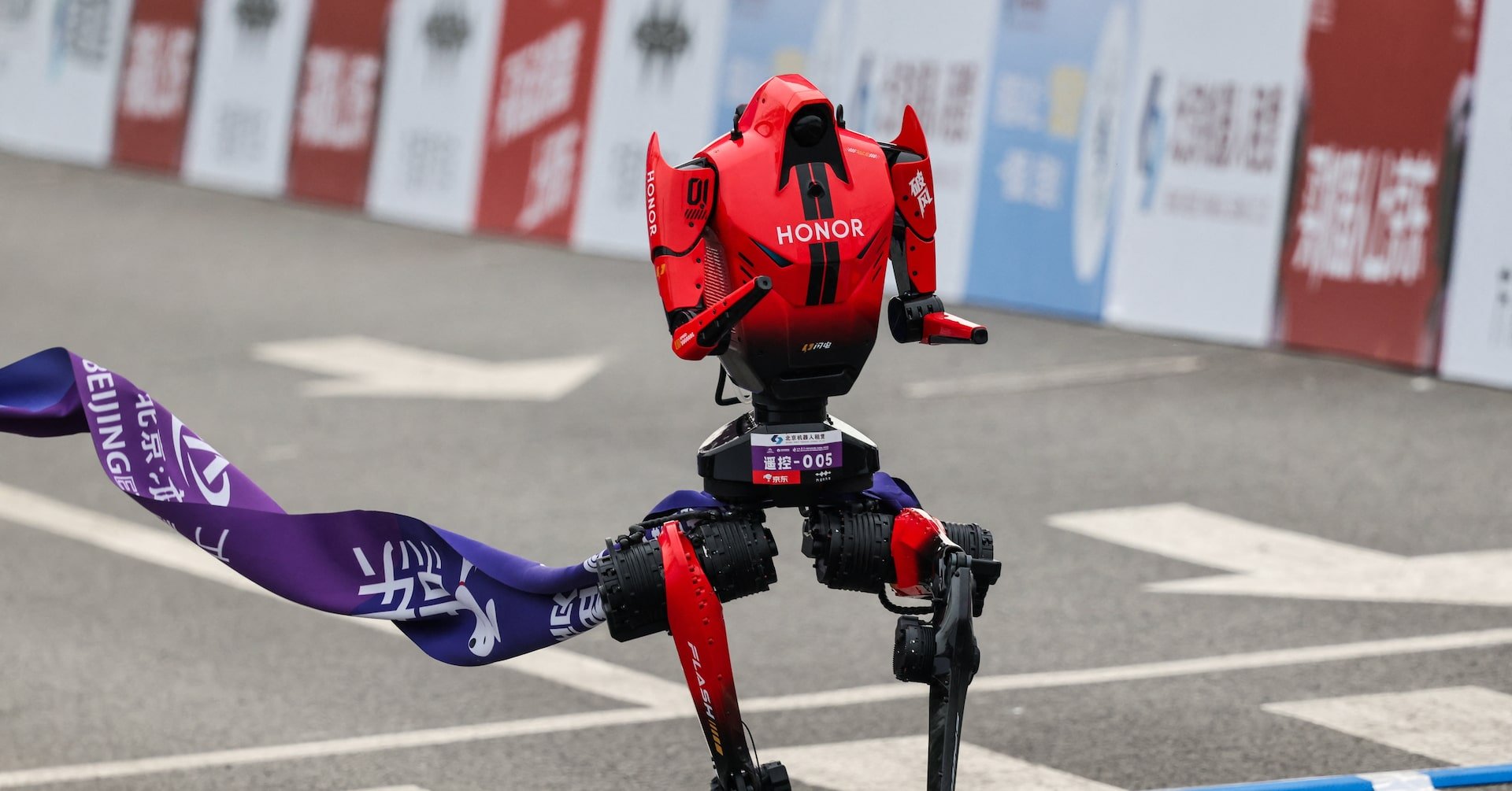
Tiangong Ultra won a 100 metre preliminary heat at the World Humanoid Robot Games in Beijing with a time of 9.39 seconds. The humanoid is developed by the Beijing Humanoid Robot Innovation Center, which operates under the name X-Humanoid, and it passed Honor’s Lightning near the finish after trailing early in the race.
Lightning finished in 9.47 seconds and a Unitree Robotics humanoid came third in 12.41 seconds. Both leading results were faster than Usain Bolt’s 9.58 second human world record from 2009, although the competition result should not be treated as a like for like athletics record without fuller information about timing, start procedures and robot operation. The three second spread between first and third also shows how uneven top end locomotion still is across the field.
Key facts
- Tiangong Ultra time: 9.39 seconds
- Lightning time: 9.47 seconds
- Unitree robot time: 12.41 seconds
- Tiangong Ultra’s previous winning time: 21.50 seconds
- Lightning test peak speed: 14.5 metres per second
- X-Humanoid high jump: 2.88 metres
A large same event improvement
The most useful comparison is with Tiangong Ultra’s own performance at the inaugural games. Its winning time last year was 21.50 seconds, meaning the latest run cut more than 12 seconds from that result.
Chinese state media also reported that Lightning completed a preparatory 100 metre test in 9.32 seconds and reached a peak speed of 14.5 metres per second. Reuters reported the test figure but did not provide details of the measurement protocol.
Lightning’s researchers made a substantial geometry change before the games. The robot stood 169 cm tall with 95 cm legs during this year’s humanoid half marathon, then received legs lengthened by 10 cm to 1.05 metres, according to CCTV.
A separate X-Humanoid machine cleared 2.88 metres in a high jump at the same games, according to CBS News, against Javier Sotomayor’s 2.45 metre human record from 1993. The reports do not state whether the robot jumped from a standing position or with a run up, so the two figures are not directly comparable.
Speed is ahead of stopping control
The finish exposed a less polished part of the performance. Both robots ran into thick mats positioned to stop them rather than braking under control. Tiangong Ultra stumbled toward the sidelines, while Lightning collapsed and was carried away on a stretcher. The sprint times show rapid progress in straight line locomotion, but controlled deceleration was not part of the demonstrated result, and it is a core part of useful high speed mobility around people and industrial equipment.
What the reports leave out
Neither account identifies the exact robot configurations used in the sprint, or gives dimensions, power specifications, autonomy details, timing methodology or start protocol. Without those details the run is best read as an event result rather than a reproducible locomotion benchmark.
Lightning had already won this year’s humanoid half marathon in 50 minutes and 26 seconds. Tiangong Ultra won the previous edition of that event.
The Beijing games opened on 22 August 2026 and include 51 events spanning football, table tennis, dancing and industrial tasks. Organizers said 2,056 robots from 666 teams across 16 countries and six continents were participating, compared with 280 teams at the inaugural event. Reliability across the field was uneven, with CBS reporting robots that tripped, broke apart or caught fire during competitions. The event runs through Wednesday 26 August at Beijing’s National Speed Skating Oval.
Sources: reuters.com, cbsnews.com, scmp.com