Tau Robotics sends humanoids into homes for paid cleaning
Tau Robotics is offering paid humanoid cleaning visits in San Francisco, with remote human operators doing much of the work while the startup collects training data. An apartment trial reported by MIT Technology Review showed the robots cleaning kitchens and toilets, but also exposed how heavily the service depends on reliable communications and operator equipment.
According to the publication, Tau was charging $60 per weekly cleaning with two robots, or $100 for a single visit. The reporter initially booked an earlier offer of $30 for an hour with one robot. The service is in beta, and the account describes cleaning that was thorough but slow.
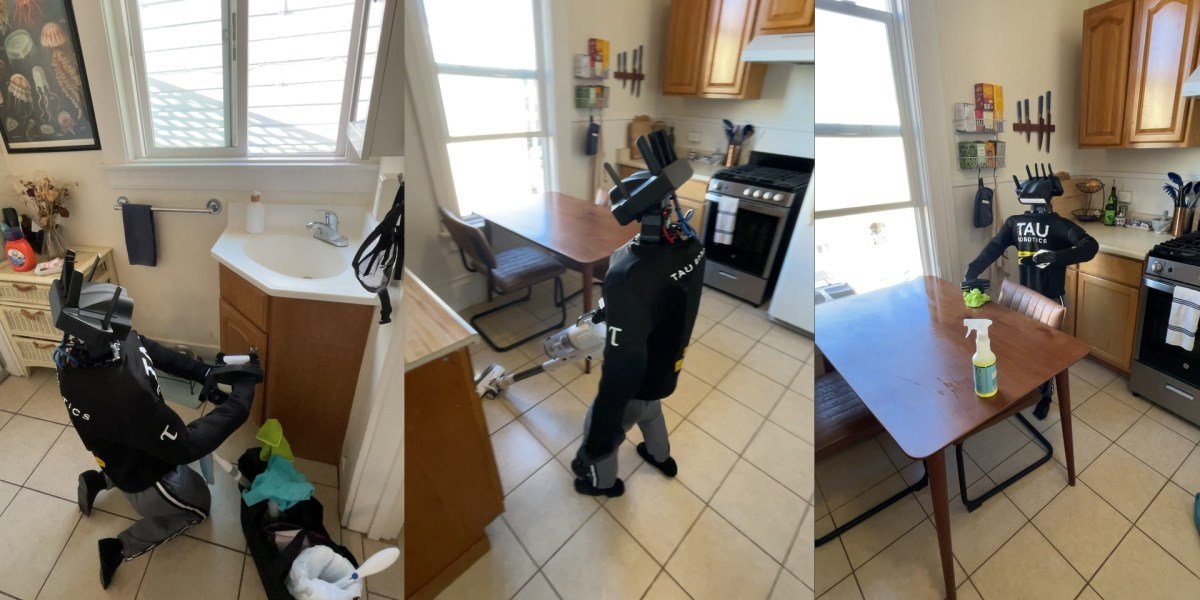
Tau Robotics’ cleaning robots stand four and a half feet tall and have cameras in their heads and wrists for remote operation. Their equipment includes a 3D printed head with communications antennae and two 3D printed claw hands. According to the report, more humanlike hands were not durable enough for the work.
Remote operation is part of the service
For tasks such as making beds and folding laundry, human pilots perform movements that sensors transmit to the robot, a process the article calls kinematic guidance. Tau intends to use these examples of completed household tasks to train models for more independent operation. Cofounder Cornelia Weinzierl told MIT Technology Review that the robots can already vacuum and mop without human help.
The first visit illustrated the operational dependencies. The robot struggled on the building’s entrance stairs and needed to be carried up the final steps of an interior staircase. Weinzierl attributed its uneven walking partly to transmission delays between the robot and its remote controller.
Repeated stoppages then ended that visit early. The initial suspicion was that the robot had overheated, but the fault was ultimately traced to heat shutting down the equipment its human operator used to see the apartment. Without that remote assistance, cleaning stopped. Tau refunded the visit and offered another at no charge.
The second visit went more smoothly. In an hour, the reporter observed the robot clean the kitchen, though not the stove, and tackle the toilet. During toilet cleaning, the wand head detached three times, and the robot reattached it each time by maneuvering the handle into contact. The same visit also included dripping taps, a knocked over oil bottle and a toppled air purifier it could not right.
The practical achievement here is a paid household service with human support, rather than autonomous housekeeping. At the time of the report, Tau had completed only a couple hundred cleanings, each adding real household task examples to the training data the company hopes will support greater autonomy.
Source: MIT Technology Review