Humanoid Robot Hands – State of the Art – Single User License
$ 472
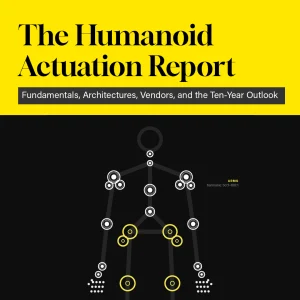
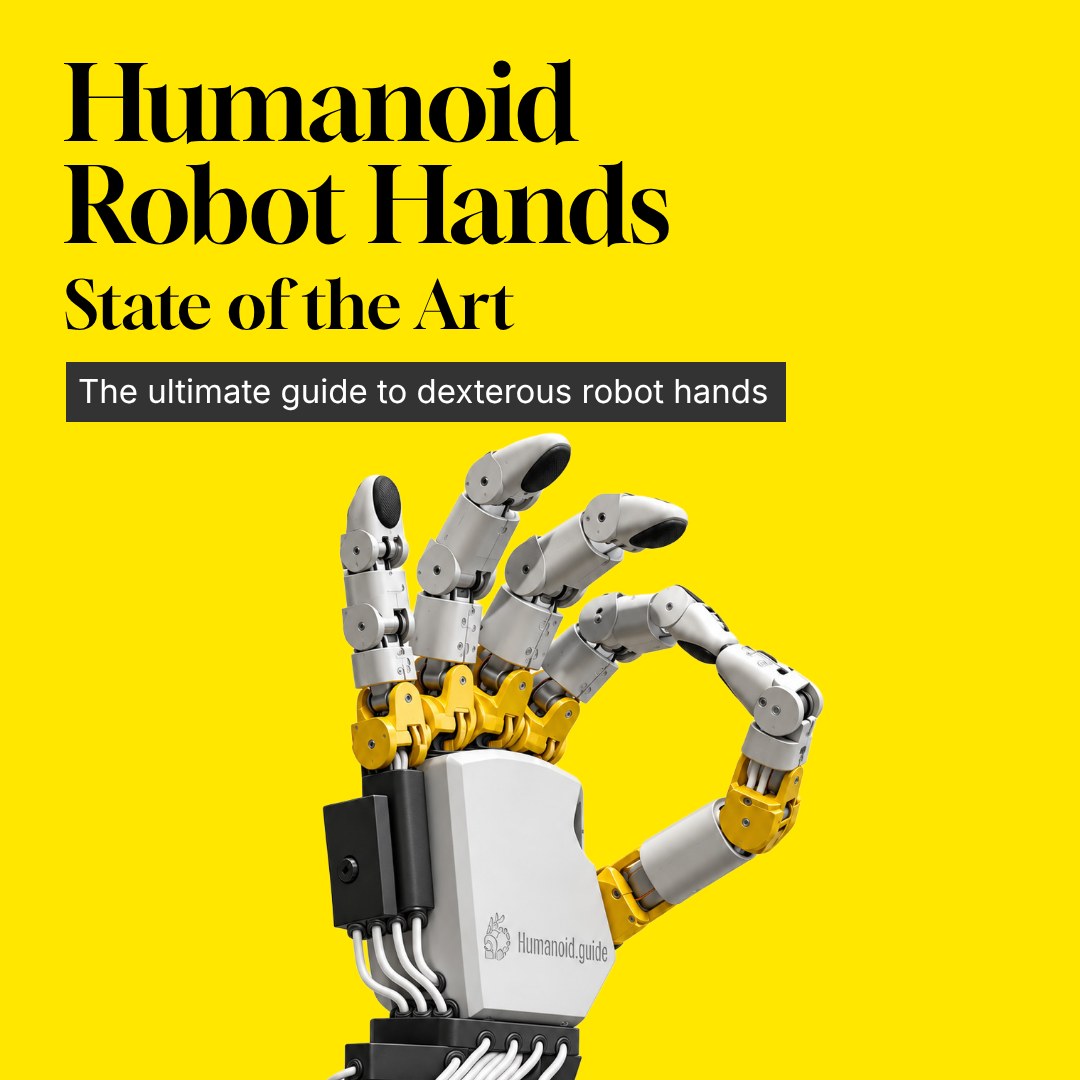
The hand decides what a humanoid can actually do, and nobody has yet proven one can last. This 325-page report maps the field at September 2026: vendors and OEMs, tendons versus motors at the joint, tactile and force sensing, durability, manufacturing, financing, standards and procurement – plus a Hand Score card for every one of 78 hands. Read more about the report here
This is a single user license version. If you want a version that you can share within your organization, click here.
Specifications and details:
Description
The hand decides what a humanoid can actually do. No robot hand has yet proven it can hold up to real work, day after day.
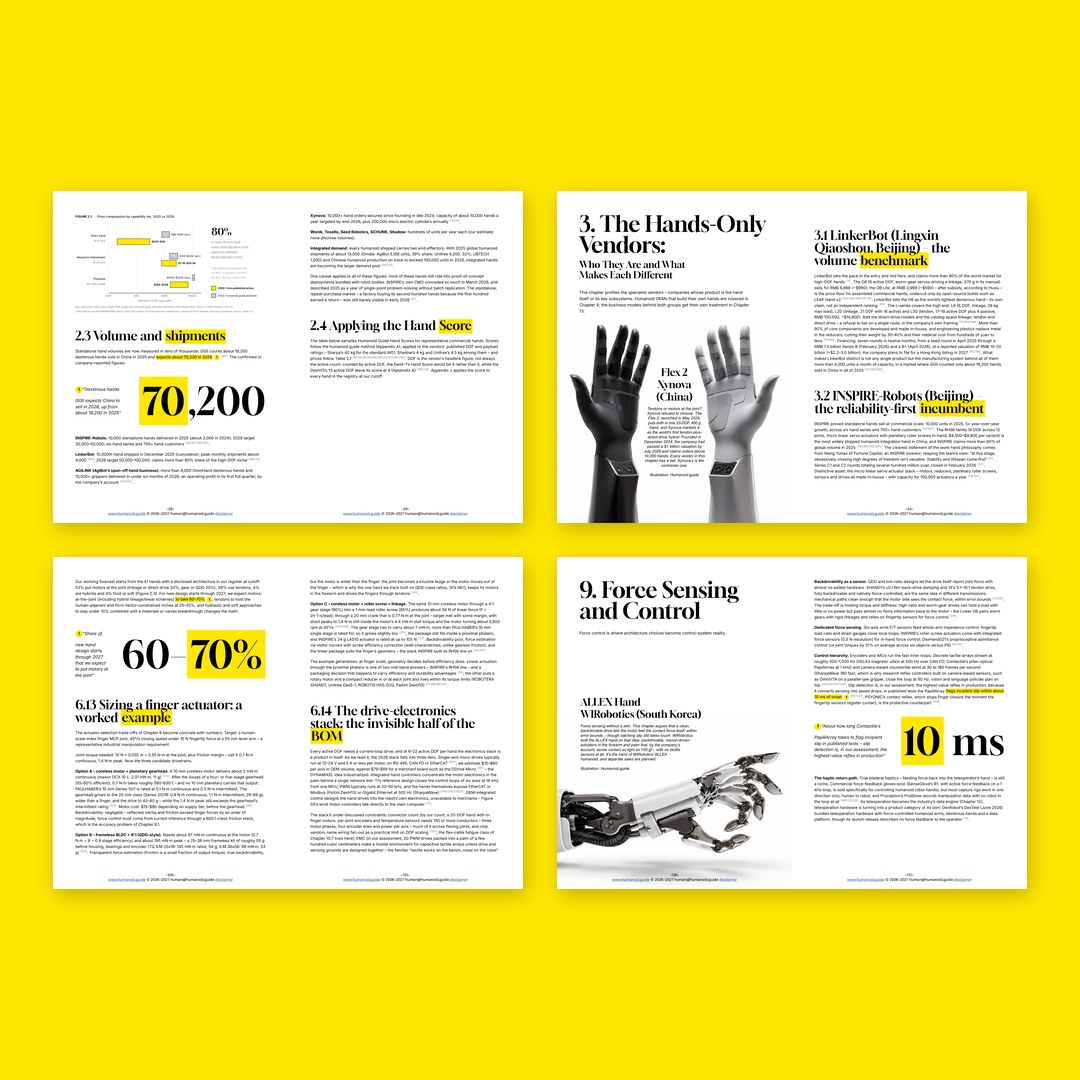
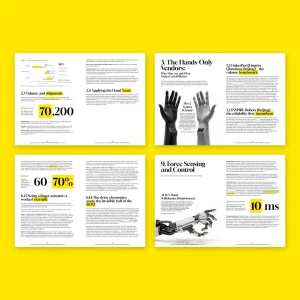
GGII expects about 70,200 dexterous hands to sell in China in 2026, up from about 19,200 in 2025. ITjuzi counts about $4.2 billion of disclosed capital in China’s dexterous-hand track between January 1 and August 3, 2026 – more than in all of 2025, though about two-thirds of it was whole-robot rounds at humanoid makers that build their own hands. Around Beijing’s World Robot Conference, high-DOF hands that once sold for RMB 400,000–500,000 were quoted at the RMB 10,000 level. Yet the best published system-level runs for any humanoid hand still fall 8 to 50 times short of the 10,000-hour MTBF that Xiaomi founder Lei Jun proposed as a 2027 target for robots in specific industrial scenarios.
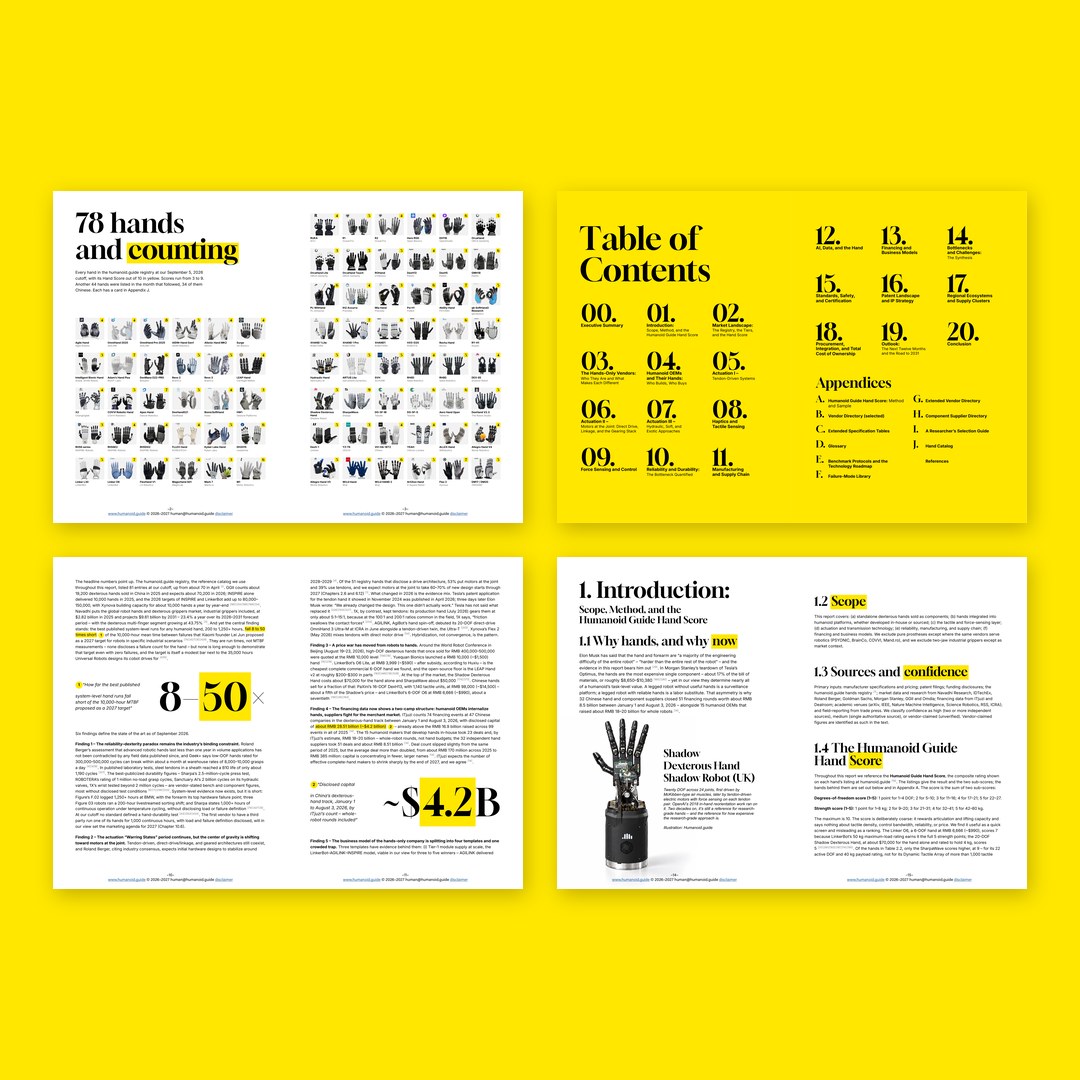
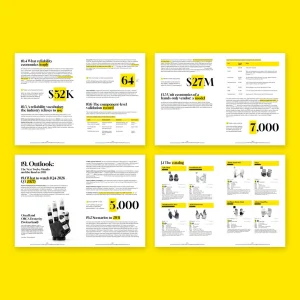
This report maps the whole field at our September 5, 2026 cutoff: who makes hands and who builds their own, how tendons, motors at the joint and hydraulics really compare, what touch and force sensing are worth, how long hands last, what they cost to build and to own, where the money goes – and a catalog card with a Hand Score for every one of the 78 hands in the humanoid.guide registry.
Inside the report
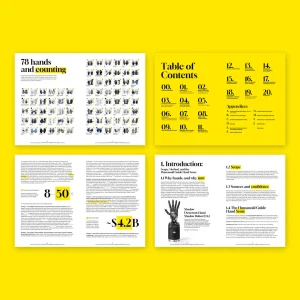
- 325 pages, ~81,000 words – Executive Summary, 20 chapters and 10 appendices
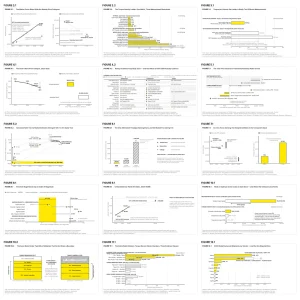
- 45 tables, 8 figures, 574 references – vendor claims marked as vendor claims, our estimates marked as ours
- The hands-only vendors profiled, and the humanoid OEMs that build or buy their hands
- Actuation in three parts: tendons, motors at the joint, and hydraulic, soft and exotic approaches
- Tactile sensing, force sensing and control
- Reliability and durability quantified: the published record, failure modes and maintenance economics
- Manufacturing and supply chain, AI and data, financing and business models
- Standards, patents, regional ecosystems, procurement and total cost of ownership, and the outlook to 2031
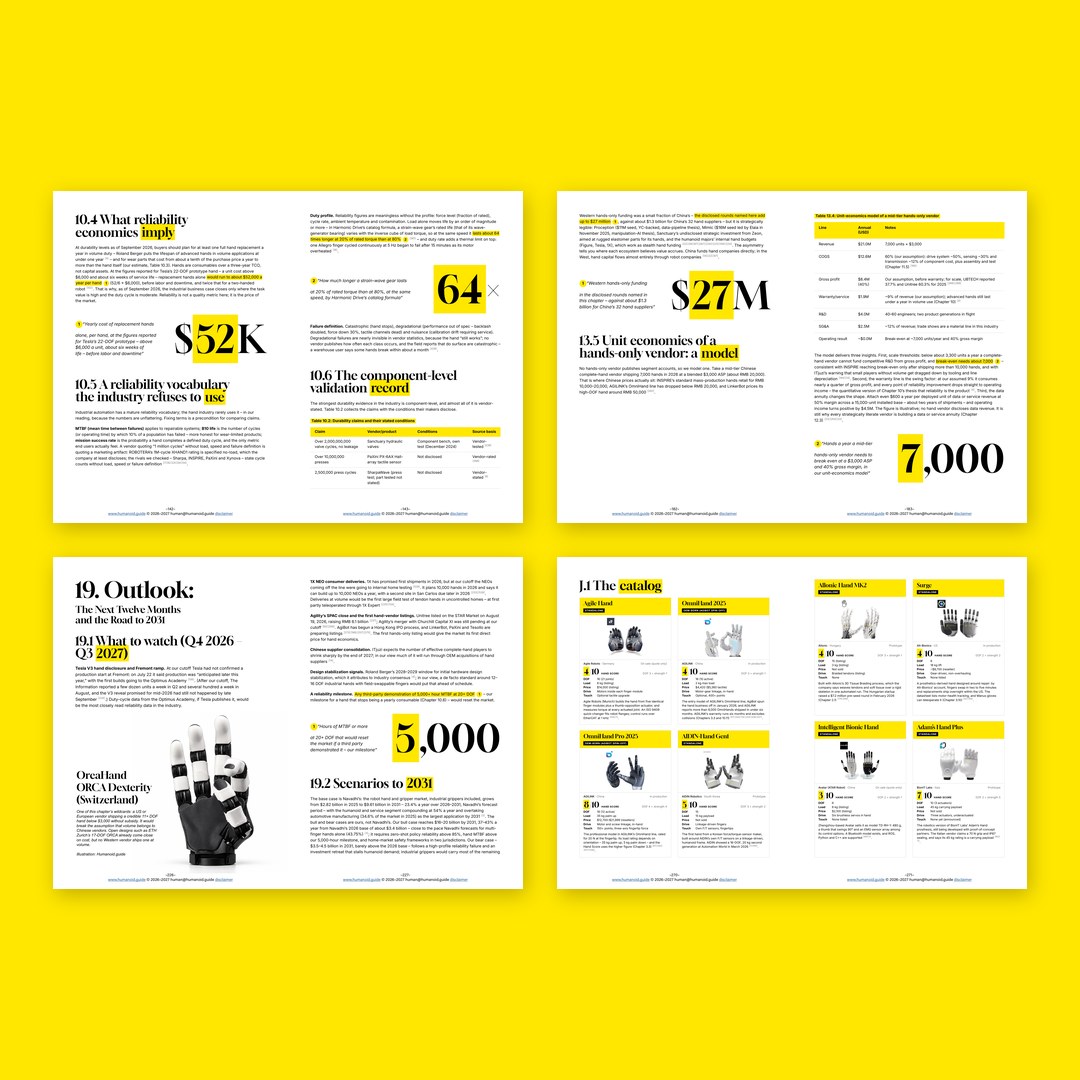
- Appendix J, the Hand Catalog: 78 hands, each with its Hand Score
Written for
Hand and component vendors · humanoid OEMs · buyers and integrators · investors · research labs · strategy and policy teams.
PDF, delivered immediately. Free updates throughout the 2026 cycle. Data to September 5, 2026.