
MWC Shanghai puts humanoids at center of 5G-Advanced pitch
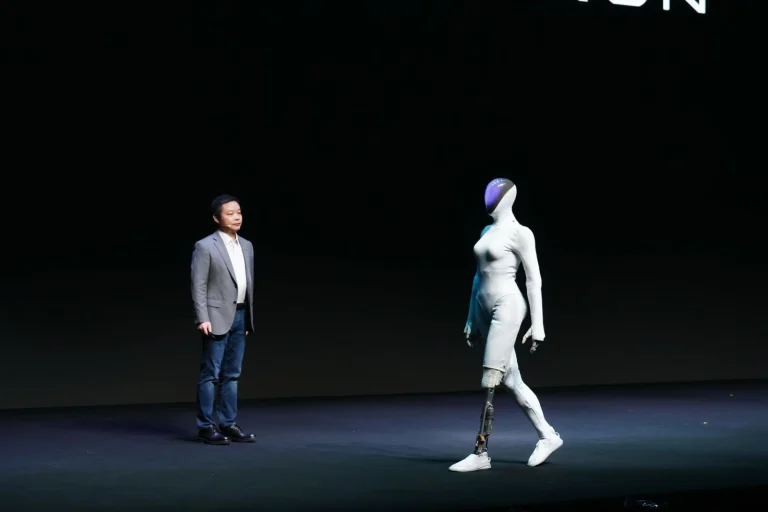
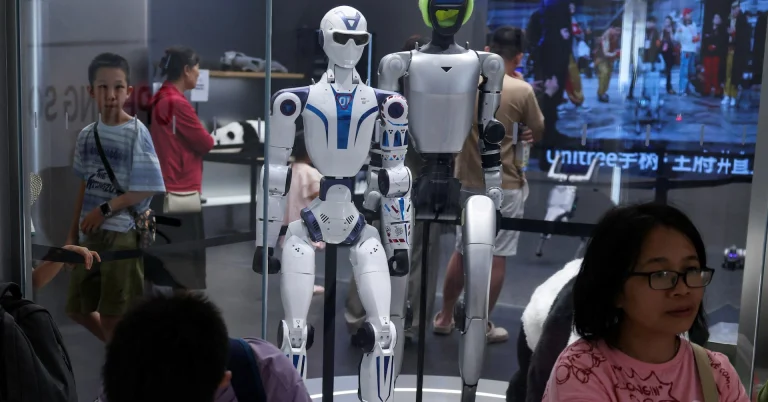
MWC Shanghai 2026 opened at the Shanghai New International Expo Centre with two HONOR humanoid robots, Flash and Vita Boy, walking on stage before the first human keynote speaker, according to Tech Times. The staging gave the mobile industry show an unusually explicit robotics lead, with GSMA using 5G-Advanced as infrastructure for embodied AI rather than treating humanoids as side attractions.
The three day event runs through June 26 and includes about 200 speakers and 500 exhibitors. For humanoid robotics, the stronger story is not the ceremony itself. It is the way Chinese carriers are presenting low latency networks as a practical input for robot fleets, industrial inspection and Robotics as a Service models.
HONOR’s Flash claim comes with caveats
Tech Times identifies Flash as the HONOR robot that won the 2026 Beijing Yizhuang Humanoid Robot Half Marathon on April 19, completing the 21 km course in 50 minutes and 26 seconds under autonomous navigation. The article says that time was faster than the human half marathon world record of 57 minutes and 20 seconds, set by Uganda’s Jacob Kiplimo in Lisbon in March 2026.
If the reported conditions are accurate, Flash represents a serious locomotion result. The source also notes skepticism from robotics researchers, citing MIT AI Lab founder Rodney Brooks, who pointed to the use of a pre mapped route and questioned how much support infrastructure accompanied the robot. A controlled endurance run is not the same test as general purpose autonomy in a crowded warehouse or factory.
The source gives less detail on Vita Boy, describing it only as the newer HONOR robot. It does not provide actuator specifications, power system information, payload data or a description of either robot’s autonomy stack, which limits any technical comparison beyond the public demonstration and the Flash race claim.
Carriers pitch humanoid deployments, not just demos
GSMA Director General Vivek Badrinath used the opening keynote to place humanoid robotics alongside drones and connected vehicles as commercial domains for Asian mobile operators. According to the article, China Mobile is developing robots for hospitality order management, China Telecom is working with Shanghai based AgiBot on a Robotics as a Service model in aviation and logistics, and China Unicom is deploying robots for hazard inspection in chemical industrial environments.
AgiBot is the most concrete name in that list. Tech Times reports that the company produced its 10,000th humanoid robot in March 2026 and ranked first globally in humanoid robot shipments for 2025 with a 39 percent market share, citing Omdia. Peng Zhihui, AgiBot’s founder and a former Huawei engineer, is also listed as an MWC Shanghai speaker on embodied intelligence.
5G-Advanced gets framed as robot infrastructure
The network claim is specific. The article says traditional 5G networks based on 3GPP Release 15 and 16 specifications typically deliver 20 to 30 millisecond average latency under load, while 5G-Advanced, based on Release 18 and beyond, can reach 1 to 10 millisecond low latency profiles under controlled conditions. It also says commercial 5G-Advanced deployments now cover more than 330 Chinese cities.
For humanoid operators, the practical argument is cloud edge assistance rather than putting an entire robot control stack in the network. A robot may run sensor fusion and motion planning onboard, but offload compute heavy tasks or fleet level world model updates when local processing is insufficient. The difference between a 30 millisecond and 5 millisecond round trip can show up as visible pauses or smoother motion in manipulation and navigation tasks.
MWC Shanghai’s next humanoid test is scheduled for June 25, when the Humanoid Robot Football Penalties Challenge holds its semifinals and final from 09:30 Shanghai time. The event is described as a test of real time autonomous decision making with no pre programming, hidden controllers or resets.
Source: techtimes.com