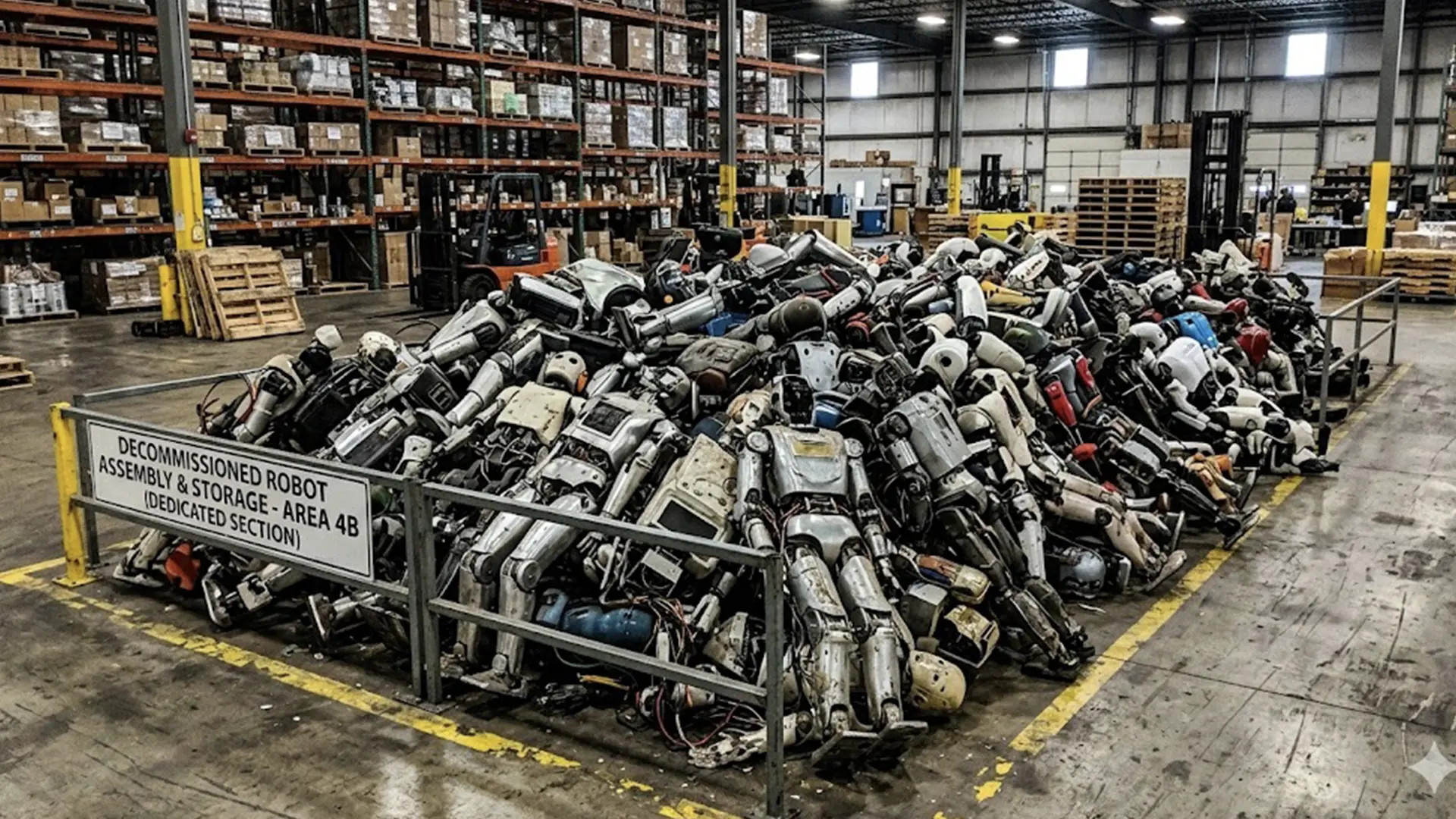
The Humanoid Graveyard
with humanoid.guide on what happens after the off-switch
Every humanoid rolling off the line today will, one day, be switched off for good. Inside each one sit 10,000 to 15,000 components – rare-earth magnets, live battery packs and a memory full of sensitive data. Almost nobody is planning for how to take them apart. The recyclers think that is a multi-billion-dollar oversight.
The race to mass-produce humanoid robots is in full swing. The industry argues, endlessly, about how to source, assemble and deploy machines built from ten to fifteen thousand individual parts. One question almost nobody asks out loud: what happens when they retire? Decommissioning a humanoid is not ordinary scrapping. To the people who recycle technology for a living, it looks far more like surgery – technical, high-stakes and, done wrong, genuinely dangerous.
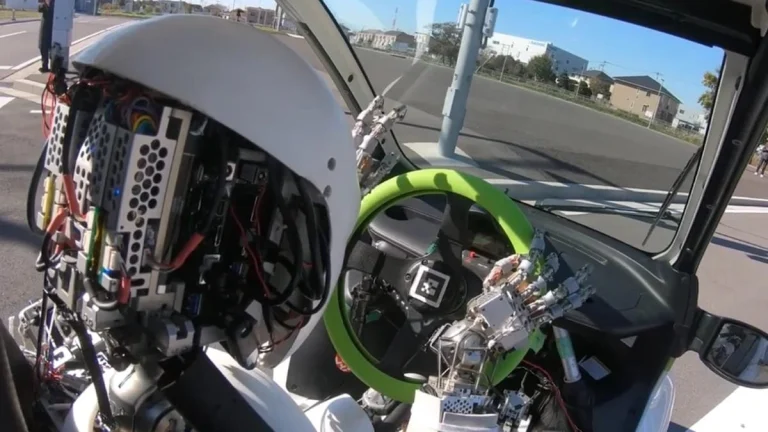
To see why a retired humanoid is so hard to take apart, look at how densely it is packed. A single unit holds 200 to 500 major sub-components, grouped into four interlocking systems behind a hard shell or a soft skin. Each system fights the recycler in its own way.
- Actuation & motion – 20 to 40 electric motors, each paired with a precision reducer and gearbox, increasingly fused into sealed, integrated drive modules that combine motor, harmonic drive and control in a single unit.
- The kinematic skeleton – 30 to 50 structural elements in aluminium alloy, carbon fibre or titanium, held together by 1,000 to 3,000 specialised fasteners, bolts and pins.
- The artificial nervous system – 40 to 80 position encoders, 50 to 200 sensors, tactile pressure points and perception arrays (LiDAR, IMUs, cameras), threaded together by miles of internal cabling.
- The semiconductor core – up to 80 memory and storage devices running firmware and local processing.
That density turns end-of-life processing into a minefield. Re-Teck, a global electronics-recycling firm, flags four areas where a retired humanoid becomes a liability. Three of them bite before a single magnet is touched.
1 · The kinetic data breach. A retired robot is a goldmine for corporate espionage. Its memory can still hold proprietary navigation maps, biometric logs, facial-recognition recordings and behavioural patterns. If the storage is not physically destroyed or cryptographically wiped, reselling the hardware leaves a backdoor straight into sensitive enterprise – or household – data.
2 · Stored energy and volatility. Lithium-ion and lithium-polymer packs cannot simply be binned. Punctured or crushed cells can go into thermal runaway, venting toxic gas or exploding. Safe handling means reducing them to "black mass" for element recovery, or diagnosing them carefully for a second life. Hydraulic and pneumatic parts add their own hazard: trapped high-pressure energy that becomes a projectile if a specialist does not discharge it first.
3 · Material fatigue. Salvaging a high-performance servo motor can pay – the manufacturer knows its mean-time-to-failure. Reusing structure is riskier. A reclaimed carbon-fibre frame carries hidden fatigue, and fatigue under load tends to fail suddenly and catastrophically.
A retired robot is a data goldmine. Its memory can still hold navigation maps, biometric logs and facial-recognition recordings. No physical destruction or cryptographic wipe, no safe resale – the hardware ships with a backdoor attached.
New! 2026 Humanoid
Robot Market Report
198 pages of exclusive insight from global robotics experts — uncover funding trends, technology challenges, leading manufacturers, supply chain shifts, and surveys and forecasts on future humanoid applications.

now Google DeepMind
The Humanoid Actuation Report
Fundamentals, Architectures, Vendors and the Ten-Year Outlook

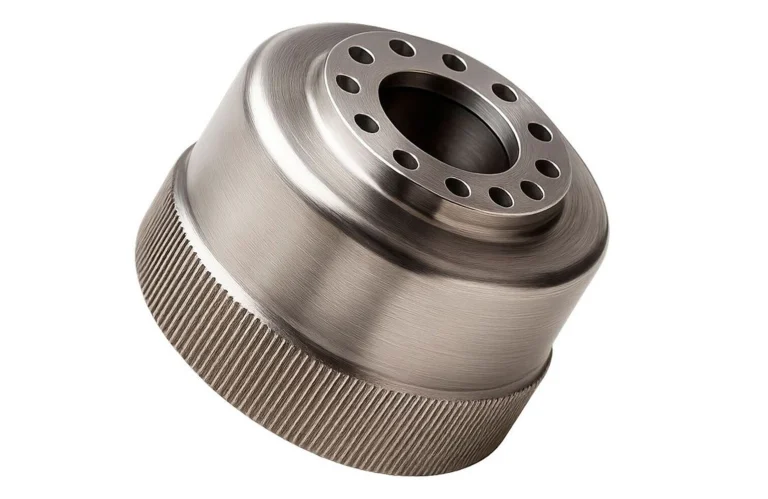
Here is the part almost nobody expects. A single humanoid carries 3.5 to 4 kilograms of rare-earth neodymium magnets (NdFeB) – a load that, Re-Teck notes, can exceed the amount in an entire electric-vehicle "skateboard" chassis. Conventional recycling relies on bulk crushing. Crush a humanoid and those magnets are shredded together with aluminium, titanium and carbon fibre, cross-contaminated into worthless scrap.
So the magnets have to come out by hand. Skilled, human-in-the-loop technicians extract them before anything is crushed – dangerous work that exposes them to severe pinch and crush injuries, flying shrapnel, and magnets that oxidise into corrosive dust and can spontaneously ignite. This is the "surgery" in robotics recycling: precise, manual and slow.
3.5–4 kg per robot. The rare-earth magnet load in one humanoid can exceed what sits in a whole EV battery-platform chassis. Crushed in bulk with the rest of the body, those critical metals are lost for good.
Re-Teck's argument is that today's approach does not scale. As humanoids start shipping by the thousand, hand-extracting magnets and defusing batteries one robot at a time becomes an environmental and logistical bottleneck. Their proposed fix is to move the problem upstream – to Design for Recycling (DfR).
In practice that means OEMs and recyclers collaborating from the drawing board: abandoning permanent industrial adhesives in favour of modular cartridges and standardised decoupling joints, so a robot can be taken apart as cleanly as it was put together. Get that right, and decommissioning turns from dangerous manual surgery into an efficient, circular supply of motors, magnets, batteries and metals feeding the next generation of robots.
It is an idea worth getting behind early. The companies designing humanoids now are also, whether they realise it or not, designing the recycling problem of the 2030s. Building that problem out – rather than leaving it for a technician with a crowbar – is the difference between a circular industry and a growing pile of hazardous, data-laden scrap.
Every humanoid we build today is a recycling problem we have not designed for yet.
The industry has spent five years learning how to make humanoids stand up, walk and work. The next hard problem is teaching them how to come apart – cleanly, safely and on purpose.
New! 2026 Humanoid
Robot Market Report
198 pages of exclusive insight from global robotics experts — uncover funding trends, technology challenges, leading manufacturers, supply chain shifts, and surveys and forecasts on future humanoid applications.
now Google DeepMind
The Humanoid Actuation Report
Fundamentals, Architectures, Vendors and the Ten-Year Outlook