
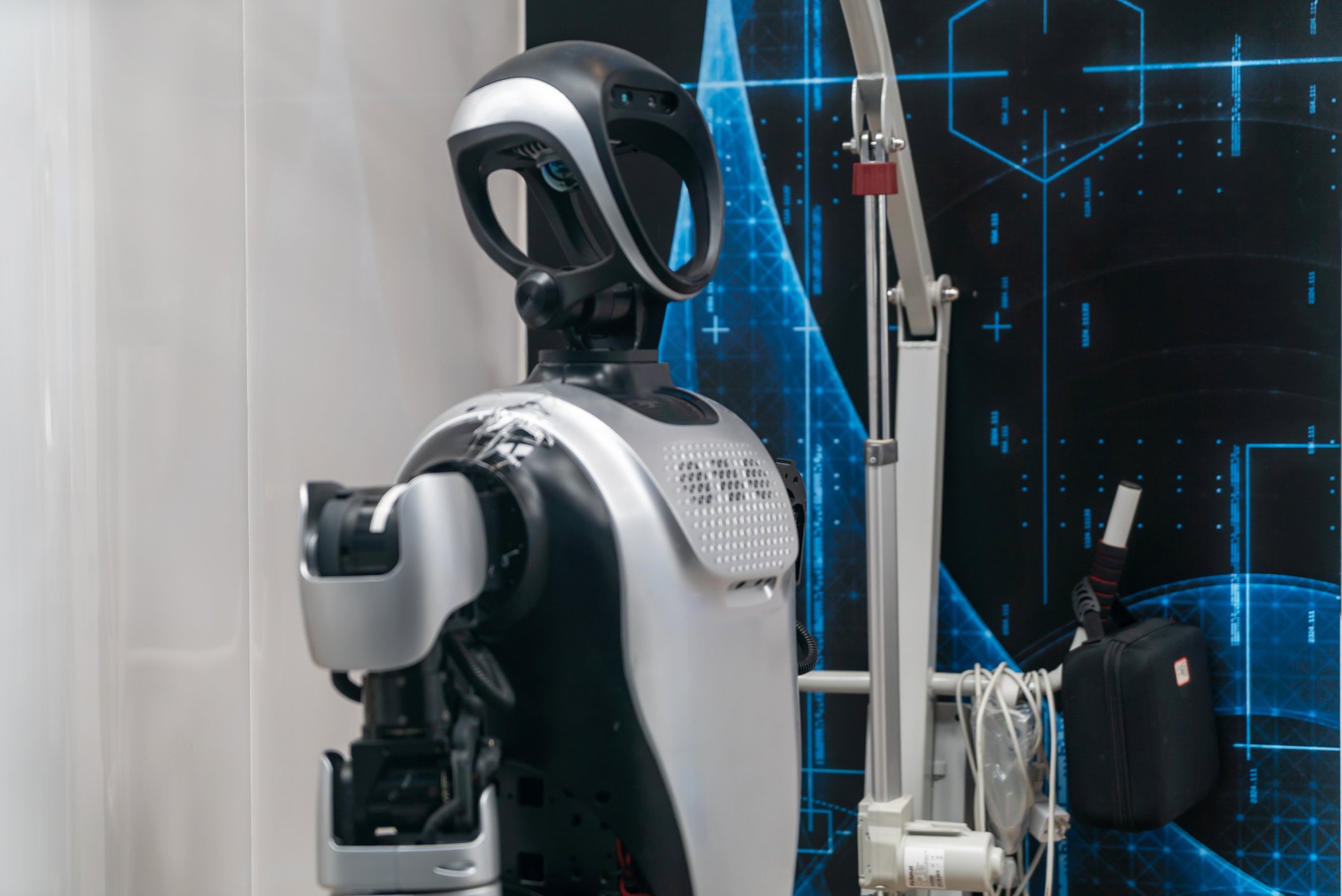
UC San Diego tests teleoperated humanoids in live surgery
UC San Diego engineers and surgeons used two teleoperated humanoid robots, nicknamed Surgie, to complete two surgeries in a preclinical trial on large mammals that were not primates, AfroTech reported, citing UC San Diego Today. The university characterized the work as a world first for live surgery performed with teleoperated humanoids.
The first procedure used one humanoid robot, with a human surgeon assisting, to remove a gallbladder. The second procedure used two humanoid robots working together. Researchers said the results validated the use of humanoids in the operating room, but their proposed near term role is narrower: assistants rather than independent surgeons.
The case for a humanoid platform is practical. According to the report, researchers pointed to easier transport, smaller operating room footprint, lower cost and broader task versatility as reasons the robots could be useful in under resourced areas or remote communities. Michael Yip, a faculty member in the UC San Diego Department of Electrical and Computer Engineering, said remotely operated and autonomous humanoid robots could expand access to critical surgeries, including in places where staffing is difficult. The technical caveat is latency. AfroTech reported that researchers still need to address lag between the human operator and the robot’s movement. For surgical teleoperation, latency is a core control and safety issue. The trial remains preclinical, so the defensible reading is limited but meaningful: UC San Diego has shown that live surgical tasks can be completed through a humanoid teleoperation setup, without yet showing that the system is ready for routine clinical use.
Source: afrotech.com