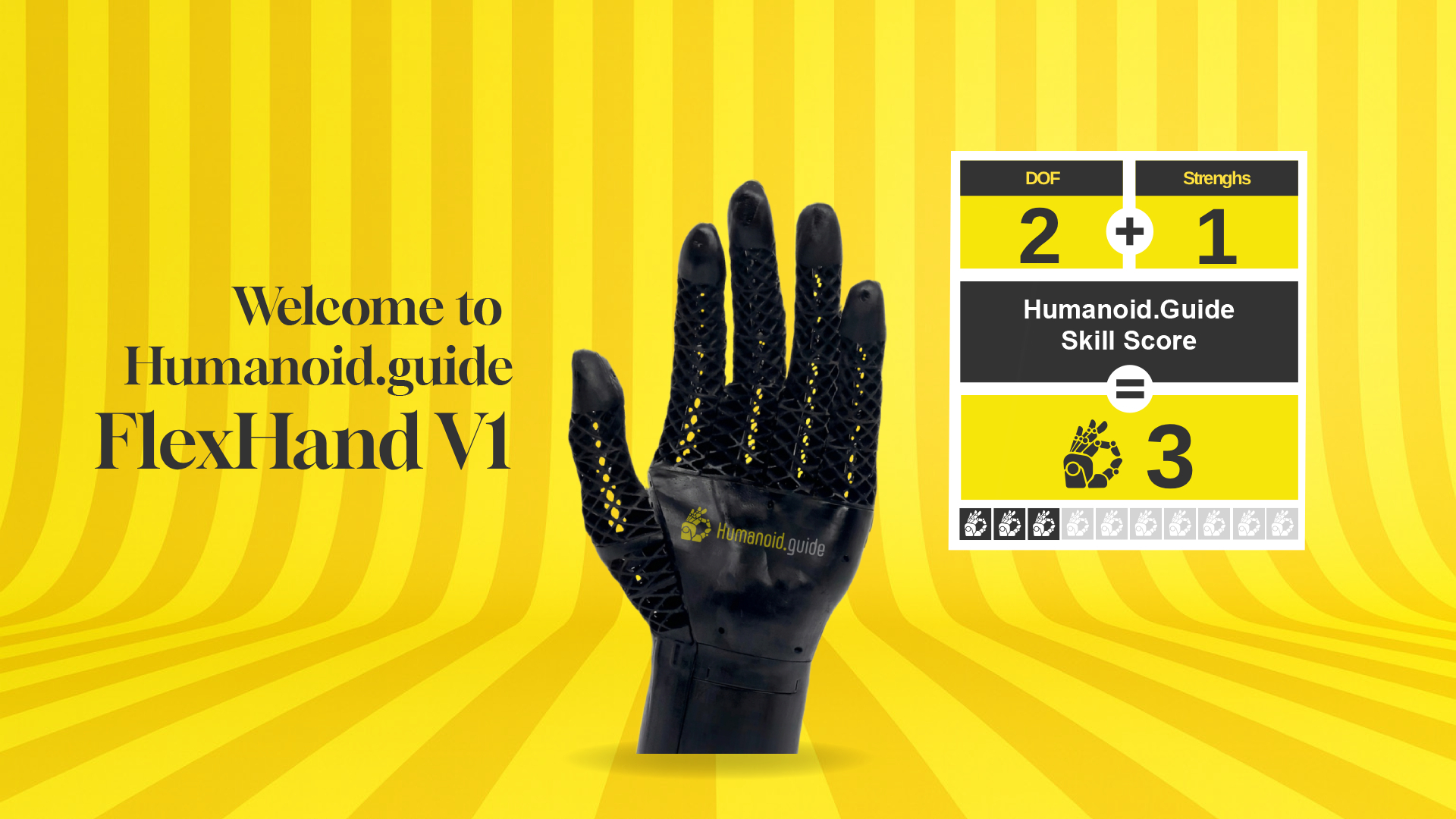
Welcome, FlexHand V1 Robotic Hand by LX Robotics!
The FlexHand V1 is a state-of-the-art robotic hand developed by LX Robotics, specifically engineered to exhibit intricate, human-like motions. It’s an ultralight design which allows easy integration with a multitude of robotic systems without adding unnecessary heft. The hand is driven by tendons, emulating the way in which a real human hand operates to provide smooth, controlled interactions. The hand has the gentle capability to handle delicate objects while simultaneously retaining robust strength, and the proprietary soft-lattice construction material boosts its durability by offering impact-resistant and waterproof properties.
The FlexHand V1 boasts of having 6 degrees of freedom, making it significantly dexterous and responsive. Furthermore, the lack of weight makes the hand a favorable choice in scenarios that demand precision, such as test assistive technologies and automation tasks. The hand is particularly suitable for research, education, and experimental robotics applications. Universities are using it to study AI embodiment and human-machine interaction, bridging the gap between artificial intelligence and tactile interaction.
The FlexHand V1, while currently not available for purchase, is in production. Manufactured by LX Robotics, based in China, the product can be expected to return to the market soon. The broader significance of the FlexHand V1 lies in its potential for aiding advancements in the field of humanoid robotics. Featuring real-world usability, it offers a practical platform for innovation, making it a valuable tool for any research lab or educational institute.