Apple HALO reaches reported 91% success on Unitree G1 tests
Apple researchers’ HALO humanoid control system achieved an average 91% success rate across 360 single-task trials on a Unitree G1, according to Shattered. The evaluation covered six real environments that had not been pre-scanned or mapped, with tasks including obstacle navigation, box pushing, following a person, passing through narrow openings and sitting on furniture.
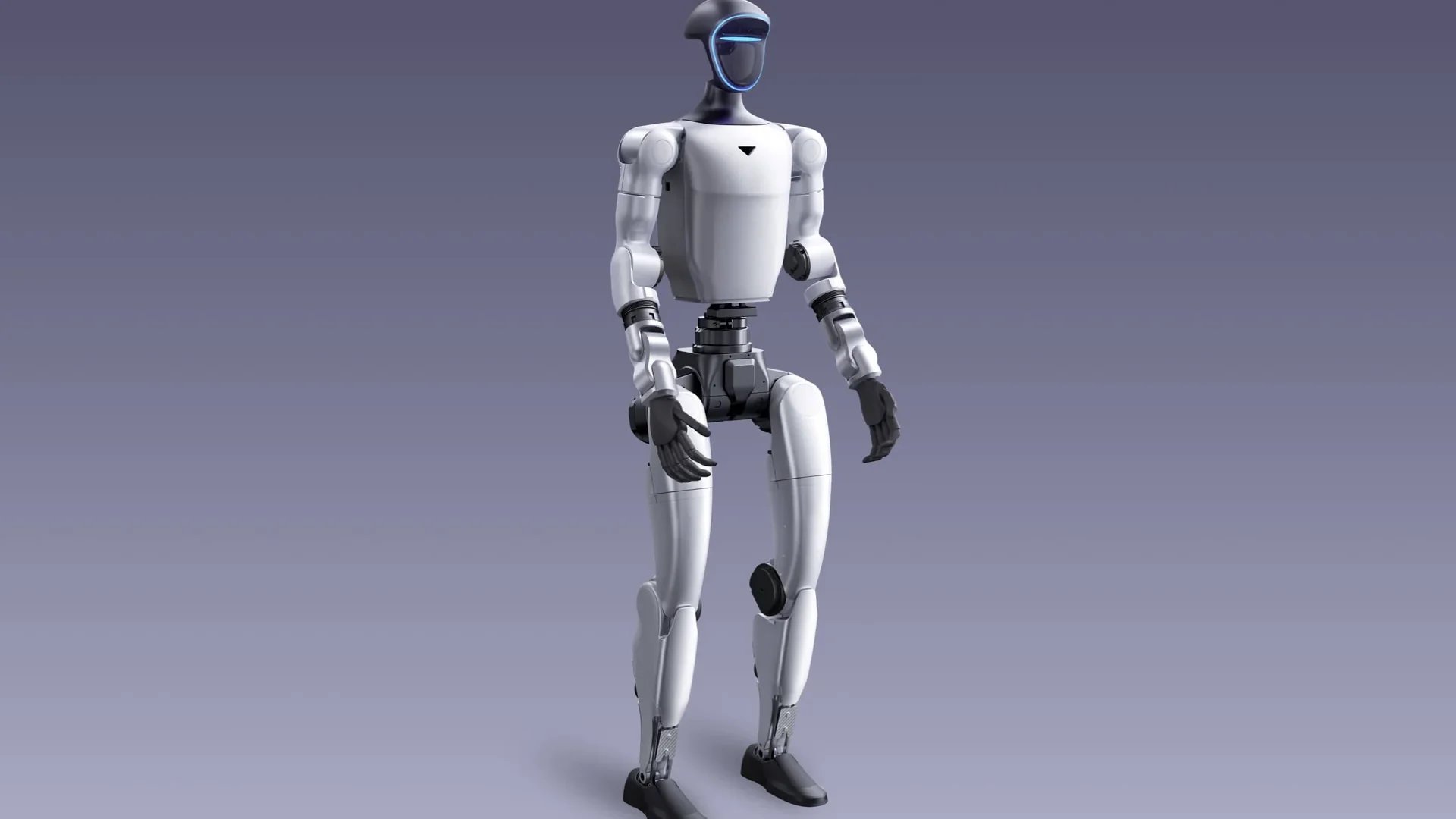
The reported results come from a paper titled “Perceptive Humanoid Motion from Simulation.” Apple HALO uses a commercially available humanoid as its test platform, rather than a robot body designed by Apple. The research is not an announced consumer product or a confirmed Apple and Unitree partnership.
A separate evaluation produced a lower result: 70% average success across 30 combined-task trials in one real environment, Shattered reported. That test covered three task types, each run 10 times. For operators assessing useful autonomy, the combined-task figure is the more demanding measure: completing an isolated action and completing a sequence place different requirements on a controller.
Training in generated rooms
Shattered reports that HALO’s training used roughly 300 hours of simulated human-like motion across about 1,000 virtual rooms. The approach addresses a familiar bottleneck in humanoid research: collecting varied physical robot experience takes operator time and exposes hardware to wear and falls.
36Kr adds that the virtual environments were generated programmatically, with randomized furniture arrangements. It reports that the training scenes also included blur, noise and changes in brightness and color tone to expose the system to visual variation before physical testing.
The central research question is whether that synthetic experience transfers to unfamiliar physical spaces. Testing in six previously unseen environments provides a concrete evaluation of that transfer, although the reported aggregate success rate cannot establish equal reliability across every behavior.
A planner and motion stack running onboard
The G1 carried an M4 Pro Mac mini with 64GB of unified memory, according to Shattered, which cites AppleInsider’s reporting on the onboard computer. Shattered identifies Alibaba’s Qwen3.6-35B-A3B as the local task-planning model.
36Kr describes a three-level architecture rather than a single model controlling the entire robot. The top layer interprets tasks and visual observations. A middle layer uses Qwen3.5-2B to generate movement instructions covering the next five seconds, while a lower motion-tracking layer drives the joints.
According to 36Kr, both upper layers run on the carried Mac mini, and the demonstrated system operates offline without remote control or a cloud connection. That division of work separates slower task reasoning from the motion tracking needed to execute whole-body movements.
Sources: Shattered, eu.36kr.com