Welcome, MM-Hand 1.0!
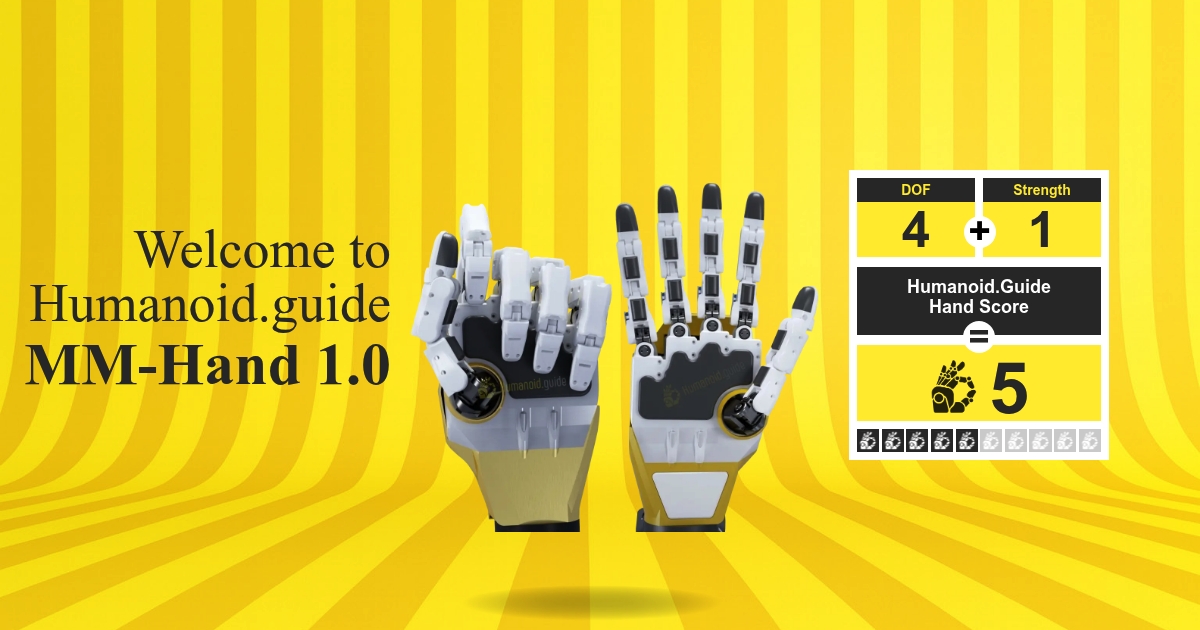
Developed by MMLab at the University of Hong Kong, this dexterous robotic hand is an open source research prototype with a lightweight, modular design. Its overall Hand Score of 5 out of 10 places it in the developing category, with a clear contrast between its two assessed dimensions: degrees of freedom earns 4 out of 5, while strength earns 1 out of 5. These ratings describe category performance rather than physical joint counts or measured lifting capacity. The design separates the hand from an external motor hub, using tendons routed through flexible sheaths rather than placing all motors inside the palm and fingers. The hand weighs approximately 350 grams and uses printed plastic for its main structural parts. Material cost is approximately US$1,400, which should not be confused with a confirmed retail purchase price. Its combination of published design resources, modular construction, and accessible materials gives the project a distinct identity as a research platform rather than a finished commercial appliance.
The central technical distinction is the balance between a strong degrees of freedom rating and a lower strength tier. A score of 4 out of 5 for degrees of freedom highlights dexterity as the stronger assessed dimension, but it does not establish precision, speed, reliability, or success on any particular manipulation task. Likewise, the strength rating of 1 out of 5 is a comparative tier, not a payload specification. For research planning, these scores provide a useful starting point for separating interest in articulation from requirements involving force. Evaluating the hand for a specific experiment still requires task specific measurements rather than treating either score as a complete performance guarantee.
Availability is listed as prototype, making development status an important consideration for prospective users. The project comes from an academic laboratory, and its full design, electronics, and software are shared openly. That openness gives researchers a basis for inspecting the implementation and planning modifications without treating the hand as a closed commercial system. The approximately US$1,400 material figure provides context for budgeting, while assembly, integration, and support require separate consideration. Its broader significance lies in making a dexterity focused hand design available for study and adaptation. With an overall score in the developing range, it represents an ongoing research platform rather than an established benchmark for comprehensive hand performance.