Welcome, X-Bot!
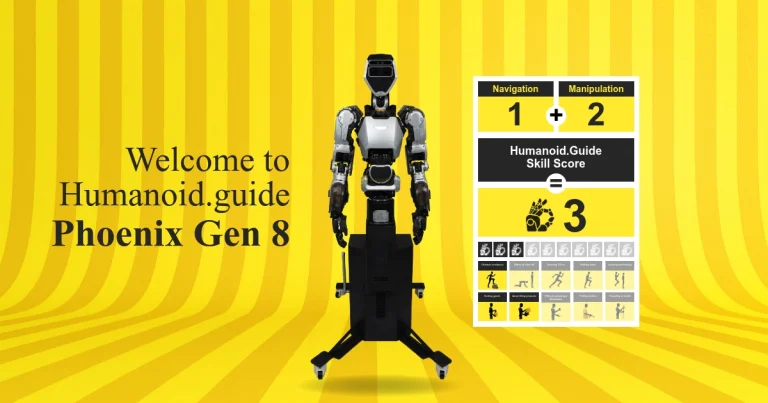
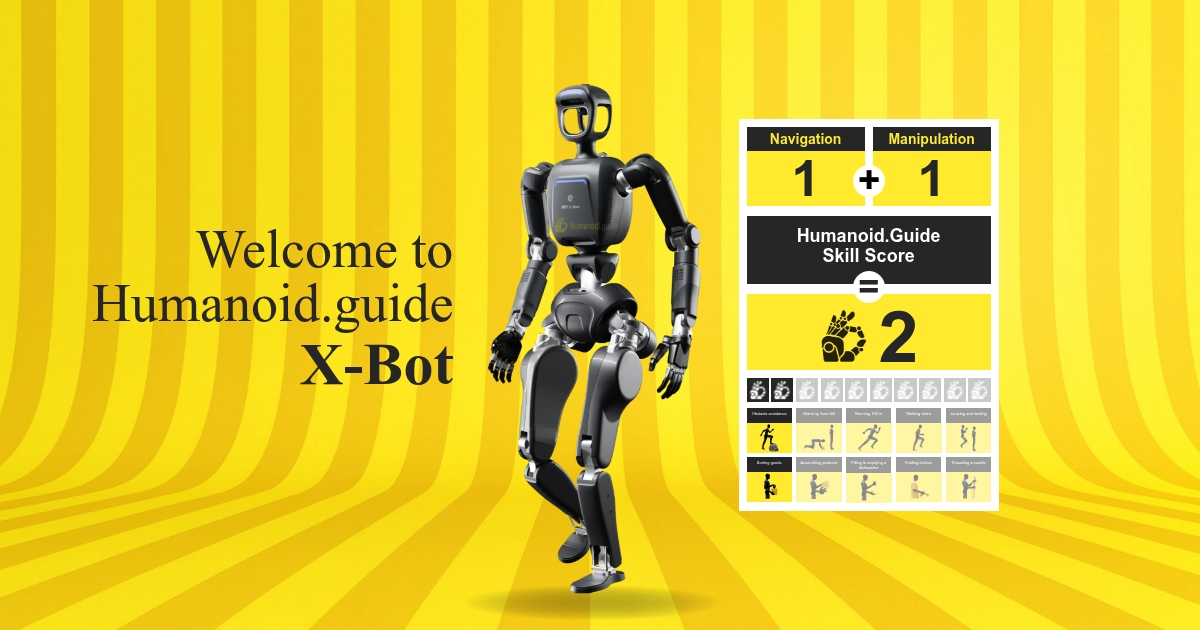
X Bot, also known as Boxing, is a full size bipedal humanoid developed by Yue Quan Bionics in Beijing, China. It stands 167 cm tall, weighs 60 kg, and combines a humanlike body with 51 degrees of freedom. Its listed maximum speed is 5.4 km/h, while its dual arm payload reaches 20 kg. Runtime is listed at two hours per charge. The platform incorporates electric motor modules, with knee and hip torque around 340 N·m, ankle torque around 46 N·m, and arm torque around 60 N·m. Computing combines an NVIDIA Jetson Orin NX with 16 GB of memory for AI, vision, and decision processing, alongside an Intel NUC12 i7 for motion control. Its overall skill score of 2 out of 10 places it in the early stage category, with Navigation and Manipulation each rated 1 out of 5. These ratings distinguish its preliminary demonstrated skill level from its substantial physical specifications and computing hardware.
Obstacle avoidance and sorting goods are the two supported capabilities central to this humanoid’s practical profile. Obstacle avoidance addresses movement through spaces containing physical obstructions, while sorting goods concerns organizing objects through manipulation. Its sensing hardware includes LiDAR and an Intel RealSense D435 depth camera, with depth resolution up to 1280 × 720. These components provide spatial information relevant to navigating around obstacles and locating goods. The listed dual arm payload supplies useful context for handling tasks, but does not establish sorting speed, precision, or reliability. Likewise, its Navigation and Manipulation ratings remain at the first tier out of five, keeping expectations appropriately focused on preliminary capability rather than advanced autonomy.
X Bot is listed as in production, with an advertised price of USD 47,000. Yue Quan Bionics positions the platform across education, research, reception, guided tours, delivery, medical assistance, and industrial support. Those market categories describe intended applications rather than proof of proficiency in every setting. The company’s broader technical approach centers on bionic tension and compression, drawing inspiration from how the human body works. Its human scale dimensions make it relevant to research into robots operating in environments designed for people. For prospective buyers, the important distinction is between production availability and skill maturity: this is an available physical platform with an early stage overall capability rating, not a broadly proven autonomous worker.