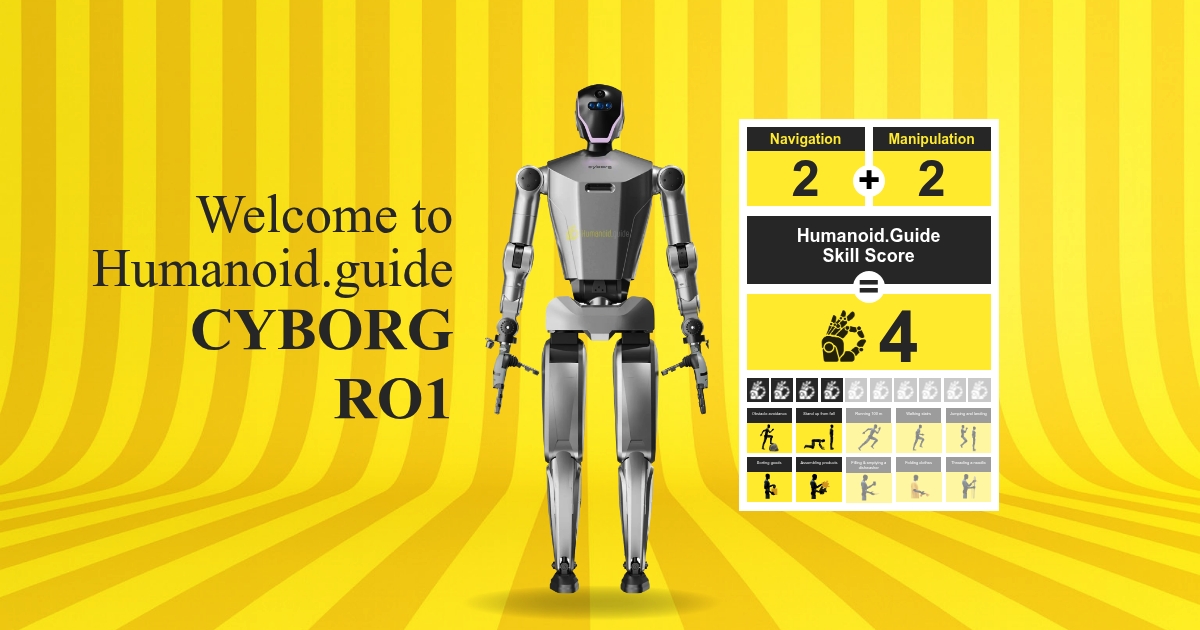
Welcome, CYBORG R01!
CYBORG R01 is a full size bipedal humanoid developed by Cyborg Robotics in Guangdong, China, for industrial environments where physical work can expose people to danger. Standing 180 cm tall and weighing 75 kg, it combines a humanoid frame with 62 degrees of freedom and dexterous hands featuring 16 degrees of freedom. Its listed payload is 20 kg across both arms, supporting substantial object manipulation within its operating limits. The structure uses an aluminium and magnesium alloy, while joint motor modules deliver torque exceeding 400 newton metres. In house linear actuators provide thrust in the 10,000 newton class. Battery runtime is listed at two hours per charge, with battery swaps taking approximately one minute. Its overall skill score of 4 out of 10 places it in the developing category, with Navigation and Manipulation each rated 2 out of 5. Demonstrated capabilities include obstacle avoidance, standing up after a fall, sorting goods, and assembling products.
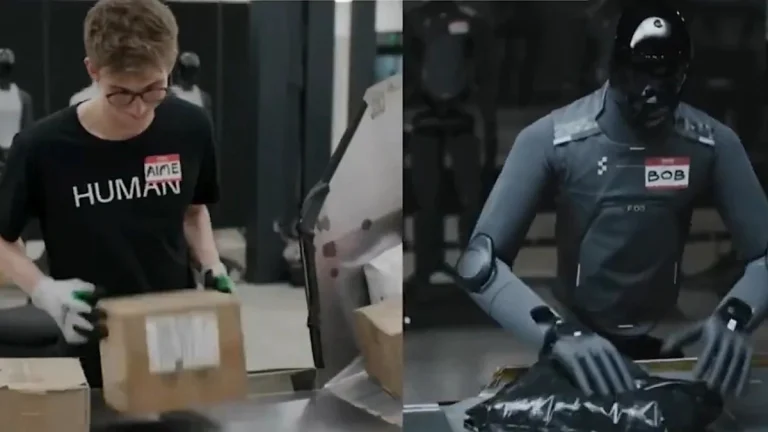
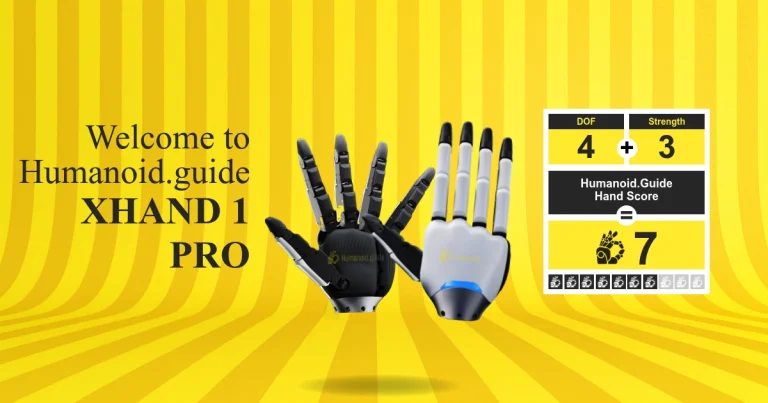
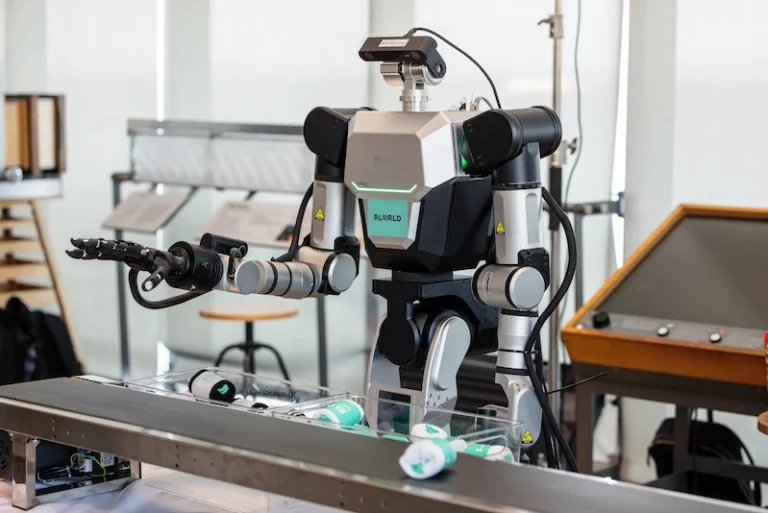
Obstacle avoidance and recovery from a fall give CYBORG R01 practical whole body capabilities for navigating spaces containing physical obstructions. Sorting goods and assembling products extend its role beyond locomotion into coordinated manipulation. Its five fingers per hand provide a physical interface for these tasks, while fisheye and RGB depth cameras supply visual input. A perception platform with 12 processor cores and 275 TOPS supports onboard processing, alongside the company’s automotive grade Bonao control hub. Five layers of safety control, three control modes, and push recovery form part of its safety architecture. These provisions support controlled operation, but its classification as only partly safe with humans makes operational safeguards important.
CYBORG R01 is listed as in production, with an advertised price of USD 70,000. Its manufacturer, Cyborg Robotics, is based in China and positions the platform around transferring dangerous physical work from people to robots. For prospective industrial users, the combination of payload capacity, replaceable batteries, and dexterous hands provides concrete specifications to assess against sorting and assembly requirements. The developing skill score is equally important context: substantial mechanical specifications do not automatically establish mature performance across varied workplaces. Its broader significance lies in bringing mobility and manipulation into one full size platform, while leaving buyers to evaluate task consistency, integration requirements, and safe deployment conditions for their particular operating environment.