Kinetic Blocks adds interests as robot data demand lags
Kinetic Blocks has added a less formal way for buyers to signal their robot training data needs after sellers dominated registrations during the first month of its marketplace beta. The company opened the platform for commercially licensed, provenance tracked data on September 1.
Roughly nine out of ten organizations registering during the month were sellers, according to Kinetic Blocks, while buyers accounted for the remainder. Suppliers included teams capturing egocentric video in factories, warehouses and construction sites, as well as teleoperation operators and robot integrators collecting data during deployments.
Kinetic Blocks interprets the imbalance as evidence that data production capacity is developing faster than procurement processes among companies training robot policies. The company did not disclose the total number of registrations or completed transactions, so the ratio offers an early view of activity on one robot training data marketplace rather than a broad measure of the sector.
A lower commitment route for buyers
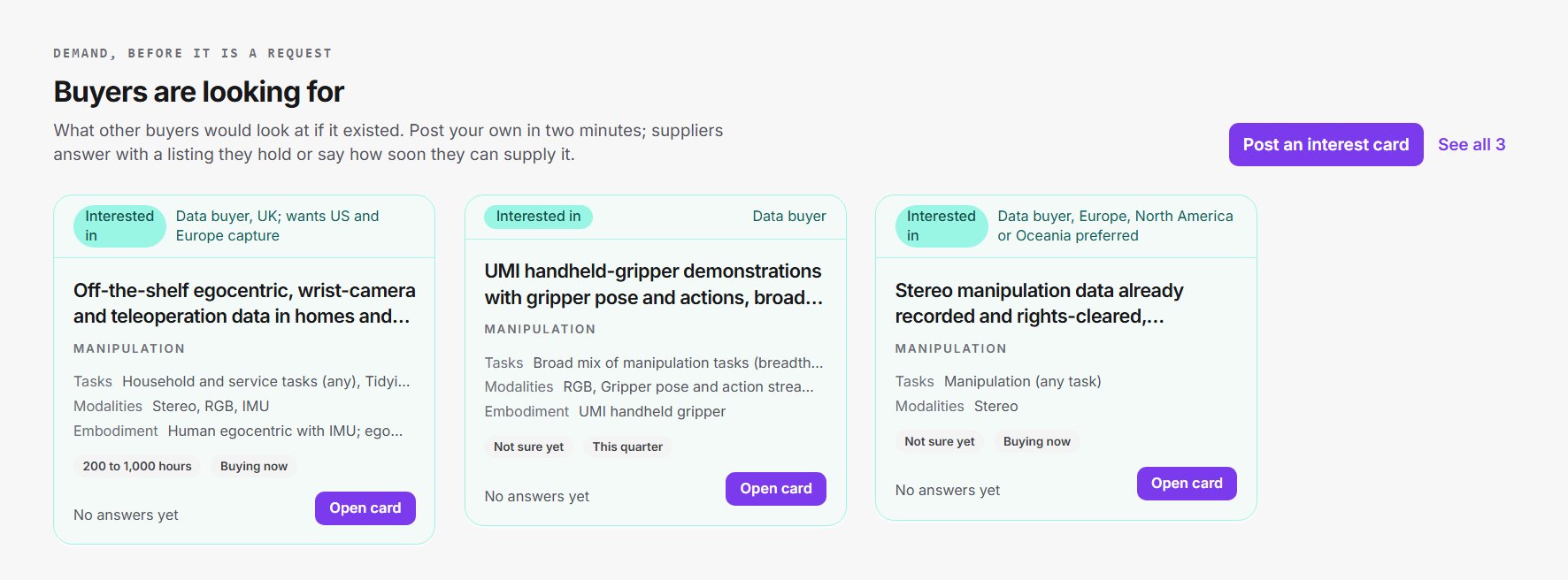
The new category, called interests, allows buyers to describe the data they may need in a few lines. A formal request requires specifications covering environments, tasks, hardware, formats and volumes, which buyers may not be ready to define during an early stage project.
Kinetic Blocks plans to match each interest with datasets that sellers already hold or could collect. The buyer can then produce a formal request once its requirements are clearer. Initial interest cards cover egocentric and teleoperation data in homes, UMI handheld gripper demonstrations, and rights cleared stereo manipulation data.
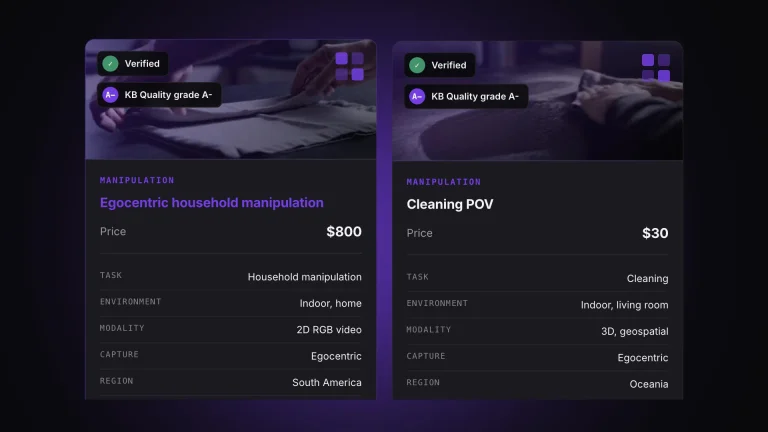
The company also said transactions remain highly manual. Buyers and sellers find one another, share samples and negotiate terms over email and Teams. Kinetic Blocks is using quality scores and custody documentation to help buyers assess datasets, while platform held payments are intended to protect sellers once nonreturnable data has been delivered. Establishing those payment terms may take longer in China, where the company says suppliers commonly require advance payment.
Training outcomes are still an open question
Kinetic Blocks acknowledged that its current scoring assesses capture and documentation quality, not whether a dataset can train a working robot policy. It plans to build a benchmark connecting its scores with robot training outcomes, although it provided no timeline or methodology.
That missing link is central to the marketplace model. Provenance, licensing and capture quality can reduce transaction risk, but buyers ultimately need evidence that a dataset improves policy performance. Until the planned benchmark is available, Kinetic Blocks cannot yet demonstrate that relationship.
Source: kineticblocks.com