Industrial applications dominate 80% of humanoid designs
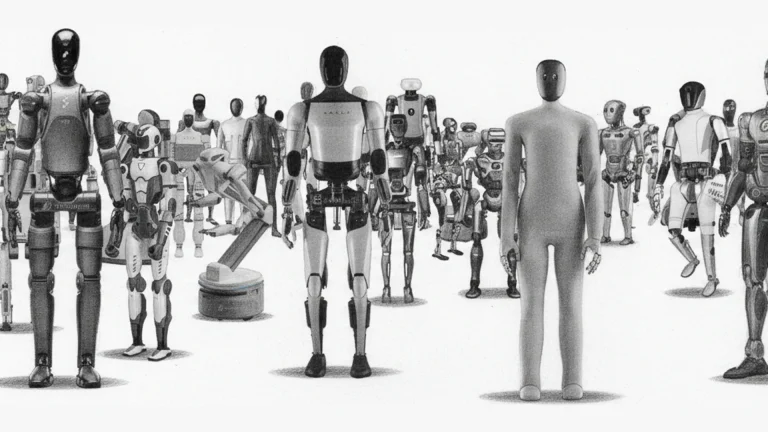
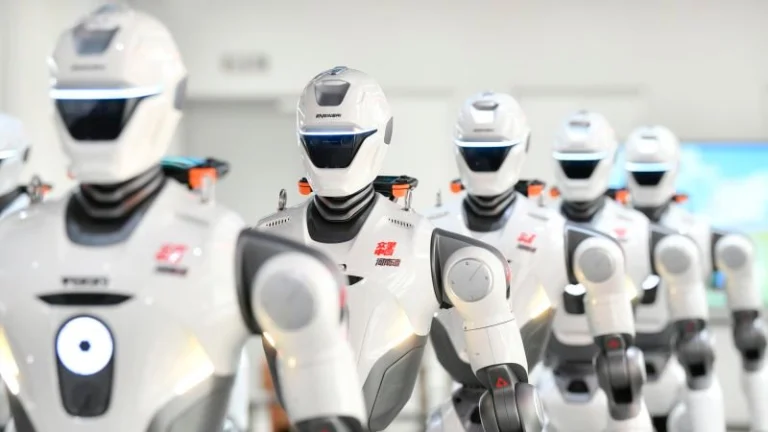
Approximately 80% of humanoid robots and prototypes developed to date were designed for industrial settings, according to IDTechEx research reported by Assembly. The concentration on factory work leaves developers balancing strength and battery capacity against total weight, particularly for robots expected to carry loads while remaining stable.
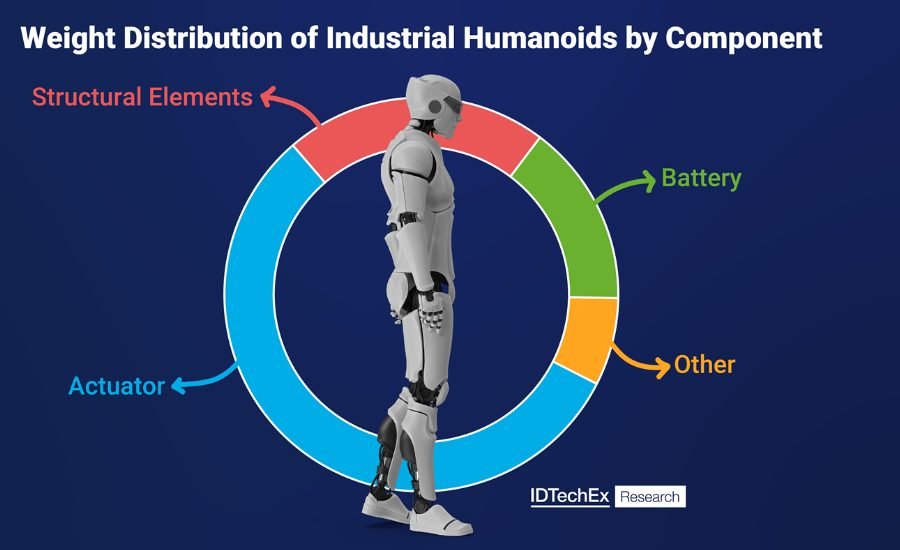
IDTechEx places the average weight of an industrial humanoid at 78 kilograms. Some wheeled models exceed 100 kilograms, illustrating how quickly batteries, actuators and structural components can produce a heavy machine.
Actuators account for most of the weight
Actuators represent more than half of a typical humanoid robot’s weight, according to the research firm. Those components repeatedly move the robot and carry external loads, placing demanding requirements on their gears, screws and materials. High strength, hardness, durability and wear resistance are needed.
Manufacturing the relevant components consistently is another constraint. IDTechEx specifically identifies planetary roller screws and gears as parts that remain difficult to produce with sufficient precision and consistency. The challenge becomes more visible as manufacturers prepare larger numbers of robots for pilot deployments and early commercial use.
Weight also influences the design of major load bearing joints, including the hips and knees. Developers using bipedal architectures must allocate mass without compromising balance, while still providing enough battery capacity for useful industrial operation.
Wheeled humanoids offer a different compromise
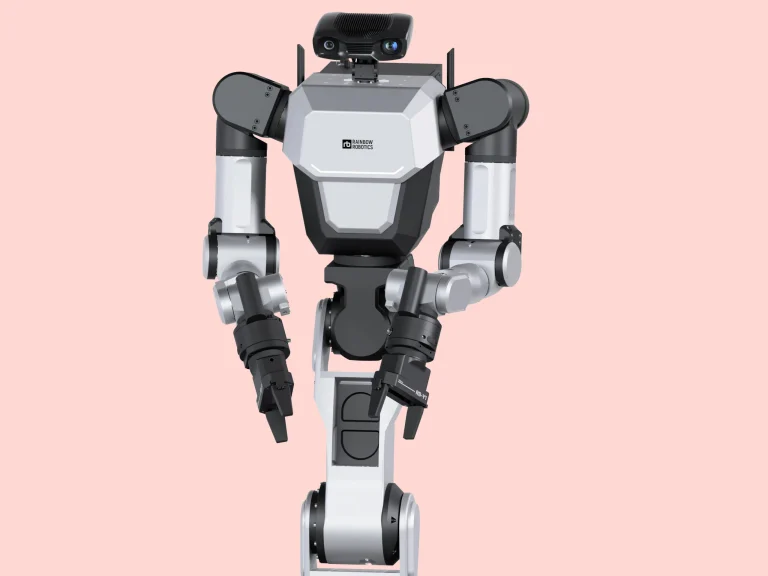
Some developers are placing humanoid upper bodies on wheeled bases. IDTechEx says this approach can accommodate larger batteries and reduce the balancing demands encountered by bipeds, especially during load handling. The resulting machines may be heavier, but their bases remove some of the control and mechanical burden associated with walking.
IDTechEx forecasts that the overall humanoid robot market could approach 1 million units around 2030. That projection comes with a substantial caveat: actual deployments have so far fallen below some manufacturers’ targets. Safety, certification, workforce training and the identification of industrial applications with clear economic value remain unresolved commercial hurdles.
Source: CredSpark