Welcome, UnifoLM OminiA!
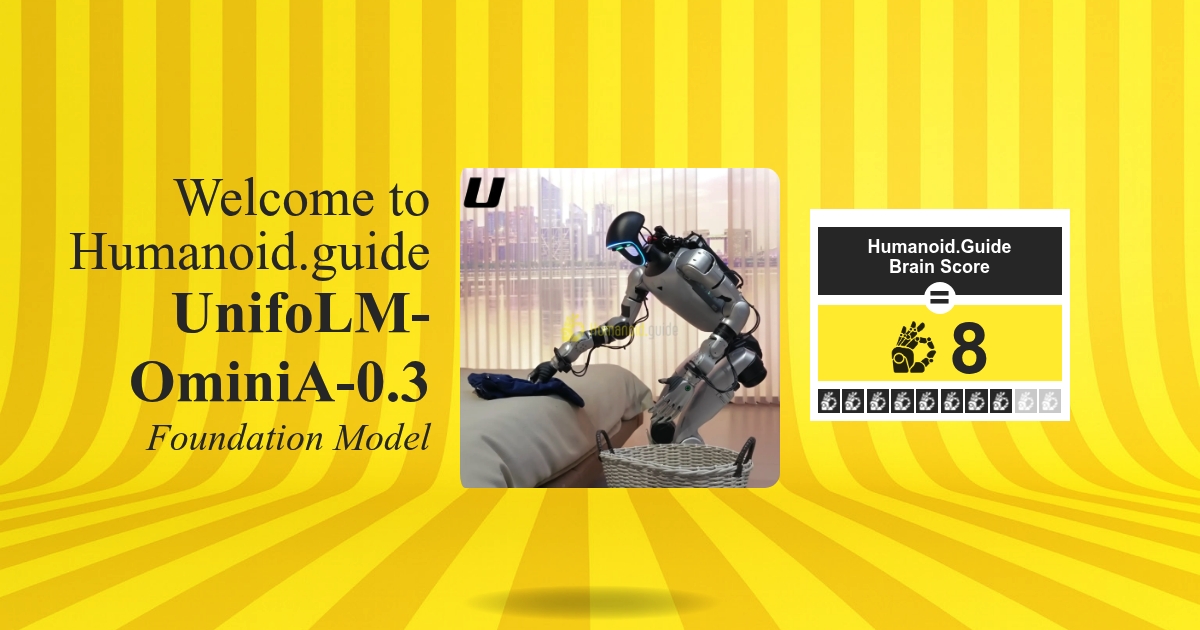
UnifoLM OminiA is a state of the art foundation model from Unitree Robotics designed as a single unified brain for the G1 humanoid robot. Instead of splitting perception, language, planning, and action into separate modules, it brings hearing, vision, reasoning, and control into one system that can process a spoken request, interpret the surrounding scene, decide what matters, and guide the robot through the task flow. This integrated design supports more natural behavior in domestic and care environments, where routines are varied and interruptions are common. Unitree positions the model around practical assistance, including tidying a room, sorting laundry, organizing shelves, loading a dishwasher, adjusting a bed, and recognizing medicine packages. With a Brain Score of 8, it sits in the state of the art tier and signals a serious push toward adaptable embodied intelligence. The emphasis is not on a narrow scripted demo, but on a general purpose software stack intended to make robot assistance feel more fluid, context aware, and useful in everyday settings.
Technically, the most important feature is unified multimodal processing. One model handles spoken input, visual scene understanding, task reasoning, and action selection in a shared framework, which reduces handoffs between separate programs and helps preserve context from start to finish. That matters in home care and wellness workflows, where a request may depend on room layout, object identity, and changing conditions around a person or bed. The model can respond to verbal instructions while tracking what is visible and what has changed in the environment, then maintain continuity through the task. This architecture also fits settings such as elder support and hospital style assistance, where reliability, adaptability, and smooth recovery from interruptions are more valuable than narrow benchmark tricks. The result is a more general embodied intelligence layer rather than a collection of isolated skills.
UnifoLM OminiA is offered with backorder availability, while Unitree describes it as a step toward practical everyday robot assistants rather than a finished mass market software product. It sits within the broader UnifoLM family, which links this release to Unitree’s longer term embodied AI strategy across world modeling and general manipulation research. Public code and model weights have not been released for this version, so the company retains close control over deployment and iteration. That choice makes the model notable less for immediate developer access and more for what it signals about the next phase of humanoid software, integrated robot brains aimed at real household care, wellness support, and structured service environments where adaptability matters as much as raw task execution.